
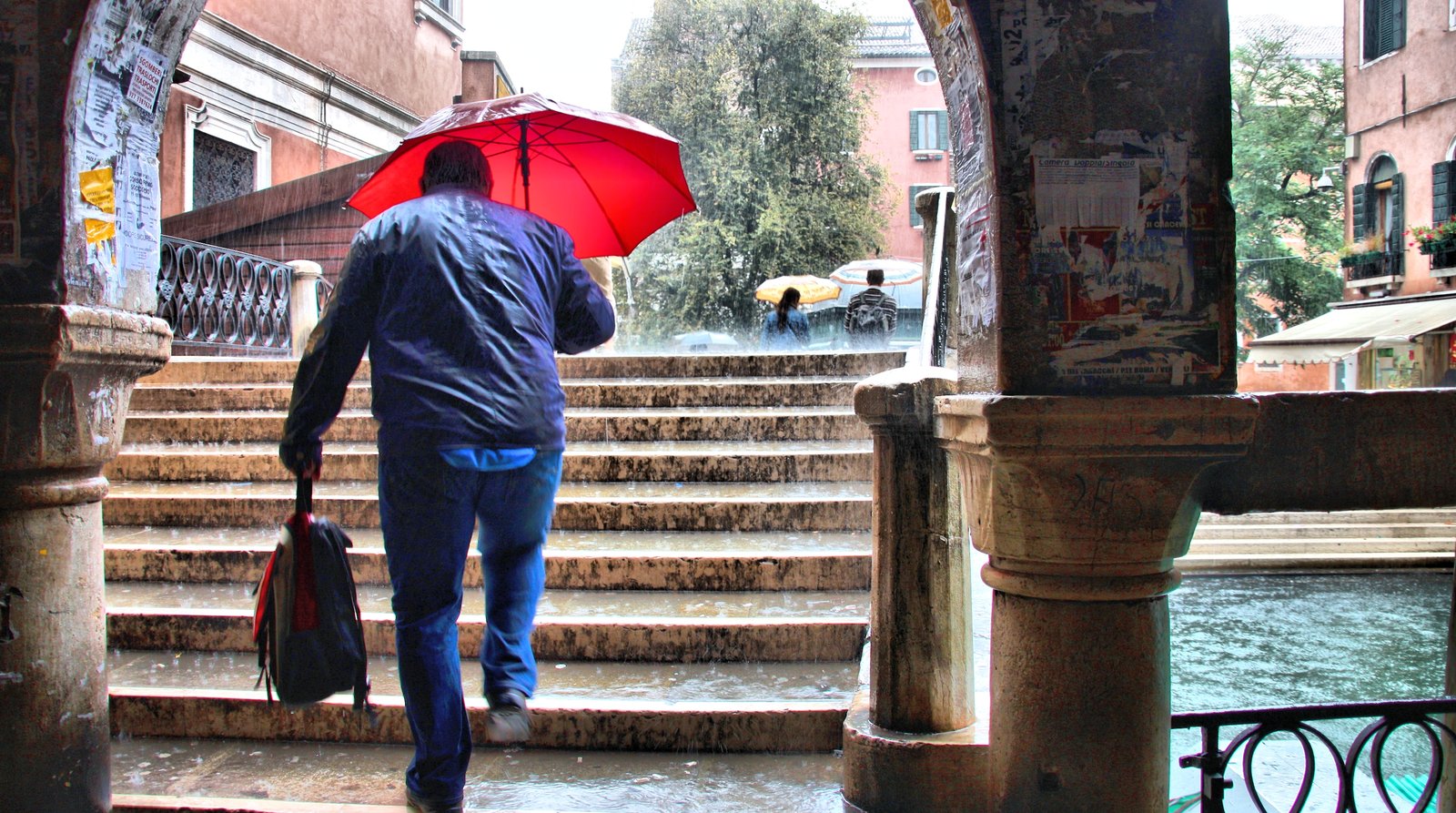
In brief
Venetian dress prioritises function without sacrificing polish: waterproof, low-heeled footwear built for stone bridges and occasional flooding, layers that adjust for humid heat or damp cold, and a generally restrained, well-tailored palette over anything flashy. It is closer to quiet, weather-literate Italian tailoring than to the gondolier-striped or carnival-costume image often sold to visitors.
At a glance
- Footwear priority
- Waterproof, low heel, real grip on wet stone
- Warm-weather habit
- Breathable natural fabrics — linen, light cotton — over synthetics
- Cold-weather habit
- Layering and a good wool coat rather than one heavy jacket
- Acqua alta gear
- Rubber boots or waterproof shoe covers kept by the door
- What locals avoid
- Flip-flops or unsupportive sandals on bridges; anything easily ruined by a splash
- Last checked
- August 2026
A city that tests your shoes before your outfit
Ask a Venetian for style advice and the conversation usually starts with footwear, not fabric. Central Venice has no flat ground for long — bridges, uneven paving stones worn smooth and slick by centuries of foot traffic, and, for a real stretch of the year, standing water — and this practical reality shapes local dressing habits far more than any decorative regional aesthetic does. Bad shoes are punished quickly and visibly in Venice: a slipped heel on wet marble steps, blisters from unsupportive soles after a day covering several kilometres on foot, since there is no other way to get around, are common enough that residents treat footwear as the first and most non-negotiable decision in getting dressed.
What actually works: low or flat heels, real tread rather than smooth leather soles, and materials that tolerate a splash without ruin. This is less a fashion statement than a survival skill that happens to look considered when done well.
Layering for a lagoon climate
Venice's climate is shaped directly by its lagoon setting: humid summer heat that can feel heavier than the temperature suggests, damp cold in winter that cuts through inadequate layers faster than a dry cold would, and a persistent breeze off the water that changes how warm any given outfit actually feels. Venetian dressing habits respond with genuine layering rather than a single seasonal uniform — breathable linen or light cotton in summer, worn loose rather than tight against humidity; a well-cut wool coat and scarf in winter, chosen for warmth without excessive bulk, since bulky clothing is genuinely inconvenient on crowded vaporetti and narrow calli.
Acqua alta and what actually goes on your feet
During the acqua alta season, roughly autumn through early spring, practical rubber boots or waterproof shoe covers are standard household items, kept by the door the way an umbrella might be elsewhere — not a fashion statement, simply a response to genuinely flooded streets on affected days. Residents check the tide forecast from the Comune di Venezia's Centro Previsioni e Segnalazioni Maree before deciding on footwear the way someone elsewhere might check a weather app before deciding on a jacket. Visitors caught out without appropriate footwear during a flood day are a familiar, slightly rueful sight to residents — a reminder that Venice's relationship with water is a daily practical fact, not a scenic backdrop.
Restraint over spectacle
Beyond function, the broader tone of Venetian dressing leans toward restraint: well-made, often muted or neutral pieces, tailoring valued over branding, and a general skepticism toward anything overtly costume-like outside Carnevale itself. This is worth stating plainly because so much "Venetian style" marketed to visitors leans the opposite way — mask motifs, harlequin patterns, gondolier stripes — none of which reflects how residents actually dress on an ordinary Tuesday. The real local aesthetic has more in common with the quiet, materials-first tailoring found across northern Italy generally than with any costume shop's version of Venice.
What to actually pack
For visitors, the practical translation is straightforward: comfortable, low-heeled, genuinely waterproof shoes with real tread, prioritized over anything else in the suitcase; breathable natural fabrics in summer and proper wool layers in winter rather than a single heavy coat; a compact umbrella or light rain shell year-round given the lagoon's unpredictable weather; and, for autumn and winter travel, a willingness to check the tide forecast and adjust footwear for the day rather than assume dry streets by default.
Commuting on foot and by water
A detail that catches many visitors off guard: getting anywhere in Venice, including to a restaurant or a formal appointment, usually means walking a real distance over bridges or standing on a crowded vaporetto, not stepping out of a taxi at the door. Venetians dress with this in mind even for relatively dressy occasions, favoring clothing that survives a twenty-minute walk and a humid boat cabin without wilting — structured but not stiff, tailored but not fragile. A wrinkle-resistant linen-cotton blend or a well-cut wool blend does more practical work in Venice than a fine silk that creases the moment it is sat on. Bags, similarly, tend toward cross-body or backpack styles that leave both hands free for railings, bridge steps and the general business of navigating a city with no flat, unobstructed pavement for long.
This same logic extends to how Venetians dress for work. Office and shop attire across the city leans toward the same practical tailoring described above — a good coat, sturdy shoes, layers that transition between an unheated ground-floor shop and a warmer upper room — rather than the more car-dependent business dress common in cities where the walk from parking to office door is measured in metres rather than kilometres.
What shoes should you actually wear in Venice?
Low-heeled, waterproof shoes with real grip — walking shoes or boots rather than smooth-soled dress shoes or flip-flops — hold up best against Venice's worn stone bridges, uneven paving and periodic flooding. Comfort and traction matter more here than in almost any other Italian city, since walking is the only way to cover ground.
Sources
- Comune di Venezia — Centro Previsioni e Segnalazioni Maree, seasonal tide guidance
- Museo di Palazzo Mocenigo — Centro Studi di Storia del Tessuto e del Costume
- Venezia Unica — visitor mobility and practical guidance for the historic centre
This article was independently researched and produced. No payment, complimentary service or editorial approval was provided by the places mentioned.