
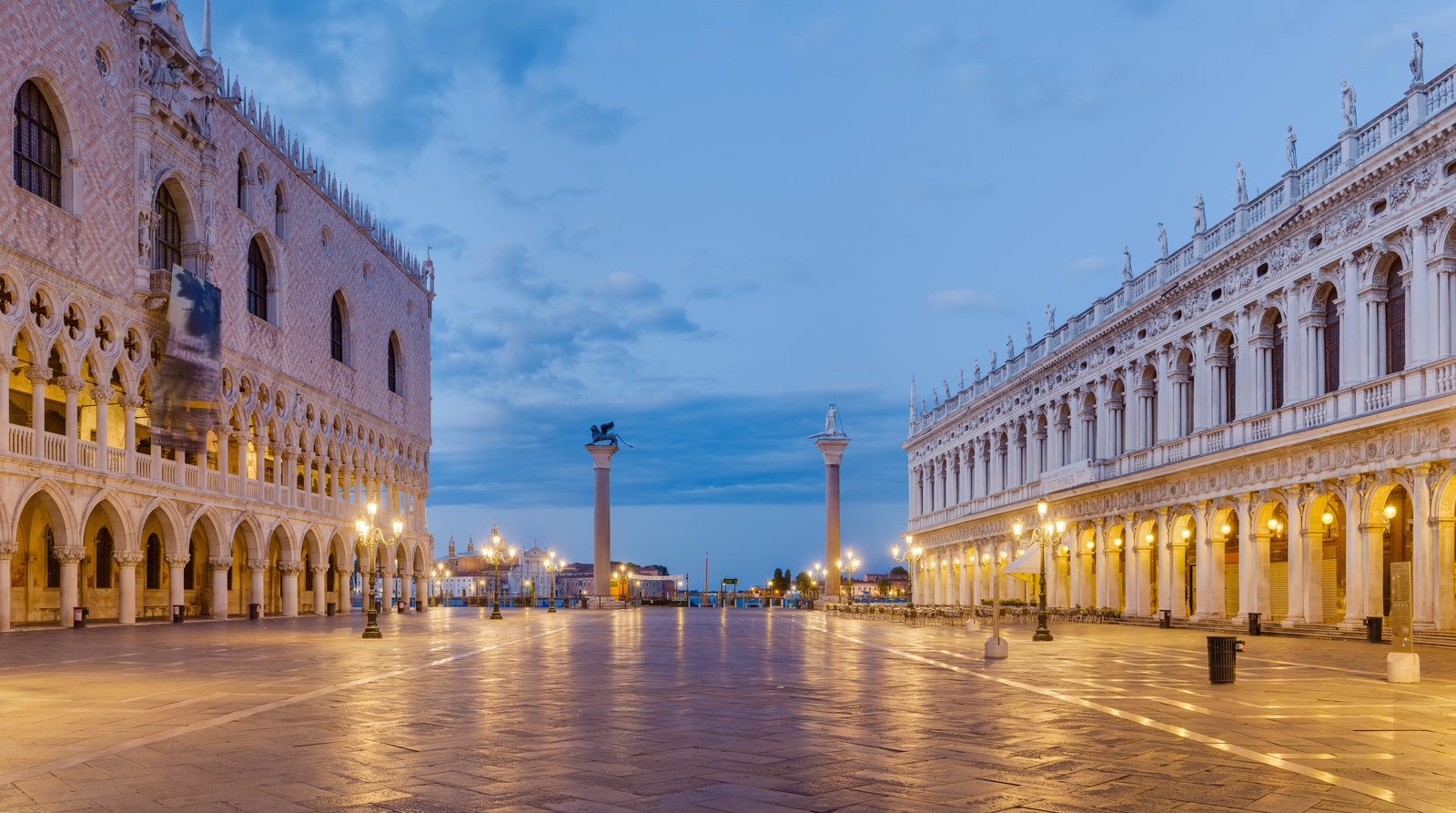
In brief
The Venetian way of living is shaped less by taste than by constraint: no cars, little flat ground, a tide that rearranges the ground floor twice a day. Out of those limits came a domestic style built on durable materials, walkable proximity and inherited objects — terrazzo floors, Murano glass, linen passed through families — rather than on decoration chosen for its own sake.
At a glance
- Where it's visible
- Ground-floor androni, campo life, home interiors across the sestieri
- Not to confuse with
- Carnival costume aesthetics or hotel-brochure "Venetian style"
- Core materials
- Terrazzo, Murano glass, linen, Istrian stone, weathered plaster
- Best observed
- Early morning markets, late afternoon campo hours, low season
- Who shaped it
- Centuries of merchant households, artisans and religious institutions
- Last checked
- July 2026
A style built from constraint, not decoration
Ask a Venetian what "Venetian style" means and the answer rarely involves velvet, gilt or masks. It involves logistics. Everything that enters a Venetian home — furniture, water, food, a new sofa, a coffin — arrives by boat and then by hand, carried across bridges with no ramps, through doorways sized for a much narrower nineteenth century. That single fact, more than any aesthetic movement, explains why Venetian domestic life prizes durability and proportion over accumulation. You do not fill a Venetian apartment the way you might fill a house with a driveway and a garage. You choose fewer things, and you choose them to last.
The lagoon adds a second constraint: water that rises. Ground-floor rooms, the androni, have for centuries been built as semi-disposable space — used for storage, workshops or boat access, tiled in stone or simple terrazzo that can flood without ruin, while the real domestic life of a household happens one flight up, on the piano nobile. This vertical logic, older than any interior decorator's instinct, still organizes how Venetian families use their homes today.
The rhythm of the campo and the calle
Living style in Venice is inseparable from the geography that produces it. A campo — the open square around which a parish once organized itself — still functions as an extended living room for the buildings facing it: children play there because there is nowhere else flat and car-free to play; older residents sit out with a coffee at the hour the light turns gold along the surrounding facades; a well-head at the centre, capped and disused since municipal water arrived in the nineteenth century, remains a meeting point out of habit rather than necessity.
This produces a domestic style that leans outward. Windowsills matter more than in most Italian cities, because a windowsill is often the only private outdoor space a household has — hence the small pots of basil, geranium and bay that line so many Venetian facades, functional as much as decorative, supplying a kitchen a few steps from where the herbs grow. Balconies, where they exist at all, are frequently shared or minimal: a single stone ledge (liagò in older Venetian usage) rather than a full terrace.
Objects built to outlast their owners
Because moving house in Venice is genuinely difficult — furniture is carried through the city by hand cart and boat, not by van — Venetian households have historically favored objects meant to be inherited rather than replaced. A terrazzo floor, laid by specialist terrazzieri and polished over decades, outlives the family that commissioned it. A Murano glass chandelier, cleaned bulb by bulb once or twice a year, is treated as fixed architecture rather than furniture. Linen, monogrammed and stored in cedar-lined chests, moves from one generation's trousseau to the next with only minor updating.
This is not nostalgia for its own sake; it is a practical response to a city where craftsmanship has historically been abundant and mobility has not. The Fondazione Musei Civici di Venezia, which oversees Ca' Rezzonico, the city's museum of eighteenth-century Venetian life, documents this domestic continuity closely: many of the furnishing types displayed there — terrazzo, glass, carved walnut, damask — remain in ordinary use in Venetian apartments today, not as museum pieces but as the actual furniture people sit on.
Ritual as a private, largely unphotographed thing
Much of what outsiders read as "Venetian style" is in fact ritual, and ritual resists photography. The way a household opens its shutters each morning to let air move through rooms that have no cross-ventilation otherwise; the specific hour, usually between six and eight in the evening, at which a spritz or a glass of wine is poured at a nearby bacaro before dinner rather than at home; the seasonal switch of bedlinen and curtains that still happens in many households around the feast of the Redentore in July and again in autumn — these are not curated experiences. They are simply how time is organized in a city where the tide, not traffic, sets the practical rhythm of the day.
Visitors who want to understand this way of living rather than merely photograph it tend to do better by slowing down: buying produce at the Rialto market rather than a supermarket, taking a passing interest in a shop's opening hours rather than treating the city as permanently open, and accepting that a great deal of Venetian domestic beauty is not designed to be seen by strangers at all.
What Venetian living style gets wrong when exported
The version of "Venetian style" sold internationally — heavy red brocade, gondola motifs, mask-shaped everything — has almost nothing to do with how Venetians actually furnish their homes. It borrows from stage and costume design, particularly eighteenth-century theatrical Venice, rather than from the domestic interiors most residents inhabit, which tend toward pale plaster, worn stone, unlacquered wood and glass used sparingly rather than as a whole chandelier's worth of color in every room. The chapters that follow in this series look at the real materials — terrazzo, glass, linen, garden greenery in a city short on soil — one at a time.
What makes Venetian living style different from "Italian style" generally?
Where much of Italian domestic style responds to sun, courtyards and land, Venetian style responds to water, verticality and constrained delivery. Materials are chosen for humidity resistance and longevity rather than seasonal refresh; ground floors are treated as expendable; and communal outdoor ritual, centred on the campo rather than a private garden, substitutes for the terraces and gardens more common elsewhere in Italy.
Sources
- Fondazione Musei Civici di Venezia — Ca' Rezzonico, Museum of 18th-Century Venice
- Comune di Venezia — municipal heritage and neighbourhood documentation
- Università Iuav di Venezia — research on Venetian residential architecture
This article was independently researched and produced. No payment, complimentary service or editorial approval was provided by the places mentioned.