
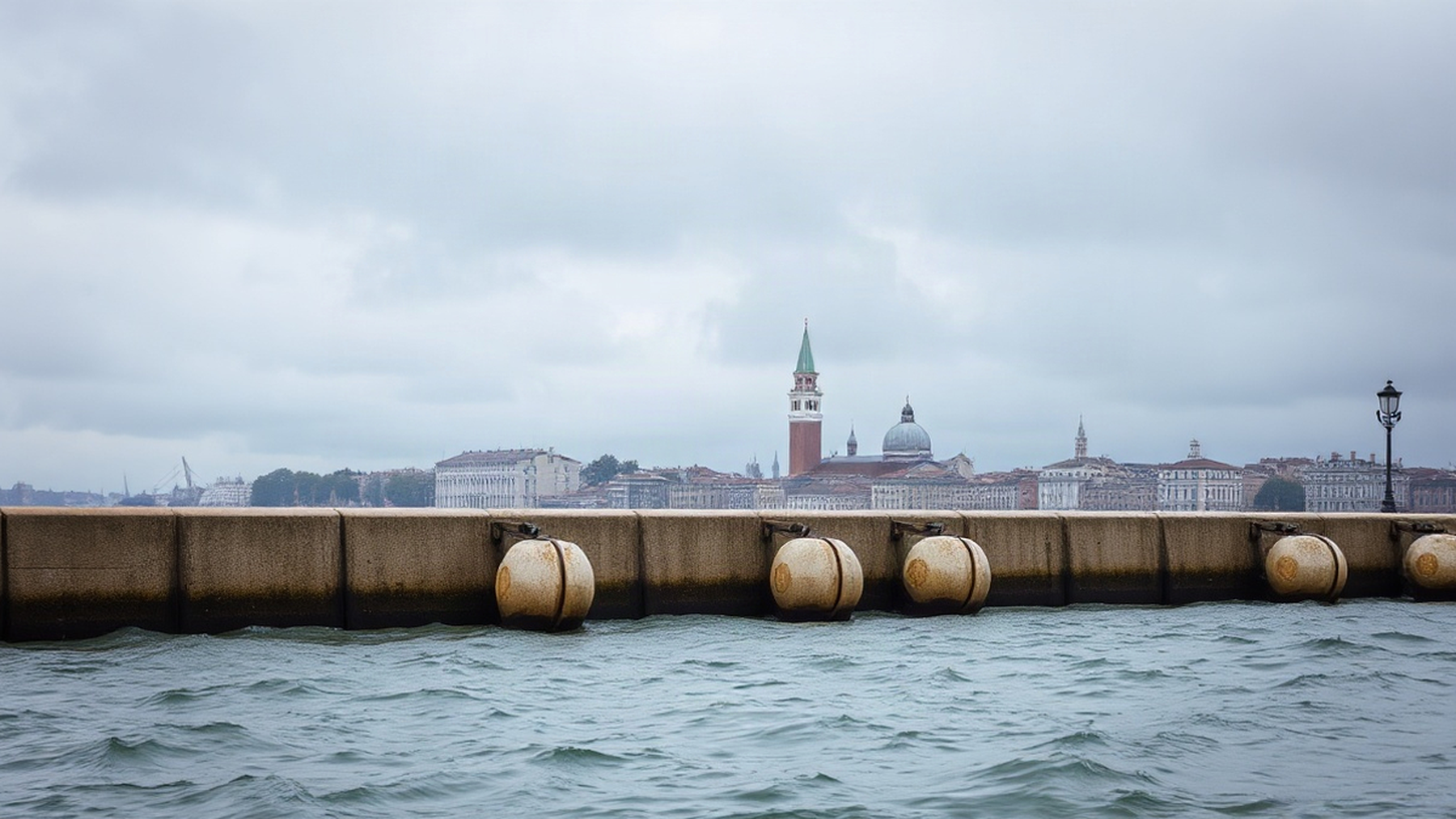
In brief
The MOSE barriers are a series of 78 mobile gates designed to protect Venice from high tides by isolating the lagoon from the sea. This winter marks their first full operational season, where their effectiveness against seasonal and unpredictable flooding will be thoroughly evaluated.
At a glance
- Where
- Venice, Italy
- Best for
- Flood Prevention
- Time Needed
- Permanent Installation
- Operational Cost
- Estimated €20 million annually
- Initiated
- Full operation expected by 2025
A City on Water
Venice, with its enchanting canals and architectural marvels, faces a unique challenge from the rising waters that are both its lifeblood and its greatest threat. The city is no stranger to flooding, with high tides historically inundating the streets and threatening its cultural heritage. In response, the MOSE project was conceived as a bold engineering solution to protect Venice from the encroaching tides.
The MOSE System
The MOSE (Modulo Sperimentale Elettromeccanico) system is an innovative flood defense mechanism involving 78 mobile barriers. These barriers are strategically placed at the three inlets of the Venetian Lagoon: Lido, Malamocco, and Chioggia. Designed to rise from the seabed during high tide events, the barriers temporarily seal off the lagoon from the Adriatic Sea, thereby preventing flooding in Venice.
Operated from the control center in Venice's historic Arsenal, the system is activated when tidal forecasts predict a rise above 130 centimeters. The flexibility of MOSE allows it to be adjusted based on specific conditions, such as wind and atmospheric pressure, ensuring optimal performance against high water events.
First Full Winter Test
This winter marks the first time the MOSE barriers are expected to operate continuously throughout the season. Since their partial activation in 2020, the barriers have already been raised numerous times to combat high tides, with positive results. The ongoing winter will be a critical period for assessing their efficacy and resilience under sustained and challenging weather conditions.
Challenges and Criticisms
The journey to operational readiness for MOSE has been fraught with difficulties. Originally proposed in the 1980s, the project has faced significant delays, cost overruns, and controversies, particularly concerning its environmental impact on the lagoon's delicate ecosystems. The total cost of the project has exceeded 6 billion euros, prompting debates about its financial viability and long-term sustainability.
Despite these challenges, MOSE has demonstrated its potential by keeping Venice dry during several high tide events. The barriers were first successfully raised in October 2020, protecting the city from a tide that would have otherwise submerged large parts of Venice. This initial success has provided a glimmer of hope for the project's future and its role in safeguarding the city.
Looking Ahead
The MOSE barriers represent a significant technological achievement in flood prevention, but their long-term success hinges on regular maintenance and effective management. As climate change continues to affect global sea levels and weather patterns, the need for robust and adaptive flood defenses has never been more critical. The coming months will provide valuable insights into MOSE's performance and its capacity to adapt to evolving environmental challenges.
As Venice enters a new era of flood prevention, the MOSE project stands as a testament to human ingenuity and the persistent effort to protect one of the world's most treasured cities. The barriers' first full winter test will be a decisive factor in determining their capability to safeguard Venice for future generations.
Environmental Considerations
One of the significant concerns surrounding the MOSE project is its potential environmental impact on the Venetian Lagoon. The lagoon's delicate ecosystem is home to various species of flora and fauna, and any disruption could have cascading effects. Critics argue that the barriers might alter water circulation patterns, impacting sediment deposition and the natural habitat. Environmental assessments are ongoing to ensure that the MOSE system operates without causing lasting harm to this fragile ecosystem. Adaptive management strategies are being considered to minimize potential ecological disruptions while maintaining effective flood protection.
Technological Innovations
The MOSE barriers are not just a testament to engineering prowess but also an embodiment of technological innovation. Each barrier, made from steel and measuring approximately 20 meters in width, can be inflated with air to rise from the seabed. This design allows the barriers to remain submerged and unobtrusive during normal conditions. The system's capability to respond dynamically to varying tidal conditions is a significant feat, involving sophisticated sensors and real-time data analysis to make swift operational decisions. The control center, equipped with advanced monitoring and communication systems, ensures that the barriers function optimally, adjusting to the nuances of each flood event.
Economic Implications
Beyond its technical and environmental aspects, the MOSE project has considerable economic implications for Venice. The city's economy heavily relies on tourism, which can be severely impacted by flooding. By safeguarding Venice's infrastructure and cultural landmarks, the MOSE barriers help ensure that tourism remains viable, protecting jobs and local businesses. However, the project's substantial cost, already exceeding 6 billion euros, has sparked debates about financial priorities and resource allocation. Balancing the need for effective flood prevention with the economic burden on taxpayers remains a critical challenge for local authorities.
Community Engagement and Education
The MOSE initiative has also underscored the importance of engaging the local community and fostering public understanding of flood prevention efforts. Educational campaigns have been launched to inform residents and visitors about the system's operation and its role in protecting the city. By raising awareness of the challenges posed by climate change and the measures being implemented to address them, these initiatives aim to build community resilience. Public tours and information sessions at the MOSE control center offer a behind-the-scenes look at the technology in action, promoting transparency and public trust in the project.
Sources
- “MOSE - Wikipedia,” Wikipedia. Source link
- “MOSE: The Venice flood barriers that might save the city,” CNN. Source link
- “MOSE, the mobile barriers system,” VENICEPROJECT®. Source link
This article was independently researched and produced. No payment, complimentary service or editorial approval was provided by the places mentioned.