
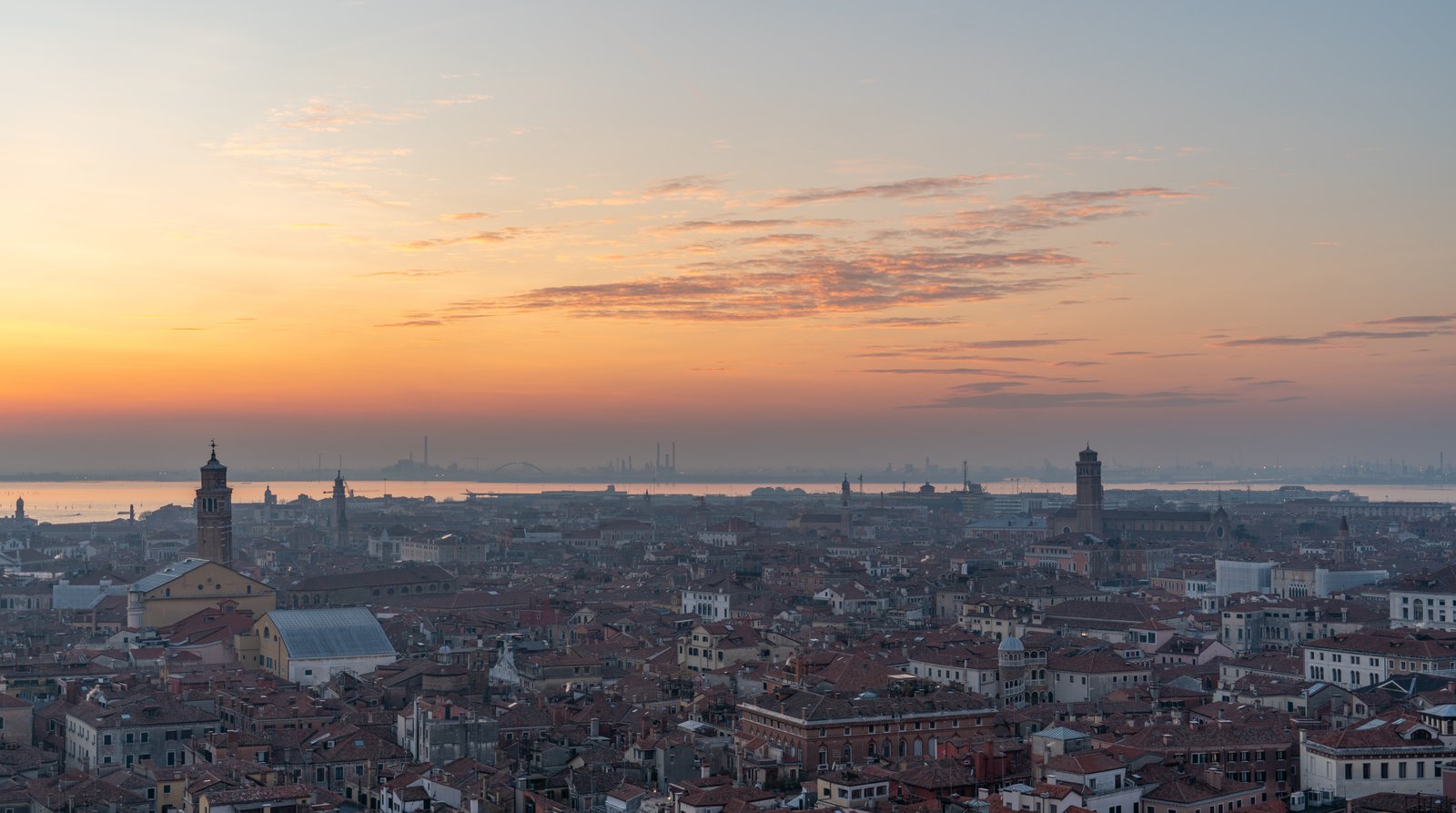
In brief
Venice's main stay areas fall into four types: the historic centre (walkable, central, expensive), the Lido (beach-adjacent, ferry-dependent, quieter evenings), Giudecca (a short vaporetto hop, calmer and increasingly residential), and outer-lagoon islands such as San Clemente (private, boat-transfer-only, most removed from crowds). The right choice depends on how much walking-distance convenience you're willing to trade for quiet.
At a glance
- Compares
- Historic centre, Lido, Giudecca, outer-lagoon islands
- Best for
- First-time planners choosing a base area before booking
- Key factor
- Vaporetto access and walking distance to Piazza San Marco
- Price pattern
- Generally highest in San Marco/Dorsoduro, lowest on the Lido and mainland-adjacent Cannaregio
- Getting around
- ACTV vaporetto network; water taxis for speed at a premium
- Last checked
- July 2026
Why location matters more in Venice than almost anywhere else
In most cities, choosing where to stay is a matter of neighbourhood character and metro proximity. In Venice, it is a matter of physics. There are no cars, no ride-hailing apps that can cut through traffic, and no shortcuts across water except by boat or on foot across bridges. A stay ten minutes' walk from Piazza San Marco and a stay reachable only by a twenty-minute vaporetto ride are, in practical terms, different trips — different evening plans, different luggage logistics, different relationships with the crowds that fill the centre by midday and thin out by early evening.
That makes the choice of area the single most consequential decision in planning a Venice stay, well before the choice of any individual property. This guide compares the four broad categories most visitors weigh against each other: staying in the historic centre itself, staying on the Lido, staying on Giudecca, and staying on one of the lagoon's more removed islands.
Comparing the main stay types
| Stay type | Access & transport | Quiet vs. central | Typical price tier | Best for |
|---|---|---|---|---|
| Historic centre (San Marco, Cannaregio, Dorsoduro, Castello, San Polo, Santa Croce) | Entirely on foot within the sestiere; vaporetto or water taxi for longer hops | Central by definition; quiet varies enormously by sestiere and by how far from the Rialto–San Marco axis | Mid to very high, especially near San Marco and the Grand Canal | First-time visitors, short stays, anyone prioritising walkability over quiet |
| Lido di Venezia | Vaporetto to central Venice, roughly 12–20 minutes depending on the line; bicycles and a few buses on the island itself | Quiet residential evenings; a beach-town rhythm distinct from the city | Mid, with a summer premium tied to the beach season and the Venice Film Festival | Longer stays, families wanting outdoor space, travellers combining Venice with beach time |
| Giudecca | Vaporetto Line 2 or 4.1 to Zattere/San Marco, typically 5–10 minutes | Markedly quieter than the centre despite being visually close to it; a working, residential island | Mid, occasionally high at converted former-industrial addresses with lagoon views | Repeat visitors, anyone wanting proximity without the density of San Marco |
| Outer-lagoon islands (e.g. San Clemente) | Private boat transfer or limited scheduled service only — no walking access to the centre | Most removed from crowds and street noise of any lagoon stay type | High, reflecting the cost of private transfers and isolated infrastructure | Travellers prioritising seclusion and lagoon scenery over walkable spontaneity |
The historic centre: maximum convenience, maximum density
Staying inside the six sestieri means Venice is genuinely on your doorstep — a late dinner, an early museum visit, or a spontaneous wander after the day-trip crowds recede are all a short walk away. But the sestieri differ hugely among themselves. San Marco is the most central and the most expensive, and it empties out fastest each evening as day visitors head for the station and car parks. Cannaregio and Dorsoduro sit further from the tourist axis and retain more resident life — grocers, launderettes, neighbourhood bars — which makes for a calmer stay without sacrificing much walking time to the main sights. Castello and Santa Croce vary block by block; proximity to a vaporetto stop matters as much as sestiere name.
The Lido: a different pace entirely
The Lido is Venice's barrier island, a narrow strip separating the lagoon from the open Adriatic, and staying there means trading canal views for tree-lined avenues, a beach, and the ability to hire a bicycle — something impossible in central Venice's narrow calli. The ferry crossing is short but real: plan around vaporetto timetables rather than assuming you can pop back to the centre on a whim late at night, when frequency drops. The Lido suits travellers who want several days in the area and value a genuine change of register between "beach island" and "museum city," including families who need somewhere for children to run.
Giudecca: close on the map, calmer on the ground
Giudecca is the compromise many repeat visitors eventually land on. It sits directly across the Giudecca Canal from Dorsoduro and the Zattere promenade — close enough that the crossing takes minutes, not tens of minutes — yet it functions as a genuinely residential island with converted warehouses, gardens, and none of the density of San Marco. The trade-off is that everything requires a short vaporetto hop, including a late return if service has thinned for the night, so it rewards travellers who plan the last crossing rather than assume one will always be along shortly.
Outer-lagoon islands: seclusion as the point
A smaller category of stays sits further out in the lagoon on islands with no walking or regular public-ferry connection to central Venice — San Clemente among them. These properties depend on private launch transfers, which is precisely their appeal: complete separation from the city's daytime crowds, lagoon views in every direction, and an environment that feels closer to a private nature reserve than a city stay. This suits travellers for whom seclusion outweighs spontaneity — arriving and leaving requires more coordination than stepping out of a hotel door onto a calle.
How to choose
A useful way to decide is to ask what the trip is actually for. A one- or two-night cultural visit favours the historic centre, ideally in Cannaregio or Dorsoduro for a calmer version of the same convenience. A week combining Venice with rest and outdoor time favours the Lido. A repeat visit, or a stay built around evenings spent away from the busiest streets, favours Giudecca. And a stay where the lagoon itself — the water, the light, the distance from anything urban — is the point, rather than a backdrop, favours an outer-lagoon island.
Sources
- Comune di Venezia — municipal tourism and mobility information
- ACTV / Venezia Unica — vaporetto routes, timetables and multi-day passes
- Venezia Unica — Lido and outer-lagoon access information
This article was independently researched and produced. No payment, complimentary service or editorial approval was provided by the places mentioned.