
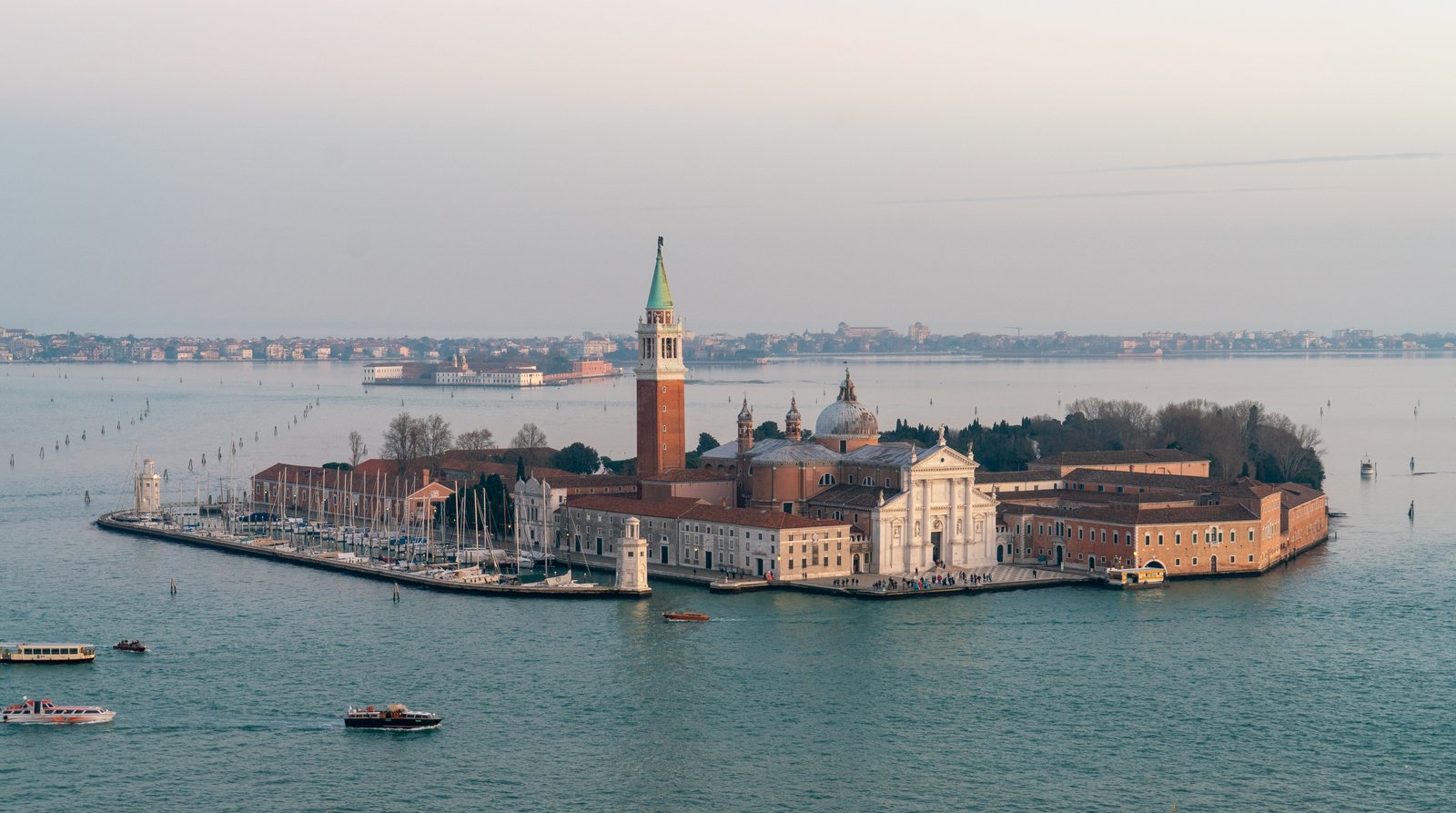
In brief
Island retreat stays sit on lagoon islands beyond the historic centre — reached by private launch or limited scheduled ferry rather than on foot — trading the spontaneity of a city-centre base for quiet, open lagoon views and gardens. They suit travellers with several nights to spend and a clear preference for seclusion over walkable convenience, and reward planning around boat schedules rather than assuming on-demand access.
At a glance
- Location
- Outer and mid-lagoon islands beyond the six sestieri
- Best for
- Multi-night stays prioritising quiet and lagoon scenery
- Time needed
- At least two nights to offset transfer time
- Access
- Private launch or limited ACTV service; check last-crossing times
- Price tier
- Mid to high, reflecting transfer logistics and lower guest density
- Last checked
- July 2026
What "beyond central Venice" actually means
The Venetian Lagoon holds roughly fifty islands of varying size, and only a fraction of them form the connected, bridge-linked archipelago that most visitors think of as "Venice." Beyond that core — San Marco, Cannaregio, Castello, Dorsoduro, San Polo, Santa Croce — the lagoon opens into a scattering of separate islands, some inhabited and public, some private, some largely wild. A small number of these host places to stay: gardens, low buildings, water on every horizon, and a degree of separation from the city that no address within the sestieri can offer, simply because there is no bridge or contiguous street to walk.
That separation is the entire premise of an island retreat stay. It is not a discount version of staying in Venice; it is a different kind of trip that happens to be a short boat ride from one of the world's most visited cities.
What you gain
The most obvious gain is quiet — not the relative quiet of a back canal in Cannaregio, but the near-total absence of foot traffic, motor noise beyond the odd passing boat, and the crowd rhythms that define central Venice by mid-morning. Many of these islands carry garden grounds, sometimes with mature trees and planted walks that simply don't exist in the density of the historic centre, where space has been built on for over a thousand years. There is also the view itself: staying on an island in open lagoon water means Venice becomes a skyline on the horizon rather than the immediate environment, which for many travellers is a genuinely different and calmer way to experience the city — seen, rather than waded through.
What you give up
The trade-off is real and worth naming plainly. There is no stepping out of the door for a spontaneous evening wander through unfamiliar calli. Every trip into central Venice, and every return, depends on a boat — either a scheduled service with fixed departure times, or a private launch arranged with the property. Late nights require checking the last crossing in advance; a missed connection is a genuine inconvenience, not a minor delay. Grocery runs, pharmacy visits, and the small errands that are trivial in a central sestiere all take more planning. This category of stay rewards travellers who have already decided that seclusion outweighs convenience, rather than those still weighing the two.
The islands that host this kind of stay
Giudecca sits at the accessible end of this spectrum — technically an island retreat, but only minutes by vaporetto from Zattere, which is why it's often treated as its own category (see our companion guide). Further out, San Clemente offers a more complete version of the island-retreat experience: a wooded islet in the southern lagoon with a documented monastic history reaching back centuries, reachable only by boat, with grounds substantial enough to walk without retracing your steps. Other lagoon islands host smaller-scale stays or are not developed for overnight visitors at all, which is worth checking directly before assuming availability — island infrastructure changes more slowly, and less predictably, than the city centre's.
Planning around the tide of the season
Island retreats are most rewarding in the shoulder seasons — late spring and early autumn — when gardens are at their best and lagoon light is at its clearest, without the height-of-summer humidity that can make open water crossings less pleasant. Winter brings its own appeal: mist over open water and near-total quiet, though acqua alta events and reduced ferry frequency mean transfers need more careful checking. Whatever the season, the operating principle is the same: build the trip around the boat schedule, not the other way around.
Is an island retreat the right choice?
If the appeal of Venice, for you, is the density and detail of its streets — market stalls, church facades, a different campo every few minutes — a central stay will serve you better. If the appeal is the lagoon itself, its light and its water and the sense of the city as something you visit rather than inhabit for a few days, an island retreat delivers something a city-centre address structurally cannot.
Sources
- Comune di Venezia — municipal tourism and mobility information
- ACTV / Venezia Unica — vaporetto routes and outer-lagoon service frequency
- UNESCO World Heritage Centre — Venice and its Lagoon documentation
This article was independently researched and produced. No payment, complimentary service or editorial approval was provided by the places mentioned.