
In brief
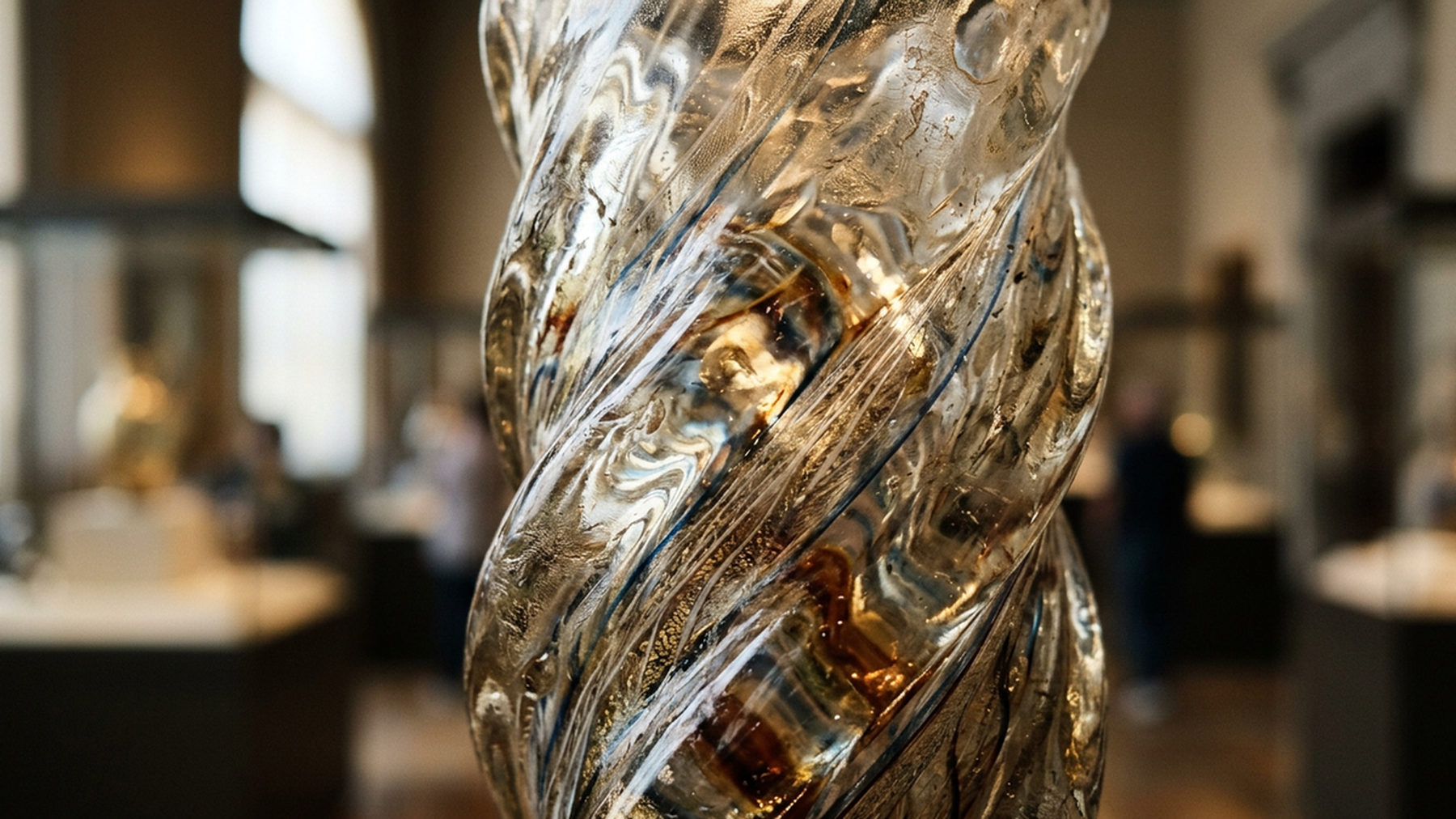
The 'Glass and Light' exhibition at the Murano Glass Museum focuses on how Muranese glass interacts with and shapes light, highlighting its role in the craft's evolution.
At a glance
- Where
- Murano Glass Museum, Murano, Venice
- Best for
- Understanding Muranese glass and light interaction
- Access
- Vaporetto to Murano Colonna or Faro
- Last checked
- November 2026
The Interplay of Glass and Light on Murano
The island of Murano, long synonymous with Venetian glassmaking, continues to be a focal point for understanding the craft's historical and contemporary significance. The Murano Glass Museum, a key institution on the island, recently opened its 'Glass and Light' exhibition, offering visitors a focused exploration of how Muranese glass interacts with and shapes light. This curatorial approach moves beyond a simple display of objects, inviting a deeper consideration of the material's inherent properties and its artistic applications.
For centuries, Muranese glass masters have not only perfected techniques for shaping molten silica but also for manipulating its transparency, opacity, and reflective qualities. The exhibition aims to illuminate this often-overlooked aspect of the craft, demonstrating how light is not merely an external element but an integral component of the glass itself. From the subtle refractions within a delicate goblet to the vibrant luminescence of a sculpted form, each piece tells a story of light captured, diffused, or intensified.
A Curatorial Lens on Muranese Craft
While the Murano Glass Museum has hosted various exhibitions, including 'Babel' by Marco Toso Borella (June 12, 2026 – March 30, 2027) and a celebration of Fratelli Toso's 170th anniversary (1854-2024), the 'Glass and Light' exhibition offers a thematic focus on a fundamental aspect of glass art. It stands apart by specifically examining the interplay between glass and light, rather than focusing solely on historical periods, individual artists, or specific workshops. This thematic approach encourages visitors to observe the pieces with a new sensibility, appreciating the nuances of color, texture, and form as they respond to illumination.
The exhibition highlights how different glassmaking techniques—such as filigree, murrine, and latticino—are not just about intricate patterns but also about how these patterns interact with light to create depth and movement. A piece of glass, when viewed under varying light conditions, can reveal entirely different facets of its design. This exploration is crucial for understanding the enduring appeal of Muranese glass, which has consistently adapted to changing aesthetic sensibilities while maintaining its core principles of craftsmanship and material mastery.
Historical Context and Evolution of Muranese Glass
Murano's glassmaking tradition dates back to the 13th century when glass furnaces were moved from Venice to the island due to fire risks. This relocation fostered a concentrated environment for innovation, leading to the development of numerous unique techniques. Early Muranese glass focused on practical items like tableware and windows, but soon evolved to include more decorative and artistic pieces. The mastery of color, transparency, and intricate detailing became hallmarks of Muranese production.
The 20th century saw a resurgence of artistic glassmaking on Murano, with designers and master craftsmen collaborating to push the boundaries of the material. This period, roughly from 1920–1970, is particularly noted for its varied productions and iconic pieces, as highlighted by exhibitions in other institutions like the Musée du Verre François Décorchemont. The 'Glass and Light' exhibition implicitly draws upon this rich history, showcasing how the manipulation of light has been an underlying principle throughout these evolutionary phases. Whether through the delicate iridescence of opalescent glass or the dramatic contrasts achieved with aventurine, Muranese artisans have consistently exploited light's properties to enhance their creations.
Implications for Contemporary Glass Art
The 'Glass and Light' exhibition also implicitly raises questions about the future of glass art. By re-emphasizing the fundamental relationship between glass and light, it provides a framework for contemporary artisans to innovate. Understanding how historical pieces achieved their luminous effects can inspire new approaches to design and production, pushing the boundaries of what is possible with this versatile material. The exhibition serves as a reminder that even in an age of advanced technology, the elemental qualities of glass—its transparency, its ability to hold and transmit light—remain central to its artistic potential.
The Murano Glass Museum itself is part of the Fondazione Musei Civici di Venezia (MUVE), which is committed to cultural programming, including exhibitions and educational initiatives. While some visitors have noted that the museum's display may feel limited for the price, its role in preserving and interpreting Muranese glass history is undeniable. The 'Glass and Light' exhibition contributes to this mission by offering a specific thematic lens through which to appreciate the collection.
Beyond the Museum: Experiencing Murano Glass
Visitors to Murano, after exploring the museum, might consider a visit to one of the island’s working glass factories, where live demonstrations offer a glimpse into the heat and precision involved in shaping glass. Such experiences, often described as educational and inspiring, provide a tangible connection to the craft. Factory tours, such as the Murano Glass Experience, are generally well-regarded for their clear explanations and impressive craftsmanship, often including a demonstration and an opportunity to view showrooms filled with finished pieces.
These factory visits complement the museum experience by showcasing the dynamic process of glassmaking. While the museum's exhibition offers a contemplative and analytical view, encouraging a deeper appreciation for the artistry involved in harnessing light within glass, the live demonstrations highlight the skill and labor involved. This dual approach—seeing the process and then studying the finished work through a specific thematic lens—enriches the understanding of Muranese glassmaking as both a technical feat and an artistic expression. The museum also offers courses through MUVE Academy in collaboration with the Scuola del Vetro Abate Zanetti, providing hands-on learning under the guidance of a master glassmaker.
Frequently asked questions
What is “Murano Glass Museum Explores Light in New Exhibition” about?
The 'Glass and Light' exhibition at the Murano Glass Museum focuses on how Muranese glass interacts with and shapes light, highlighting its role in the craft's evolution.
What is the key fact about “Murano Glass Museum Explores Light in New Exhibition”?
Murano Glass Museum, Murano, Venice
What should readers know about “The Interplay of Glass and Light on Murano”?
The island of Murano, long synonymous with Venetian glassmaking, continues to be a focal point for understanding the craft's historical and contemporary significance. The Murano Glass Museum, a key institution on the island, recently opened its 'Glass and Light' exhibition, offering visitors a focused exploration of how Muranese glass interacts with and shapes light. This curatorial approach moves beyond a simple display of objects, inviting a deeper consideration of the material's inherent properties and its artistic applications.
Sources
- “Al museo del vetro di Murano la mostra di Marco Toso Borella,” Ansa.it. Source link
- “Murano - all exhibitions and events in the city,” Finestre sull'Arte. Source link
- “Murano exhibition | Musée du Verre François Décorchemont,” Musée du Verre François Décorchemont. Source link
This article was independently researched and produced. No payment, complimentary service or editorial approval was provided by the places mentioned.