
In brief
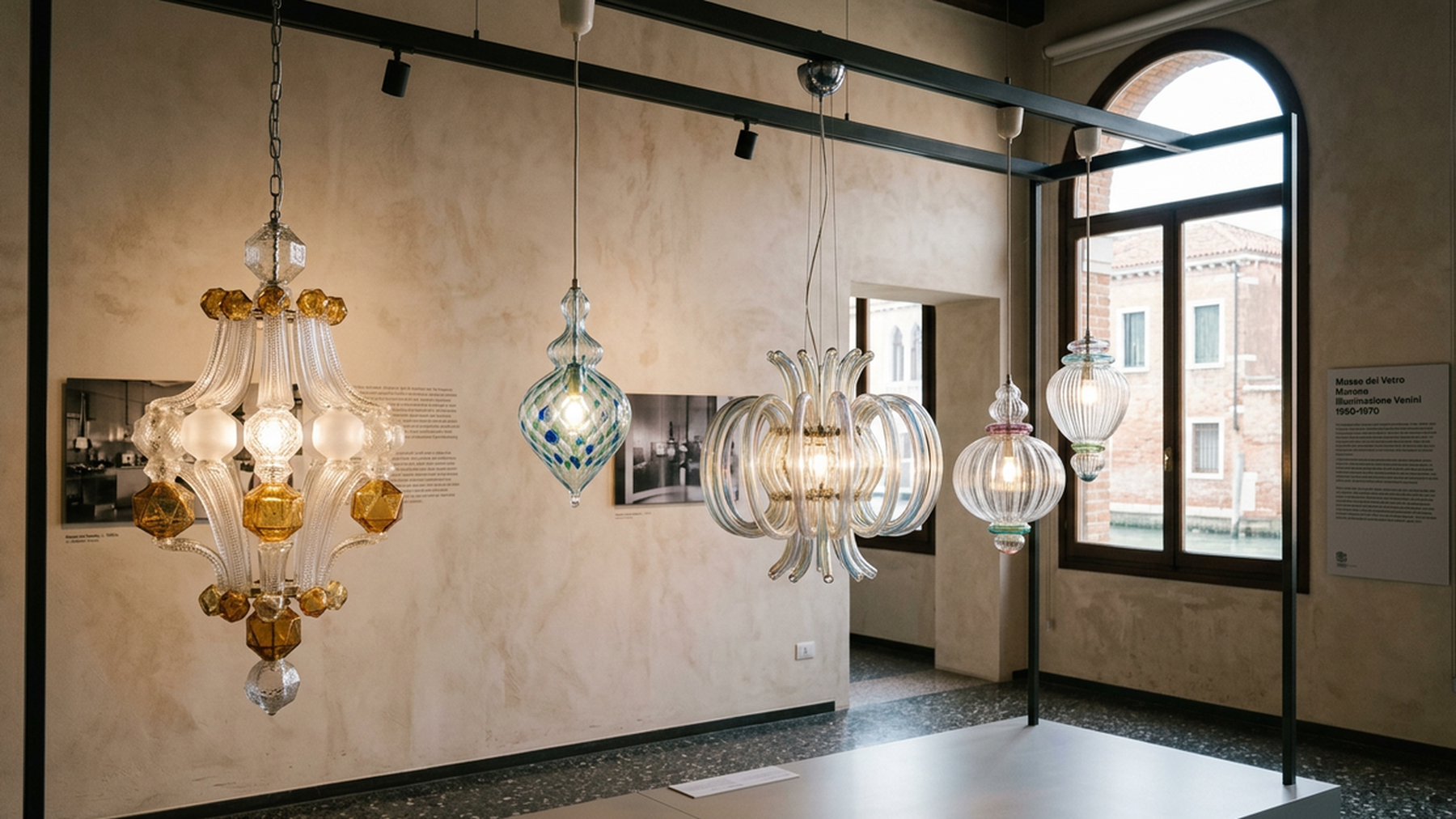
The 'Venini: Light 1921-1985' exhibition at the Murano Glass Museum explores Paolo Venini's profound influence on 20th-century glass lighting, showcasing 81 objects and the furnace's innovation.
At a glance
- Where
- Murano Glass Museum, Fondamenta Giustinian, Murano
- Best for
- Understanding Murano's role in modern design, glass art enthusiasts
- Time needed
- 1-2 hours for the exhibition, 2-3 hours for the full museum
- Access
- Vaporetto stop 'Murano Museo' or 'Murano Colonna'
A New Light on Murano's Modernism
The Murano Glass Museum, housed in the former Palazzo dei Vescovi di Torcello, typically chronicles the island's celebrated history through its most traditional and diverse forms. However, a significant exhibition, 'Venini: Light 1921-1985,' presents a focused narrative, illuminating Murano's pivotal role in 20th-century modern design, specifically through the lens of lighting. This exhibition, dedicated to the Venini glassworks, delves into its activity in lighting production, a relevant area of Murano's artistic and industrial output.
Paolo Venini, an entrepreneur and visionary, guided his furnace through decades of innovation. He fostered collaborations with numerous artists and designers who redefined glass art and its application. The exhibition, curated by Marino Barovier, features a selection of 81 objects. These pieces range from domestic fixtures to those designed for larger commercial spaces such as offices, theatres, and hotels. They illustrate how the Venini furnace, through its technical office or collaborations with various designers, consistently addressed the theme of light, pushing the boundaries of what Murano glass could achieve.
The Legacy of Paolo Venini
The Murano Glass Museum's permanent collection already covers the revival of Murano's glass from the second half of the 19th century to the present. Its galleries showcase a spectrum of styles, from classic and Art Nouveau pieces to modern and contemporary works. Notable glass furnaces featured include Cappellin & Venini, the Toso brothers, Artisti Barovier, and Seguso. Designs by acclaimed artists and designers such as Vittorio Zecchin, Carlo Scarpa, Tapio Wirkkala, Yoichi Ohira, and Dale Chihuly are also part of the museum's broader narrative. The 'Venini: Light 1921-1985' exhibition enriches this by providing an in-depth study of one of Murano's most influential glassworks.
Venini's impact extended beyond individual pieces. In 2011, the company celebrated its 90th anniversary with a unique traveling exhibition that toured internationally. For this project, the Museo Venini partnered with institutions such as the Murano Glass Museum, Palazzo Grassi and Punta della Dogana in Venice, the Shanghai Museum of Glass, and the Bagatti Valsecchi Museum in Milan. This commitment to showcasing its heritage is evident in the current exhibition, which draws from a vast archive. This archive comprises approximately 5,000 works, including prototypes that were never produced and rare trial proofs. These artifacts, alongside original sketches, have been lent to museums worldwide for exhibitions dedicated to the history of the company and the art of Murano glass.
Mid-Century Innovation and Beyond
The period covered by 'Venini: Light 1921-1985' is particularly significant for understanding Murano's embrace of modernism. Paolo Venini's leadership saw a sophisticated reinterpretation of traditional Murano techniques, such as zanfirico, applied to innovative designs from 1950 to 1954. While the exhibition highlights Paolo Venini's central role, it also acknowledges the contributions of artists and designers who collaborated with the furnace. For instance, sporadic collaborations occurred from the 1930s to the 1950s with figures like Tyra Lundgren, Gio Ponti, Piero Fornasetti, Eugene Berman, Ken Scott, Charles Lin Tissot, Riccardo Licata, Massimo Vignelli, Tobia Scarpa, and Grete Prytz. The current exhibition focuses specifically on the lighting aspect across the broader timeframe of 1921-1985, illustrating how the company consistently tackled the theme of light.
For those interested in the broader context of Murano glass at the Venice Biennale, a past exhibition curated by Marino Barovier, '1912-1930 Murano Glass and the Venice Biennale,' examined the presence of Murano glass at the Venetian event during those specific years. That exhibition showcased 135 rare works, many sourced from important museum institutions and private collections. While 'Venini: Light 1921-1985' is a more focused, single-furnace study, it contributes to the larger understanding of how Murano glass evolved and adapted to changing aesthetic sensibilities throughout the 20th century. The exhibition helps to bring glass back to the center of the international art scene, finding a home for 20th-century and contemporary glass art from Murano and other parts of the world.
Visiting the Murano Glass Museum offers an opportunity to explore this rich history. After disembarking at the 'Murano Museo' vaporetto stop, the museum is a short walk away. The experience allows for contemplation of how light, through the artistry of Murano glass, became a medium for modern expression, moving beyond mere illumination to become an integral part of design itself. The exhibition serves as a reminder that Murano's legacy is not only in its ancient traditions but also in its continuous capacity for innovation, as exemplified by the Venini glassworks' significant contributions to lighting design over more than six decades.
Exhibition Highlights: A Curated Collection
The 'Venini: Light 1921-1985' exhibition at the Murano Glass Museum offers a precise and illuminating look into Venini's contributions to lighting design. Curated by Marino Barovier, the exhibition is a testament to the glassworks' consistent engagement with the theme of light, showcasing a carefully selected collection of eighty-one objects. These pieces demonstrate the versatility and innovation of Venini, ranging from elegant domestic fixtures designed for private homes to large-scale installations created for commercial spaces such as offices, theaters, and hotels. This breadth illustrates how the Venini furnace, whether through its dedicated technical office or collaborations with a diverse array of designers, continually pushed the boundaries of glass art in the realm of illumination. The chosen works highlight how Murano glass, under Venini's guidance, transcended its traditional decorative roles to become an integral component of modern architectural and interior design.
The exhibition provides an in-depth study of Venini's activity in lighting, a significant and often pioneering area of Murano's artistic and industrial output. Visitors can observe the evolution of design and technique over more than six decades, witnessing the transformation of glass from a simple material into sophisticated light-emitting sculptures. The selection emphasizes both the aesthetic beauty and the functional ingenuity inherent in Venini's lighting creations, reflecting a period of intense experimentation and artistic collaboration that defined much of 20th-century Murano glass production.
Venini's Collaborative Spirit and Innovation
Paolo Venini's vision extended beyond his own designs, fostering a rich environment of collaboration that brought numerous artists and designers to the Murano furnace. While the exhibition largely centers on Venini's remarkable personality and leadership, it also acknowledges the significant contributions of those who worked with the company. From the 1930s to the 1950s, Venini engaged in sporadic but impactful collaborations with figures such as Tyra Lundgren, Gio Ponti, Piero Fornasetti, Eugene Berman, Ken Scott, Charles Lin Tissot, Riccardo Licata, Massimo Vignelli, Tobia Scarpa, and Grete Prytz. These partnerships infused the glassworks with diverse perspectives and artistic sensibilities, leading to a wide array of innovative lighting solutions.
The period between 1950 and 1954, in particular, saw a sophisticated reinterpretation of traditional Murano techniques, such as zanfirico, applied to contemporary designs. This fusion of historical craftsmanship with modern aesthetics is a hallmark of Venini's approach, demonstrating a continuous dialogue between tradition and innovation. The exhibition underscores how this collaborative spirit and commitment to pushing technical and artistic boundaries allowed Venini to remain at the forefront of glass lighting design for decades, influencing not only Murano but also the broader international art and design scene.
The Murano Glass Museum's Broader Narrative
The 'Venini: Light 1921-1985' exhibition, while focused, seamlessly integrates into the Murano Glass Museum's broader narrative of Murano's glass history. The museum's permanent collection already provides a comprehensive overview of the "revival" of Murano glass from the second half of the 19th century to the present day. Its galleries showcase a rich spectrum of styles, from classic and Art Nouveau pieces to modern and contemporary works. Prominent glass furnaces featured in the museum's ongoing display include Cappellin & Venini, the Toso brothers, Artisti Barovier, and Seguso. The work of acclaimed artists and designers such as Vittorio Zecchin, Carlo Scarpa, Tapio Wirkkala, Yoichi Ohira, and Dale Chihuly further enriches this extensive collection.
By dedicating an in-depth study to Venini's lighting production, the current exhibition adds a vital layer of understanding to this comprehensive history. It highlights how a single, influential glassworks contributed significantly to the evolution of Murano glass, particularly in the realm of modern design and functional art. The museum's role in housing such exhibitions, often free of charge, helps to reposition glass art from Murano and other parts of the world at the center of the international art scene, ensuring that 20th-century and contemporary glass receive the attention and study they deserve.
Frequently asked questions
What is “Venini's Legacy: Illuminating Mid-Century Murano at the Glass Museum” about?
The 'Venini: Light 1921-1985' exhibition at the Murano Glass Museum explores Paolo Venini's profound influence on 20th-century glass lighting, showcasing 81 objects and the furnace's innovation.
What is the key fact about “Venini's Legacy: Illuminating Mid-Century Murano at the Glass Museum”?
Murano Glass Museum, Fondamenta Giustinian, Murano
What should readers know about “A New Light on Murano's Modernism”?
The Murano Glass Museum, housed in the former Palazzo dei Vescovi di Torcello, typically chronicles the island's celebrated history through its most traditional and diverse forms. However, a significant exhibition, 'Venini: Light 1921-1985,' presents a focused narrative, illuminating Murano's pivotal role in 20th-century modern design, specifically through the lens of lighting. This exhibition, dedicated to the Venini glassworks, delves into its activity in lighting production, a relevant area of Murano's artistic and industrial output.
Sources
- “VENINI: LIGHT 1921-1985,” ITSLIQUID. Source link
- “And there was light - Venini, history of a legendary glass factory,” Venezianews.it. Source link
- “Murano Glass Museum, Venice,” Inexhibit. Source link
- “Venini | Venini Museum: Murano Glass Art Exhibition,” Venini. Source link
This article was independently researched and produced. No payment, complimentary service or editorial approval was provided by the places mentioned.