
In brief
La Biennale di Venezia's acquisition of Arsenale Nord signifies a permanent expansion, transforming a historic shipyard into a year-round cultural hub for exhibitions and research.
At a glance
- Location
- Arsenale Nord, Castello, Venice
- Best for
- Contemporary art, architectural exhibitions, historical exploration
- Access
- Via public vaporetto to Arsenale stop; specific exhibition access varies
- Historical Use
- Shipyard for Serenissima fleets, armaments storage
- Biennale Use Since
- 1980 for International Architecture Exhibition
A New Chapter for the Arsenale
La Biennale di Venezia has announced a significant expansion, acquiring a substantial part of Arsenale Nord. This move represents a deepening of the Biennale's commitment to Venice and a new chapter for one of the city's most historically charged locations. Once the formidable heart of the Serenissima's naval power, where fleets were built and maintained, the Arsenale has, since 1980, served as a key exhibition venue for the International Architecture Exhibition and, subsequently, the Art Biennale. This new acquisition promises to further intertwine the site's rich past with its vibrant contemporary cultural role.
The Arsenale, a vast complex, has long been a symbol of Venice's economic and military might. Its transformation into an exhibition site for the Biennale began decades ago, with spaces like the Corderie and Artiglierie becoming iconic backdrops for contemporary art. The current expansion into Arsenale Nord, the northern portion of the enclosure, builds on this legacy. The Biennale has historically utilized approximately 50,000 square meters of the South-East area, including 25,000 square meters of indoor space, for its activities, with exhibition spaces such as the Corderie, Artiglierie, Gaggiandre, Tese Cinquecentesche, and Tese delle Vergini. This new acquisition signals a more permanent and integrated presence, expanding beyond these established areas.
Arsenale Nord: A Permanent Cultural Hub
This expansion is not solely about creating more space for large-scale exhibitions. It also encompasses plans for a new headquarters for the Historical Archives and Research Center. Slated to open with a program of events from June 1 to 3, 2026, this development underscores a commitment to scholarship and the preservation of cultural memory. The initiative will include performances, lectures, and a concluding open day dedicated to the public, fostering broader engagement with the Biennale's extensive archives.
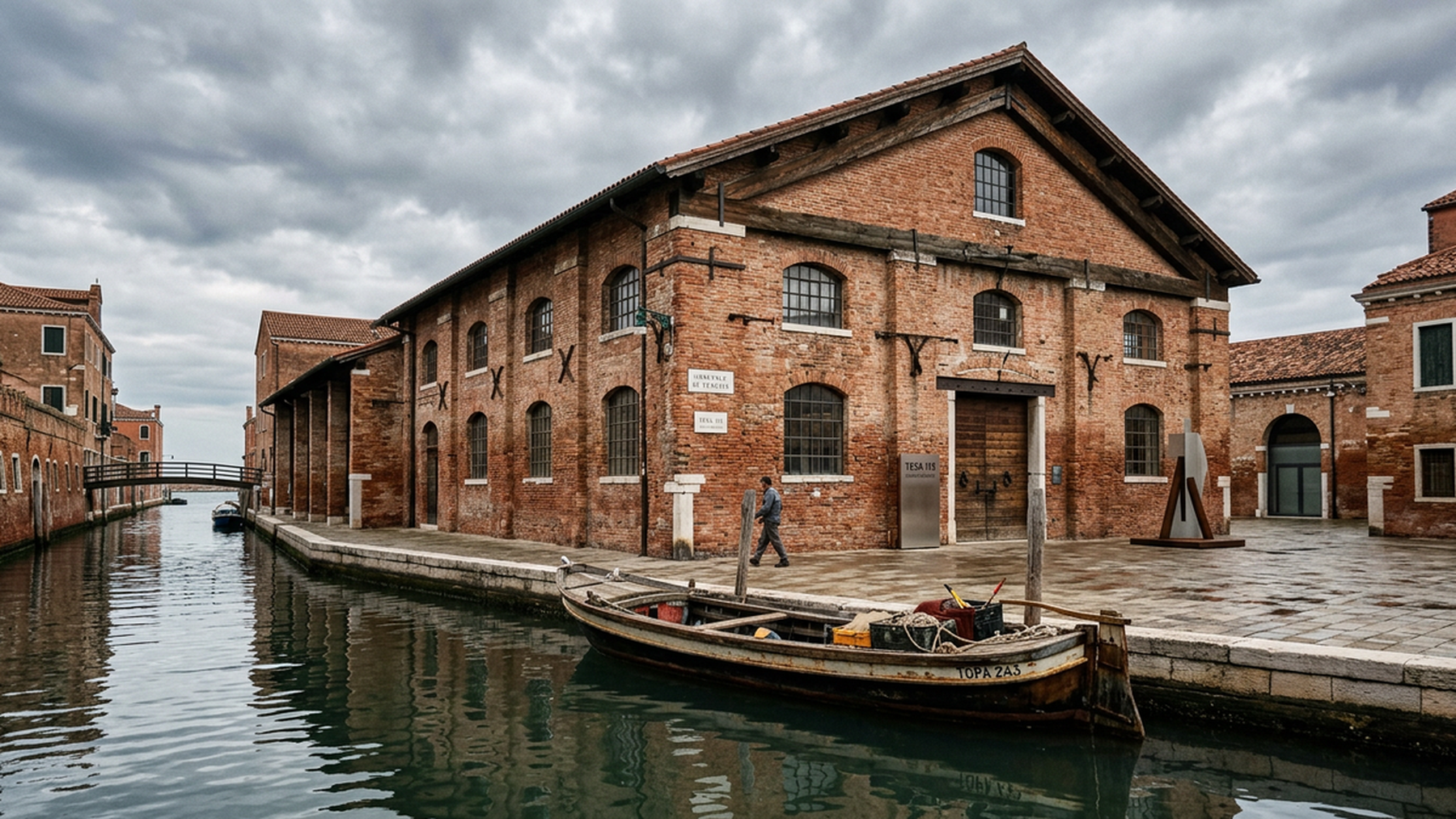
The Arsenale Nord area, with its imposing two-story buildings, including the North and South Armaments complex, holds centuries of history within its walls. These structures, dating back to around 1460, were originally used for storing armaments. The North and South Armaments complex, located in the heart of the Arsenale area currently in use by the Biennale, is made up of two imposing two-story buildings, consisting of three and four areas respectively. The total area of this complex is approximately 11,430 square meters, including lofts of 4,460 square meters. The ongoing restoration and technological adaptation of these buildings, carried out by the Venice Authority, has made them suitable for contemporary exhibitions while respecting their heritage. A recent lighting design project in Arsenale Nord received acclaim for enhancing architectural heritage while minimizing energy consumption and light pollution, further illustrating a careful balance between modernization and preservation.
The Biennale's Vision: Art, Architecture, and Research
The Biennale Arte 2024, for instance, focuses on artists who are 'foreigners, immigrants, expatriates, diasporic, émigrés, exiled, or refugees' across its Giardini and Arsenale venues, divided into two distinct sections: Nucleo Contemporaneo and Nucleo Storico. The Arsenale serves as a critical venue for this thematic exploration, featuring works such as Claire Fontaine’s suspended neon “Foreigners Everywhere (Self-Portrait)” (2004–ongoing) and Yinka Shonibare’s “Refugee Astronaut VIII” (2024), presented in the first room of the Arsenale. This expansion into Arsenale Nord will provide additional capacity for such exhibitions and related programming.
The long-term implications for Venice's cultural landscape are significant. By establishing a permanent base in Arsenale Nord, the Biennale is poised to become an even more embedded and continuous presence in the city, moving beyond its biennial cycles. This permanence could foster deeper engagement with residents and offer more consistent opportunities for educational programs. For example, free guided tours are available for teachers upon reservation to illustrate the various educational opportunities organized for schools, and a discount ticket is available for teachers accompanying their students to the exhibition, which includes admission to the Giardini and Arsenale venues.
Exploring the Historic Arsenale
For visitors, this expansion means more opportunities to explore the historic Arsenale, which often remains partially inaccessible outside of Biennale periods. While parts like the Corderie are typically open during exhibitions, the full extent of the Arsenale's grandeur is rarely seen. The integration of Arsenale Nord into the Biennale's permanent infrastructure suggests a future where more of this incredible complex is brought to life, not just for fleeting exhibitions but as a living center for art, history, and research, enriching the experience of Venice year-round. This strategic move ensures that the Arsenale, once a symbol of naval power, continues its evolution as a global center for contemporary art and culture.
The Arsenale, with its vast complex of construction sites, was where the Serenissima fleets were built, making it a symbol of the economic, political, and military power of the city. Since 1980, it has become an exhibition site for La Biennale, initially for the International Architecture Exhibition. This expansion into Arsenale Nord deepens this transformation, solidifying its role as a premier destination for contemporary art and architectural exhibitions. The areas in use by the Biennale, including the Corderie, Artiglierie, Gaggiandre, Tese Cinquecentesche, and Tese delle Vergini, represent a significant portion of the Arsenale's South-East area. The acquisition of Arsenale Nord further extends this cultural footprint, promising to enhance both the scale and the permanence of the Biennale's presence in Venice.
Frequently asked questions
What is “The Biennale's Expanding Footprint: Arsenale Nord's Cultural Future” about?
La Biennale di Venezia's acquisition of Arsenale Nord signifies a permanent expansion, transforming a historic shipyard into a year-round cultural hub for exhibitions and research.
What is the key fact about “The Biennale's Expanding Footprint: Arsenale Nord's Cultural Future”?
Arsenale Nord, Castello, Venice
What should readers know about “A New Chapter for the Arsenale”?
La Biennale di Venezia has announced a significant expansion, acquiring a substantial part of Arsenale Nord. This move represents a deepening of the Biennale's commitment to Venice and a new chapter for one of the city's most historically charged locations. Once the formidable heart of the Serenissima's naval power, where fleets were built and maintained, the Arsenale has, since 1980, served as a key exhibition venue for the International Architecture Exhibition and, subsequently, the Art Biennale. This new acquisition promises to further intertwine the site's rich past with its vibrant contemporary cultural role.
Sources
- “Biennale Arte 2024 | Homepage 2024,” La Biennale di Venezia. Source link
- “Arsenale,” La Biennale di Venezia. Source link
- “Venice Biennale, new headquarters of the Historical Archives and Research Center at the Arsenale,” Finestre sull'Arte. Source link
- “Arsenale di Venezia - Biennale. Art Destination Venice,” Universes in Universe. Source link
This article was independently researched and produced. No payment, complimentary service or editorial approval was provided by the places mentioned.