
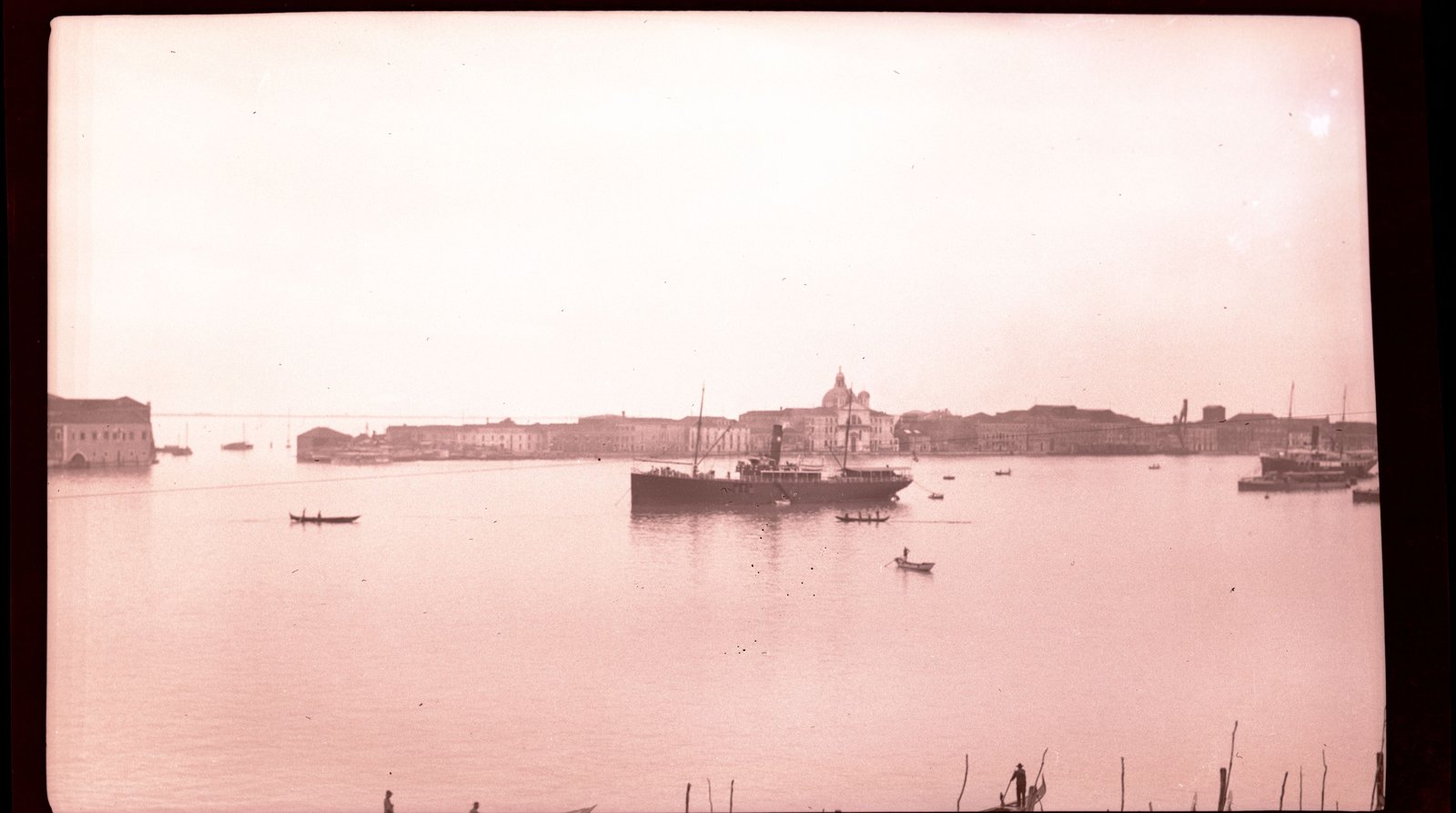
In brief
A considered lagoon boat experience is small-group or private, uses a boat suited to the water it travels — shallow-draft for the marshes, seaworthy for open lagoon crossings — and is led by someone who can explain tides, place names and history, not just narrate a fixed script. Avoid trips sold purely on speed or photo stops; ask what water they actually cover and why.
At a glance
- Best for
- Travellers who want the lagoon itself, not just a canal photo
- Group size to look for
- Small group or private, generally under eight to ten people
- Time needed
- Half a day minimum for the outer lagoon; two to three hours for central canals
- Season
- Spring and early autumn generally calmest water and softest light
- Regulation
- Lagoon navigation is overseen by the Capitaneria di Porto di Venezia
- Last checked
- July 2026
The word "boat trip" covers almost nothing and everything
Say "boat trip" in Venice and you could mean a six-minute gondola loop off Riva degli Schiavoni, a shared motor launch doing a fixed Murano-Burano-Torcello circuit, a private sandolo crossing the quiet reaches near Sant'Erasmo, or a full day threading the marshy channels of the northern lagoon toward Valle Averto. These are not interchangeable experiences wearing different price tags. They use different boats, cover entirely different water, and reward entirely different kinds of attention. The most common disappointment reported by visitors is not that a boat trip was bad, but that it was the wrong one for what they actually wanted.
The cliché, and why it persists
The cliché version is well known: a fixed route close to the busiest landmarks, a recorded or rote commentary, a schedule built around turnover rather than tide or light, and very little sense of the lagoon as a living, working system rather than a backdrop. It persists because it is easy to sell — a short, predictable product near the busiest embarkation points converts well to a passer-by with an hour to spare. There is nothing wrong with a short gondola ride as one experience among several; the problem is only when it is mistaken for "seeing the lagoon," when in reality it covers perhaps a few hundred metres of a basin that stretches for fifty kilometres.
What a considered operator looks like
A better trip usually shares a few traits, regardless of price point. The boat is matched to the water: a shallow-draft, flat-bottomed hull such as a topo or bragozzo for the marshy shallows and barene (the lagoon's characteristic mudflats) around the northern and southern lagoon, versus a more seaworthy motor launch for open crossings to the barrier islands. The guide or boatman can speak specifically about where you are — tidal patterns, place names, the difference between a canale and a rio, which channels are marked and why — rather than reciting a general script. Group size tends to be small, because a crowded boat cannot slow down, change plan for weather, or let anyone actually hear the water. And departure times are often set around tide and light rather than a fixed tourist-season timetable, since much of the outer lagoon is only navigable at certain states of tide.
Questions worth asking before you book
A short set of questions tends to separate a considered trip from a generic one. Which specific water will the boat cover, by name — a stretch of the Grand Canal, the channel to Torcello, the barene near Valle Averto — rather than a vague "the lagoon"? Is the boat licensed for passenger transport and does the operator hold the appropriate authorisation from the Capitaneria di Porto, the body that oversees lagoon navigation and safety? What happens if the tide or weather changes the plan — is there a genuine alternative route, or does the trip simply not run? And is the group size fixed in advance, or does it depend on how many other bookings come in that day? None of these questions require special knowledge to ask, and any operator confident in what they offer should answer them plainly.
Matching the boat to what you actually want
If the goal is to understand central Venice's geography, a vaporetto ride (see our companion guide on how Venice moves) or a short traghetto crossing may honestly serve better than a paid tour. If the goal is quiet and nature, the marshy channels and bird-rich shallows of the northern lagoon reward a flat-bottomed boat and an unhurried pace far more than a fast launch. If the goal is craft and history, a trip that includes time on Murano or Burano with a genuine stop, rather than a drive-by, will teach more than covering three islands in ninety minutes. And if the goal is simply the pleasure of being on the water under oar rather than motor, a rowing lesson in voga alla veneta offers something no motorised trip can — see our guide to learning to row Venetian-style.
Reading the lagoon's seasons
Spring and early autumn generally offer the calmest water and the clearest light for a lagoon crossing, while summer's high season brings both busier embarkation points near San Marco and, some afternoons, stronger thermal winds that can make open-water stretches choppier by mid-afternoon — a reason many considered operators favour early departures. Winter's acqua alta season can restrict access to some low-lying landing stages entirely, so it is worth asking directly about seasonal reliability rather than assuming a summer itinerary transfers unchanged.
Is a gondola ride worth it?
A traditional gondola ride is worth doing once, for what it is: a specific, short, elegant way to move through the narrowest back canals a larger boat cannot enter, powered by a single oar and centuries of accumulated boat-handling skill. It is not, and was never meant to be, a way to see the lagoon. Treat it as one deliberate experience among several rather than the whole of what "being on the water in Venice" can mean, and choose the rest of your time on the water with the same care you would give to choosing a restaurant off the main tourist strip.
Sources
- Capitaneria di Porto di Venezia — lagoon navigation regulation and safety oversight
- Comune di Venezia — tourism and mobility information
- Venezia Unica — official transport and visitor information
This article was independently researched and produced. No payment, complimentary service or editorial approval was provided by the places mentioned.