
In brief
The northern Venetian lagoon's barene (marsh islets), velme (tidal flats) and valli da pesca (historic fish valleys) support herons, egrets, avocets, black-winged stilts, kingfishers and increasingly flamingos, best seen by shallow-draft boat rather than on foot. The WWF-managed Oasi di Valle Averto is a key access point; spring and autumn migration periods generally offer the greatest variety of species.
At a glance
- Where
- Northern lagoon beyond Burano and Torcello, and Valle Averto to the west
- Habitat types
- Barene (marsh islets), velme (tidal flats), valli da pesca (fish valleys)
- Best season
- Spring and autumn migration periods for species variety
- Access
- Shallow-draft boat required for most productive areas; some reserve access on foot
- Key reserve
- Oasi di Valle Averto, managed by WWF Italia
- Last checked
- August 2026
A lagoon that is mostly not Venice
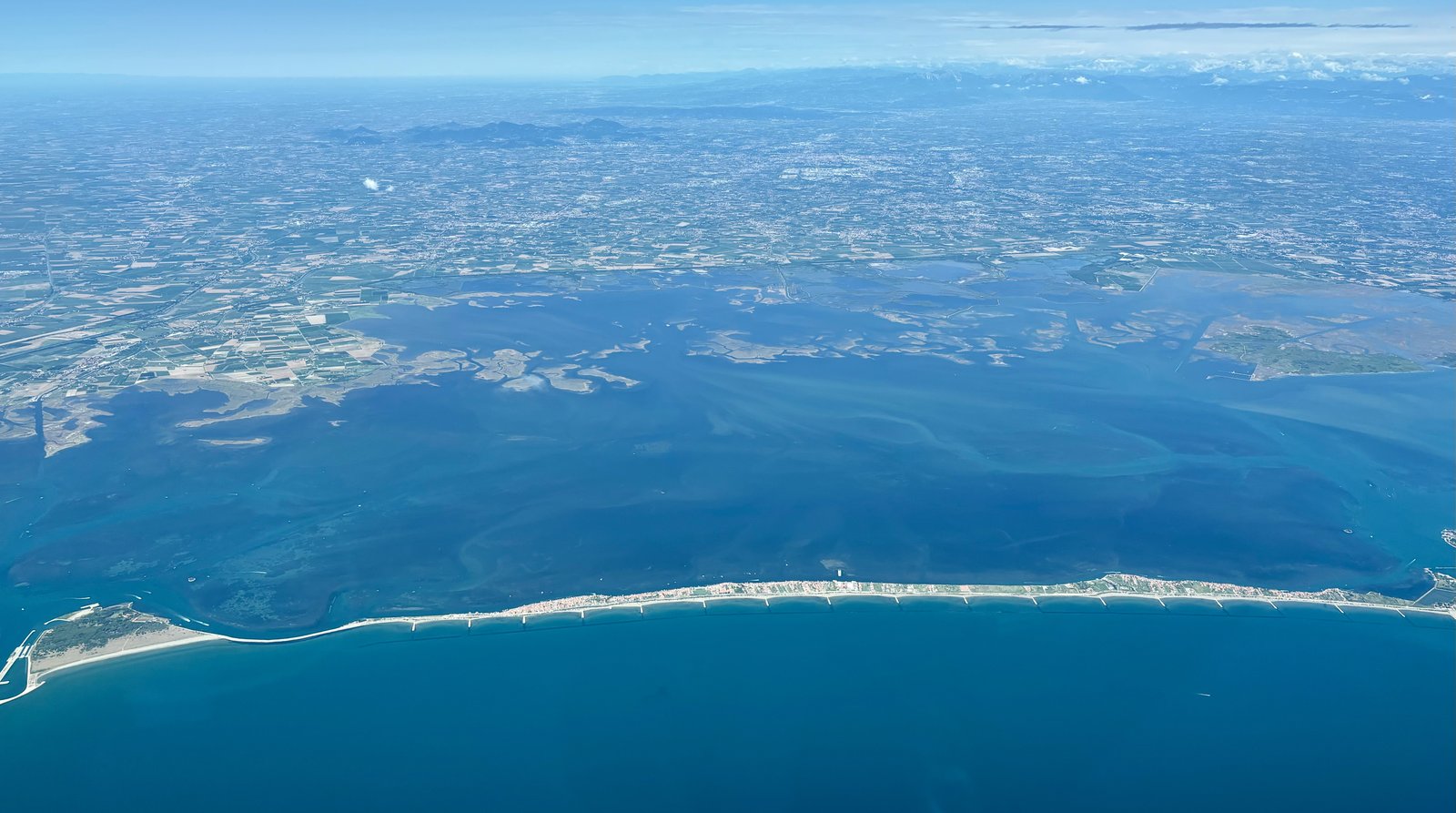
It is easy to forget, standing in the crowded calli near San Marco, that the historic city occupies only a small fraction of the lagoon's roughly 550 square kilometres. Most of that area is shallow water, mudflat and marsh — barene, the low, vegetated islets that flood and drain with the tide, and velme, the bare tidal flats exposed at low water — an ecosystem shaped as much by centuries of hydraulic engineering (diverted rivers, dredged channels, managed fish valleys) as by nature alone. This working, engineered wetland turns out to be exceptional bird habitat, and the northern lagoon, beyond the well-trodden Murano-Burano-Torcello route, holds the richest and least visited stretches of it.
What lives out there
The northern lagoon's marshes and shallows support a substantial resident and migratory bird population. Grey herons and little egrets are common enough to see on almost any visit; avocets and black-winged stilts, both distinctive waders with long legs suited to the shallow water, breed in the quieter valli da pesca; kingfishers work the narrower channels; and greater flamingos, once rare visitors, have become an increasingly regular sight in the northern and central lagoon over recent decades, generally in loose flocks feeding in the shallower valli. Spring and autumn migration periods typically bring the greatest species variety, as birds moving along the Adriatic flyway stop to feed in the lagoon's shallows.
Valle Averto: the reserve built for this
The Oasi di Valle Averto, a wetland reserve on the lagoon's western edge near Campagna Lupia, is managed by WWF Italia specifically for habitat protection and birdwatching, with marked trails, hides and boardwalks giving foot access to a historic valle da pesca — a diked, managed fish-farming valley, a land-use pattern centuries old in the lagoon, now maintained partly for conservation rather than fishing alone. It is one of the few places in the lagoon system where serious birdwatching is possible without chartering a boat, though reaching the reserve itself typically requires a car or organised transfer from Venice given its mainland-edge location.
Why a shallow-draft boat matters
For the barene and velme further out in the open lagoon — areas beyond Valle Averto's managed reserve, closer to Lio Piccolo and the channels north of Burano and Torcello — a standard motor launch cannot get close enough, and a flat-bottomed, shallow-draft boat such as a topo or bragozzo is the only practical way to approach the marsh edges where birds actually feed, without disturbing them by engine noise or wake. This is one of the clearest cases where the boat itself determines what you will actually see; a fast open-water crossing shows the lagoon from a distance, while a slow, shallow approach at the right state of tide can bring a boat within good viewing range of feeding waders. Our companion guide on choosing a lagoon boat experience covers how to evaluate an operator suited to this kind of quiet, slow-paced trip specifically, as distinct from a standard sightseeing circuit.
Reading the tide
Timing matters more here than almost anywhere else in the lagoon. Many wading birds feed most actively as the tide recedes and exposes velme and shallow mud, which means an early-morning falling tide is generally the most productive window, while high tide can push birds off the flats entirely and toward less visible roosting areas. A considered boat trip into these areas is planned around the tide table rather than a fixed tourist departure time, which is itself a reasonable indicator of how seriously an operator takes the wildlife rather than the schedule.
Watching responsibly
The lagoon's marshes are a working, protected ecosystem as well as a scenic one — several areas fall under EU Natura 2000 habitat designations, and disturbance from engine noise, close approach or off-trail walking during breeding season can have a real effect on nesting success for ground-nesting species like avocets. Keeping a respectful distance, staying in the boat or on marked paths rather than walking out onto barene, and avoiding the breeding season (roughly April through June) for the closest approaches are small, concrete ways to watch without adding pressure to a habitat already balancing conservation against a busy working lagoon. For a fuller sense of how this principle applies across the lagoon's boat-based activities generally, our guide to the quieter islands covers a related, complementary kind of unhurried, low-impact visit.
Sources
- WWF Italia — Oasi di Valle Averto nature reserve information
- Comune di Venezia — lagoon habitat and environmental information
- Capitaneria di Porto di Venezia — lagoon navigation and protected area access
This article was independently researched and produced. No payment, complimentary service or editorial approval was provided by the places mentioned.