
In brief
Voga alla veneta is the Venetian lagoon's traditional rowing style: standing, facing the direction of travel, using a single oar braced against a carved wooden forcola rather than a fixed oarlock. Local rowing clubs (remiere) teach it to visitors through introductory lessons, typically on a stable sandolo or batela, and a first session focuses on balance and the oar's rotating stroke rather than speed.
At a glance
- What it is
- Standing, forward-facing lagoon rowing technique, unique to Venice
- Boat used for lessons
- Sandolo or batela, flat-bottomed and stable for beginners
- Where taught
- Remiere (rowing clubs) across several sestieri, and some independent instructors
- Time needed
- 60–90 minutes for an introductory lesson
- Best for
- Reasonably fit visitors comfortable with balance and light physical effort
- Last checked
- July 2026
Not the gondolier's stroke you're picturing
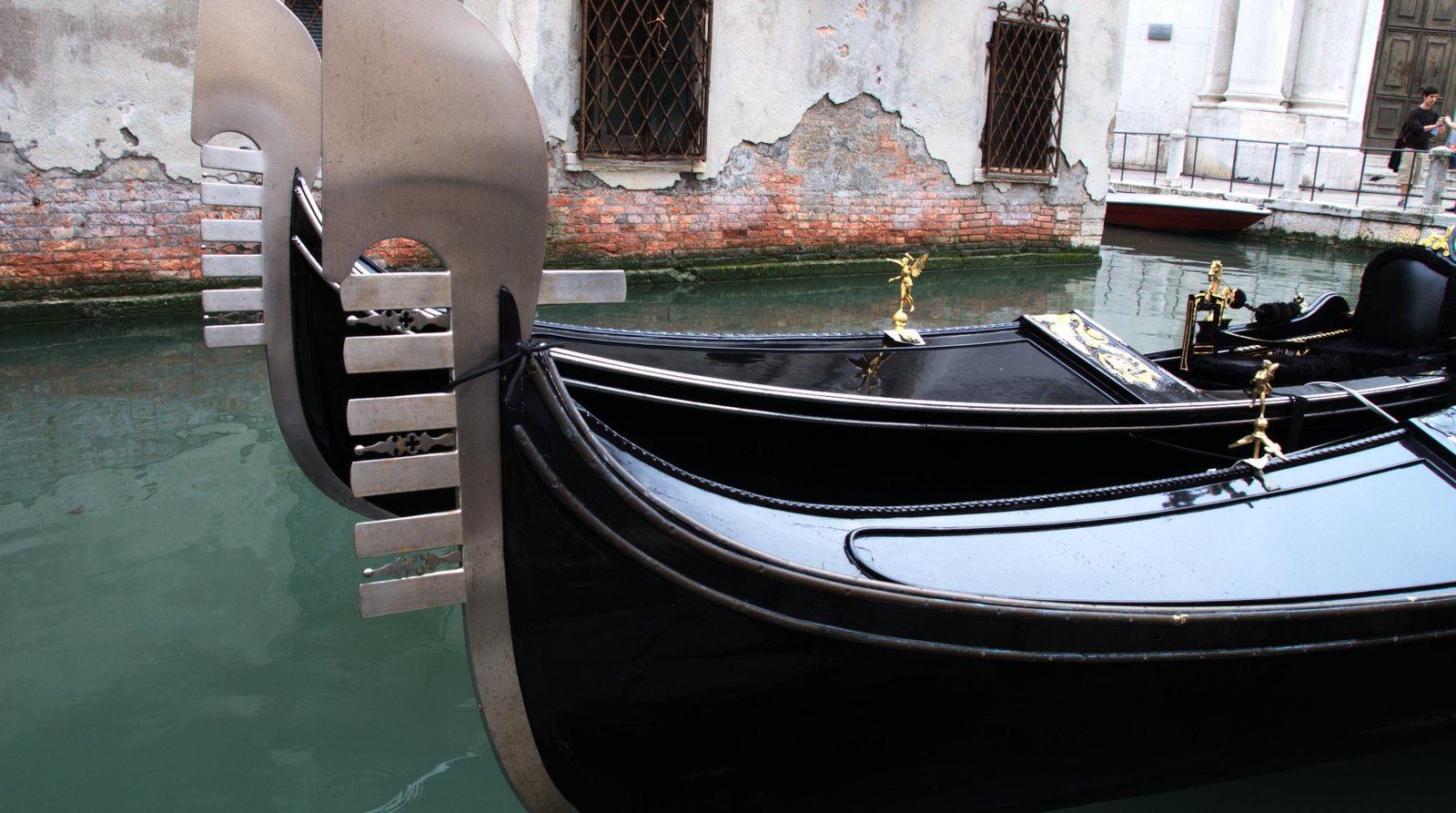
Most visitors' mental image of Venetian rowing comes from watching a gondolier from a bridge: one figure standing at the stern, oar working in a smooth, almost effortless arc. What that view doesn't show is how much technique sits inside that apparent ease. Voga alla veneta, the family of standing, forward-facing rowing styles used throughout the lagoon, is built around the forcola — a carved walnut oarlock, individually shaped for its rower and boat — against which the oar pivots, twists and braces through several distinct positions for forward strokes, braking, and turning. Unlike fixed-oarlock rowing found elsewhere, the oar is never locked in place; the rower's hands and the forcola's curved surfaces do all the controlling work, which is exactly what makes it difficult to learn and satisfying to get even slightly right.
Where the skill survives: the remiere
Voga alla veneta is kept alive today largely through remiere, neighbourhood rowing clubs found across Venice's sestieri, which train members for recreational rowing and for the city's regatta calendar — most visibly the Regata Storica each September, a historic procession and race of period boats along the Grand Canal, alongside smaller neighbourhood regattas through spring and summer. Many of these clubs, along with a smaller number of independent instructors, offer introductory lessons to visitors and residents alike, usually on a sandolo or batela — flatter-bottomed, more stable hull types than a gondola, better suited to a beginner who is still finding their balance.
What actually happens in a first lesson
An introductory lesson typically starts on land or at the water's edge, with the instructor demonstrating the basic stroke: the oar enters the water at an angle, pushes through a rotating motion against the forcola, and exits with a twist that resets it for the next stroke, all while standing with knees soft and weight centred over a boat that moves more than a beginner expects. Most first lessons focus entirely on this rotation and on balance, often with the instructor rowing alongside or steadying the boat, rather than on covering distance. It is common to spend the first twenty minutes simply getting a feel for how the oar resists and releases water differently from a conventional rowboat stroke — the sensation surprises almost everyone who has rowed a normal boat before, because none of that experience transfers directly.
Why standing changes everything
Standing to row, facing forward rather than backward, is not simply a stylistic choice — in the lagoon's shallow, crowded and tidal channels, a standing rower can see obstacles, other boats and changing depth ahead in a way a seated, backward-facing rower cannot. It is a technique shaped directly by the water it was built for: narrow canals with blind corners, mudflats that shift with the tide, and centuries of dense boat traffic that made forward visibility a practical necessity rather than a preference. Understanding that context reframes the lesson from "a novelty activity" into something closer to what it actually is — a demonstration of how completely Venetian daily life was engineered around its water.
Who it suits, and what to expect physically
A rowing lesson demands more core and leg engagement than most visitors expect from what looks, from a bridge, like a gentle activity — expect some fatigue in the legs and lower back after even a short session, particularly the first time. It suits travellers in reasonable general fitness who are comfortable with an unfamiliar balance challenge; it is less suited to anyone with significant mobility limitations, given the standing position, though some clubs and instructors can discuss adapted approaches on request. Lessons generally run in calmer stretches of canal or the more sheltered parts of the lagoon rather than open water, which keeps conditions manageable for a first attempt.
Pairing it with the rest of a lagoon visit
A rowing lesson sits well alongside a broader look at how the city moves — our companion guide on how Venice moves explains the boats that carry passengers and cargo, while this is the one skill among them a visitor can actually try. It also pairs naturally with a more considered look at choosing a lagoon boat experience generally, since the same principle applies here: match the activity to genuine curiosity about the water, rather than treating it as a single tickable photo opportunity.
Is it worth doing if you'll never row again?
Almost certainly yes. The value of a voga alla veneta lesson has little to do with becoming competent — an hour is nowhere near enough for that — and everything to do with the shift in perspective it produces. Fifteen minutes of feeling how much control, balance and reading of the water a single oar and a carved piece of walnut demand will change how every subsequent boat you see moving through a Venetian canal reads to you, gondola or otherwise.
Sources
- Comune di Venezia — traditional rowing and regatta heritage information
- Coordinamento delle Associazioni Remiere Veneziane — Venetian rowing club coordination body
- Capitaneria di Porto di Venezia — lagoon navigation and safety oversight
This article was independently researched and produced. No payment, complimentary service or editorial approval was provided by the places mentioned.