
In brief
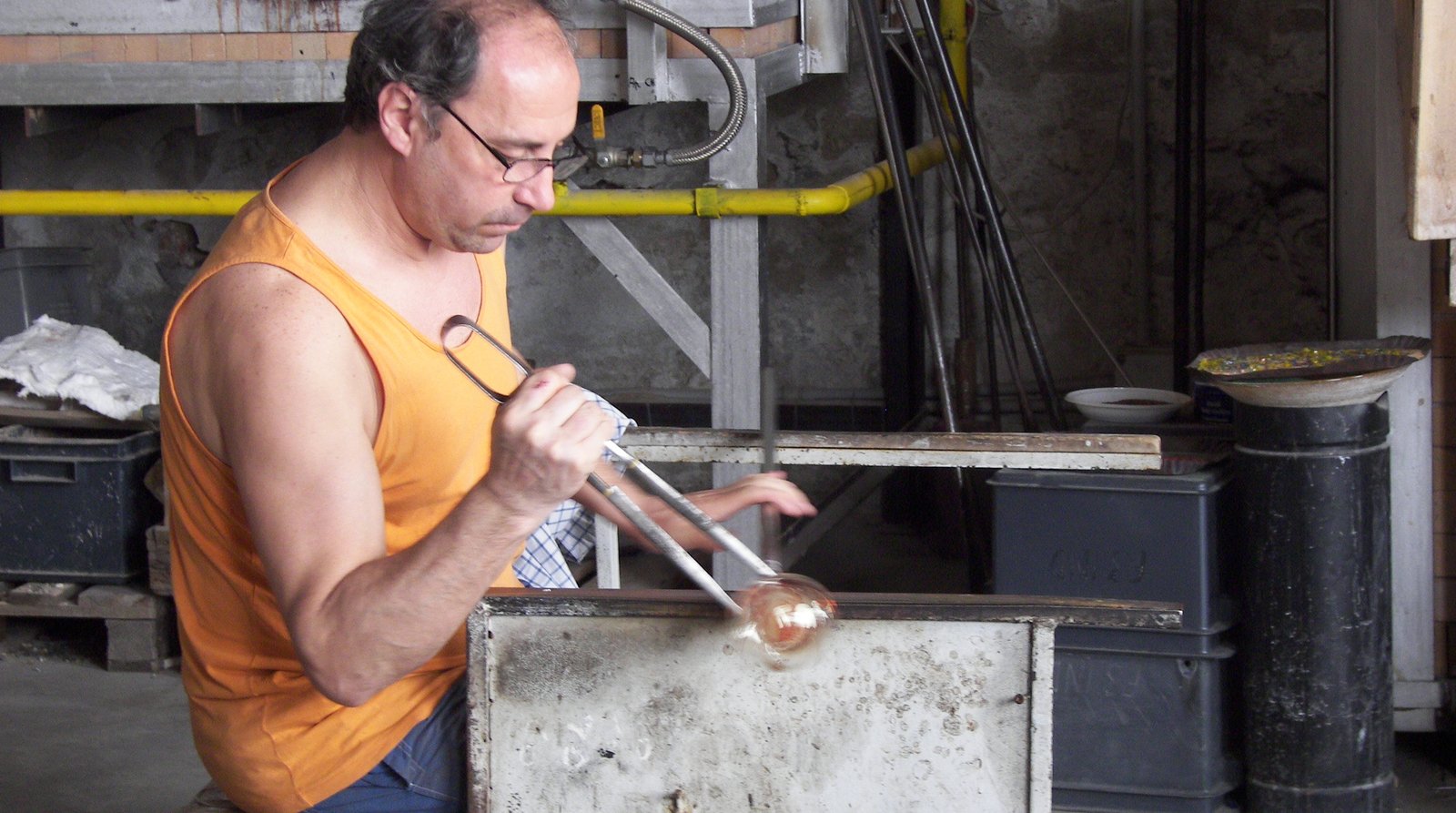
Murano glass is glassware produced on the island of Murano, where the Republic relocated the city's furnaces by decree in 1291, officially to reduce fire risk. Genuine Murano glass is hand-blown or hand-worked using techniques including lattimo, filigrana and murrina, and is now protected under a consortium trademark; most "Murano-style" glass in central Venice's souvenir shops is mass-produced and imported, not made on the island.
At a glance
- Furnaces relocated to Murano
- By Republic decree, 1291
- Key techniques
- Lattimo (milk glass), filigrana (threaded glass), murrina (patterned cane slices), avventurina
- Protection mark
- Vetro Artistico Murano trademark, issued by the Consorzio Promovetro Murano
- Where to see real furnaces
- Working fornaci on Murano, mostly along Fondamenta dei Vetrai
- Where to see history
- Museo del Vetro, Murano
- Last checked
- August 2026
Why the furnaces are on an island at all
Murano's association with glass is not incidental geography — it was a deliberate act of urban planning. In 1291 the Venetian Republic ordered the city's glass furnaces relocated from central Venice to Murano, officially because open furnaces posed a serious fire risk to a city built almost entirely of wood and closely packed masonry. The move also had the practical side effect of concentrating a valuable, closely guarded trade on a single island where it could be more easily monitored — glassmakers' techniques were treated as state secrets for centuries, and workers who left Venetian territory to practise glassmaking elsewhere without permission could, according to historical accounts of Republic-era guild law, face serious legal consequences. Murano subsequently developed its own semi-autonomous civic identity, distinct enough that historical accounts describe Murano glassmakers as holding a social status considerably above ordinary artisans, with some families gaining privileges normally reserved for nobility.
What the techniques actually are
"Murano glass" is not one technique but a family of related ones, developed and refined on the island over centuries. Lattimo, an opaque white glass designed to imitate porcelain, became especially significant when Venetian glassmakers achieved it before large-scale European porcelain production existed, giving Murano a genuine technical edge for a period. Filigrana involves embedding fine threads of colored or opaque glass within clear glass in careful patterns, requiring the glassmaker to manage multiple colors and temperatures simultaneously during a single working session at the furnace. Murrina — the technique behind the small circular patterned discs seen in some jewellery and vessels — is made by fusing colored glass rods into a patterned cane, then slicing that cane crosswise to reveal the same pattern repeated in each thin disc, a technique requiring exact control over how the colored rods are bundled and heated. Avventurina, a glass containing fine copper crystals that produce a distinctive sparkling effect, is another Murano-associated technique with its own closely guarded historical production methods. Each of these remains, in genuine workshop hands, a slow, physically demanding process requiring years of apprenticeship before a maker works independently at the furnace.
The trademark that exists because of imitation
The scale of imitation Murano glass sold in Venice — much of it manufactured in Eastern Europe or Asia and shipped in for sale in central Venice's souvenir shops — became significant enough that Murano's producers organised formal protection. The Consorzio Promovetro Murano administers the Vetro Artistico Murano trademark, a legal mark certifying that a piece was genuinely made on Murano using traditional techniques, issued to member furnaces meeting the consortium's production standards. Genuine pieces typically carry this trademark sticker or an accompanying certificate of authenticity; its complete absence on a piece being sold as "Murano glass" is one of the more reliable warning signs of an import, though its presence alone should still be weighed alongside other signs given how widely the reputation gets borrowed in marketing language even where the mark itself is not literally faked.
Reading craftsmanship without a certificate
Beyond the trademark, several physical signs distinguish hand-worked Murano glass from mass-produced imitation. Genuine hand-blown pieces show slight asymmetry and individual variation — no two are perfectly identical, unlike mould-cast imports produced from a single template. A pontil mark, a small rough or ground scar on the base where the glass was detached from the blowing rod during working, is a strong sign of genuine hand-blowing, though quality furnaces polish it smooth rather than leaving it raw. Weight and wall thickness in hand-blown glass tend to vary slightly across a single piece in ways machine-pressed glass does not. And price remains a blunt but honest signal: skilled furnace labour and genuine material costs mean authentic Murano glass, even in small decorative forms, costs meaningfully more than the identical-looking pieces stacked in central Venice's cheapest souvenir shops.
A trade under real pressure, still working
The number of working fornaci on Murano has fallen substantially from its mid-twentieth-century peak, squeezed by energy costs for wood- and gas-fired furnaces, competition from cheap imports using the Murano name without the substance, and the same apprenticeship and housing pressures affecting Venice's other hand crafts. What remains is smaller but genuine: a number of family-run furnaces, some now several generations deep, continuing to blow glass using techniques their ancestors developed, alongside the Museo del Vetro, which documents the island's full technical and design history from Roman-era glass through contemporary studio work. Visiting an actual furnace demonstration on Murano itself, buying only pieces bearing the Consorzio Promovetro Murano trademark, and treating a lower price as a warning sign rather than a bargain are the most concrete ways a visitor can support the real craft rather than its imitation.
Sources
- Consorzio Promovetro Murano — Vetro Artistico Murano trademark and authenticity standards
- Fondazione Musei Civici di Venezia — Museo del Vetro, Murano glass history and collections
- Comune di Venezia — Murano heritage and craft trade documentation
This article was independently researched and produced. No payment, complimentary service or editorial approval was provided by the places mentioned.