
In brief
Venice's buildings are conserved against continuous saltwater damage using traditional lime-based plasters and mortars that let walls "breathe" moisture out rather than trapping it, combined with modern damp-proofing, stone replacement using matched materials, and the MOSE mobile barrier system, operational since 2020, which closes off the lagoon's three inlets during exceptional high tides.
At a glance
- Core threat
- Rising damp and salt crystallisation in brick, stone and plaster
- Traditional material
- Lime-based (not cement-based) plasters and mortars, breathable to moisture
- Foundation system
- Wooden piles driven into lagoon clay, supporting stone platforms and brick walls
- Flood defence
- MOSE mobile barrier system, operational since October 2020
- Lead bodies
- Soprintendenza, Comune di Venezia, Consorzio Venezia Nuova, private restoration foundations
- Last checked
- July 2026
A city standing on wood, in salt
Venice's foundations are, structurally, one of the more improbable engineering feats still functioning after centuries: buildings rest on forests of wooden piles — oak, larch and alder, historically sourced from forests as far as present-day Slovenia and Croatia — driven deep into the lagoon's compact clay layer, capped with stone platforms (zatteroni) on which brick and Istrian stone walls rise. The wood survives underwater partly because oxygen-poor, waterlogged mud slows the bacterial decay that would otherwise rot it on dry land — piles below the waterline have, in many cases, lasted centuries. The real ongoing threat sits above that waterline, where tidal water repeatedly wets masonry and evaporates, leaving salt crystals behind inside the pores of brick, stone and plaster. Those crystals expand as they form, physically breaking apart the material from within — a slow, continuous process rather than a single flood event, and the one conservators spend most of their effort managing.
Why cement plaster makes things worse
A recurring theme in Venetian conservation, and one that distinguishes serious restoration from a quick modern fix, is the choice of plaster. Cement-based renders, widely used in twentieth-century construction elsewhere, form a relatively impermeable skin — durable against weather, but disastrous on a saltwater building, because they trap moisture and salt inside the wall behind the render rather than letting them migrate out and evaporate at the surface. The traditional Venetian answer is lime-based plaster (intonaco a base di calce), a material that remains porous enough to let moisture and salt pass through and crystallise at or near the surface, where it can be brushed away or sacrificially re-plastered, protecting the structural masonry underneath. Conservation bodies working on historic buildings increasingly specify lime-based, breathable materials for exactly this reason, even though they require more frequent maintenance than modern alternatives — a trade-off between long-term structural health and short-term convenience that runs through most serious Venetian restoration decisions.
Matching stone, matching mortar
Istrian stone, a dense, low-porosity limestone quarried historically from the Istrian peninsula, has been Venice's preferred material for elements exposed to direct water contact — building plinths, steps, well-heads, bridge parapets — precisely because it resists salt damage better than more porous local stones. Restoration work on historic facades generally aims to match original stone sources and working methods rather than substitute modern alternatives, both for appearance and for how the replacement material will behave chemically alongside centuries-old original fabric; mismatched stone or mortar hardness can create new stress points and accelerate decay at the joins. This is slow, expensive work, typically overseen by Italy's regional Soprintendenza (heritage authority) in coordination with building owners, and it is a significant reason why full facade restorations in Venice can take years rather than months.
MOSE and the flood question
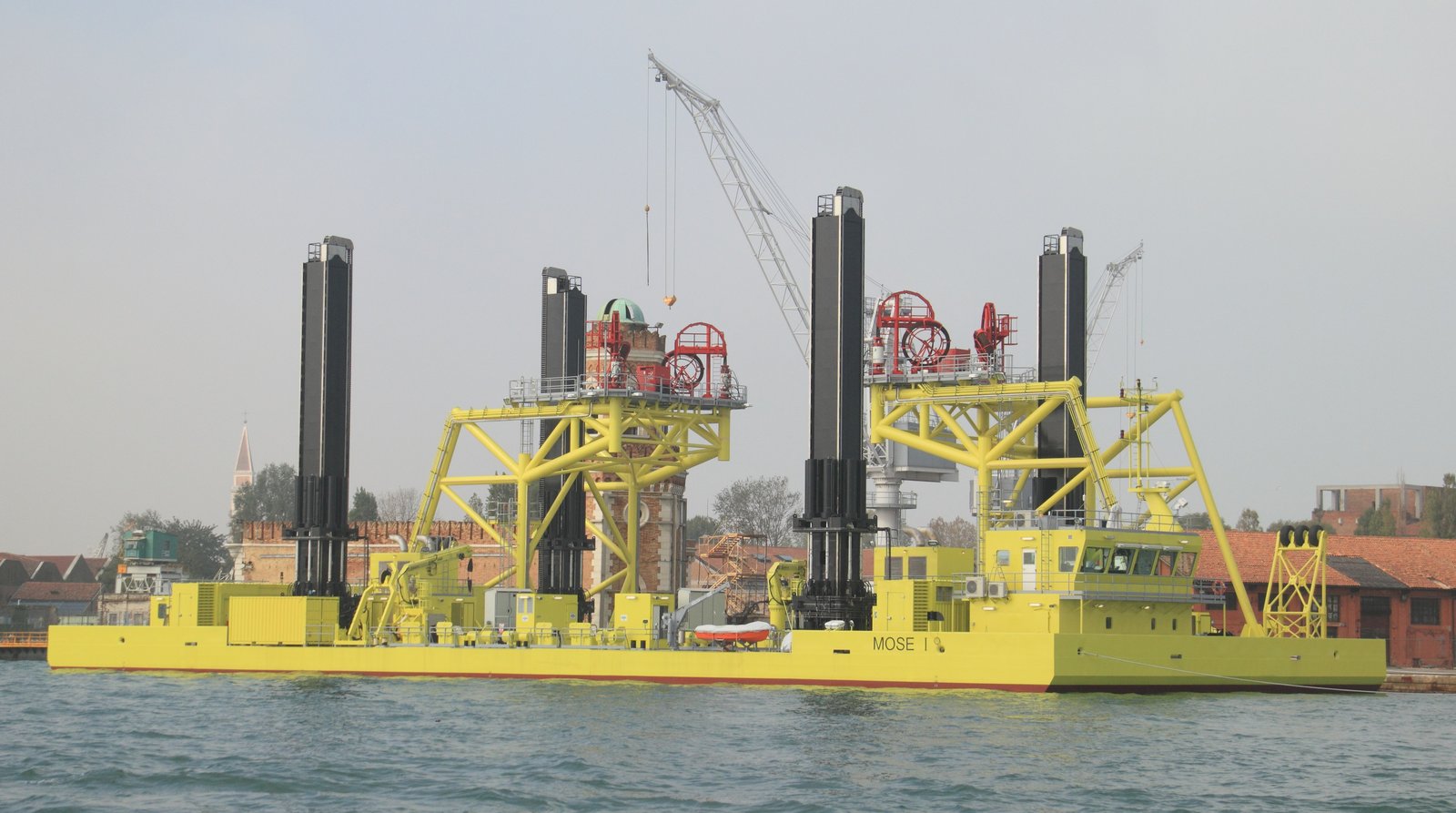
Acqua alta — exceptional high water, most common between autumn and early spring — is the most visible conservation threat to visitors, though not necessarily the most damaging one over time compared with chronic capillary damp. The MOSE project (Modulo Sperimentale Elettromeccanico), a system of 78 hinged mobile gates across the lagoon's three inlets at Lido, Malamocco and Chioggia, became operationally active in October 2020 after a construction process that ran for decades and drew sustained public debate over cost, delays and environmental impact. When exceptional tides are forecast, the gates rise from the seabed to temporarily separate the lagoon from the Adriatic, preventing the highest storm surges from reaching the historic centre — a system credited with sparing Venice from repeats of the catastrophic 2019 flooding in several high-tide events since, while still drawing scrutiny from engineers and environmental groups over long-term maintenance costs and effects on lagoon ecology.
Who does the work
Venetian conservation runs through a layered system: the Soprintendenza has statutory authority over interventions on protected historic buildings; the Comune di Venezia manages public infrastructure and civil works including flood monitoring; Consorzio Venezia Nuova has historically overseen MOSE construction and lagoon-wide hydraulic works; and a network of private and international restoration foundations — funding everything from individual palazzo facades to major monuments — has been active in the city since the widely publicised 1966 flood galvanised international conservation interest. Private owners of listed buildings are generally required to use approved conservation methods and materials for any exterior work, which is part of why Venice's historic fabric, despite real financial pressure, has not been quietly replaced with cheaper modern substitutes at the scale seen in some other historic cities.
What visitors can, in practice, respect
For a visitor, the practical takeaway is mostly about awareness rather than action: acqua alta walkways (passerelle) are laid out during high water for a reason and should be used rather than waded around; graffiti and leaning on stonework accelerates damage to already-stressed surfaces; and donations to recognised restoration foundations, rather than informal appeals, are the most reliable way to support ongoing conservation work on specific monuments.
Sources
- Comune di Venezia — acqua alta monitoring and public infrastructure information
- Soprintendenza Archeologia, Belle Arti e Paesaggio per il Comune di Venezia — heritage conservation authority
- Consorzio Venezia Nuova — MOSE flood barrier system documentation
- Fondazione Musei Civici di Venezia — historic materials and restoration records
This article was independently researched and produced. No payment, complimentary service or editorial approval was provided by the places mentioned.