
In brief
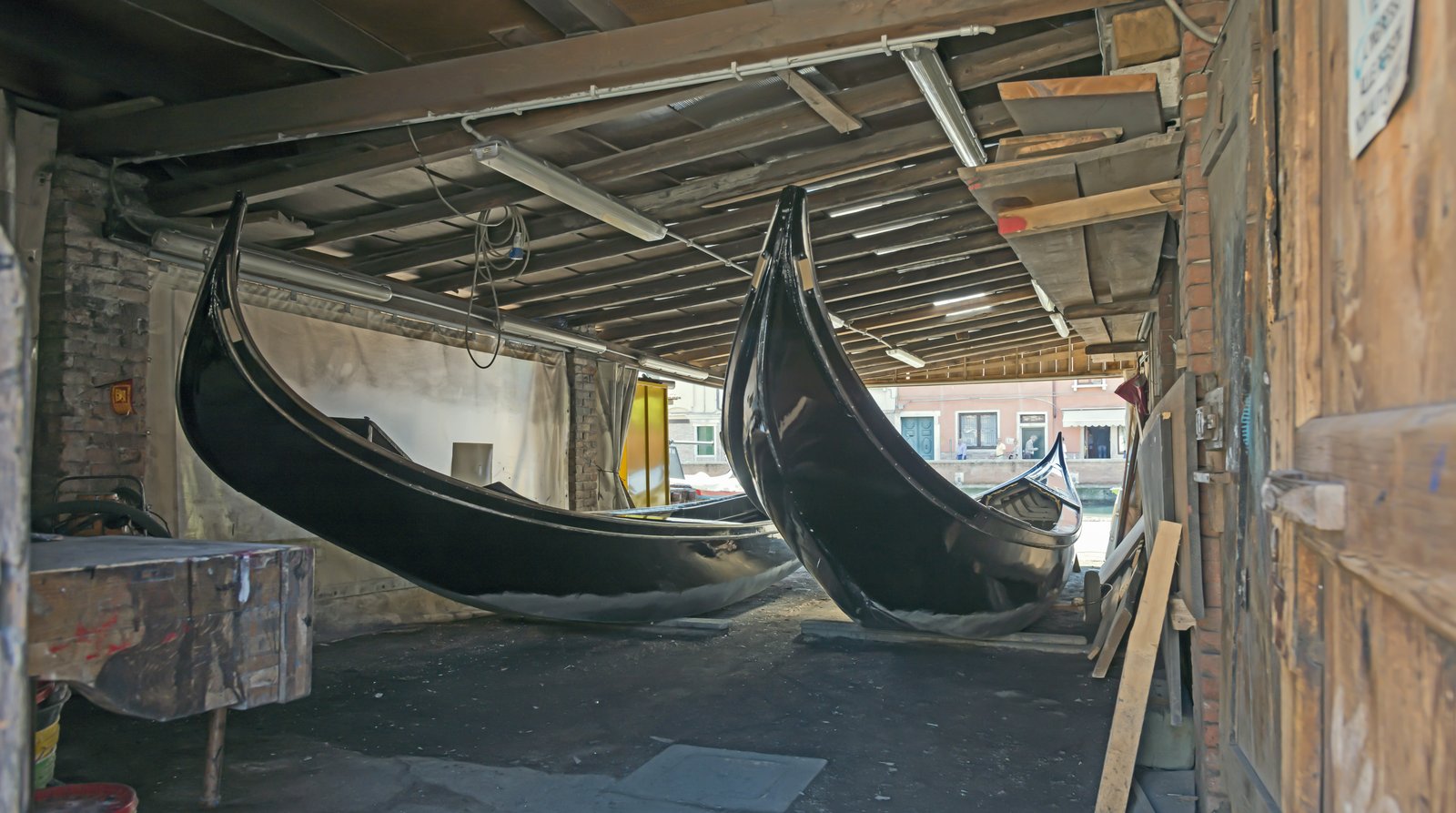
A squero is a traditional Venetian boatyard where gondolas and other lagoon boats are built and repaired by hand, using methods largely unchanged for centuries. A gondola is deliberately asymmetric — one side is wider than the other — to counteract the sideways push of a single oar rowed from the stern, and is built from roughly eight species of wood over several months of skilled labour.
At a glance
- Term
- Squero — a traditional Venetian boatyard
- Best-known example
- Squero di San Trovaso, Dorsoduro, active since roughly the 17th century
- Build time
- Several months for a new gondola; ongoing seasonal maintenance for existing boats
- Materials
- Around eight wood species, including oak, fir, elm, cherry, walnut, larch, lime and mahogany
- Access note
- Working yards; viewable respectfully from the Zattere embankment opposite, not a paid attraction
- Last checked
- July 2026
What a squero actually is
The word squero refers to a small boatyard built for constructing and repairing Venice's traditional flat-bottomed lagoon boats, of which the gondola is the most famous but far from the only type. Historically the city held dozens of these yards scattered through the sestieri, each typically specialising in particular boat types and often run by a single family across generations. Today only a small number remain active, the best known being the Squero di San Trovaso in Dorsoduro, distinctive for its wooden buildings that resemble an alpine chalet more than a Venetian palazzo — a style thought to reflect the mountain origins of many boatbuilders who historically came down from the Cadore region to work Venice's yards, bringing timber-frame building habits with them.
Why a gondola is not symmetrical
The gondola's most counterintuitive feature is invisible to most people looking at one from a bridge: it is not symmetrical along its long axis. The left side, away from the gondolier, is built roughly 24 centimetres wider than the right. This asymmetry exists to counteract a specific physical problem — a gondola is rowed by a single oarsman standing at the stern using one oar on one side, a technique that would otherwise push the boat's bow constantly off a straight line. By building the hull wider and more curved on the left, boatbuilders create a hydrodynamic correction that lets a solo rower hold a straight course using the forcola's pivot points rather than fighting the boat's natural drift. It is a solution refined by trial and error over centuries rather than derived from any formal naval-architecture calculation, and it means every gondola hull is a working answer to a specific mechanical problem, not a decorative shape.
Eight woods, one hull
A traditionally built gondola uses a considered mix of timber species, each chosen for how it performs in a specific part of the boat: oak for the structural keel and ribs, where strength against flex matters most; fir for lighter planking; elm, which tolerates being permanently underwater in the submerged parts of the hull without rotting as readily; cherry and walnut for curved and decorative elements; larch, mahogany and lime for other structural and finishing roles. Boatbuilders — squerarioli — steam and bend these woods into the hull's compound curves by eye and experience, using patterns and jigs passed down within a yard rather than standardised industrial templates, which is part of why boats from different squeri, and even different builders within the same squero, are recognisably distinct to a practised eye.
Building and maintaining, not just building
New gondola construction is genuinely rare — Venice's roughly 400 licensed gondolas are mostly decades old, refurbished and re-planked repeatedly rather than replaced, and a squero's steadiest work is maintenance: recaulking seams, replacing worn planking, repainting the traditional black hull (a colour with its own disputed history, sometimes linked to a Republic-era sumptuary law curbing ostentatious decoration, sometimes to simple practicality), and re-fitting ferro bow ornaments and forcole supplied by remèri workshops elsewhere in the city. A full new build, when one is commissioned, can take several months of skilled labour and represents a considerable investment — one reason squeri survive mainly by serving the professional gondolier trade and rowing clubs rather than casual buyers.
A trade under real pressure
Like most of Venice's hand crafts, squero work faces a structural problem: skilled boatbuilders take years to train, workshop space in the historic centre is expensive and limited, and the number of young Venetians choosing the trade has fallen even as the professional gondolier fleet still needs steady maintenance to stay licensed and safe. Some yards have adapted by building smaller traditional boats — sandoli, mascarete, topi — for the recreational rowing clubs that have grown alongside a revival of voga alla veneta as a competitive sport, which has, if anything, helped keep demand for real hand-built hulls alive even as tourist-facing gondola numbers stay flat.
Watching respectfully
The Squero di San Trovaso can be viewed from the public embankment along the Rio di San Trovaso and the Zattere waterfront opposite — a genuinely good vantage point without needing to enter a working yard uninvited. It is an active business, not a museum exhibit, so treating it as one — quiet observation rather than a demand for photographs or interaction — is the basic courtesy expected of anyone stopping to watch.
Sources
- Fondazione Musei Civici di Venezia — Museo Storico Navale, traditional boatbuilding documentation
- Comune di Venezia — gondola licensing and voga alla veneta heritage records
- Ente Gondola — Venice's official gondolier trade association, public information on gondola construction
This article was independently researched and produced. No payment, complimentary service or editorial approval was provided by the places mentioned.