
In brief
Venetian culture today survives as a working practice, not a museum display: boatbuilding at squeri, oar-making by remèri, glassblowing on Murano, feast-day rowing regattas, parish festivals and a spoken dialect all continue in reduced but genuine form. It is carried mainly by a historic-centre population that has fallen to roughly 49,000 residents, alongside a smaller cohort of committed craftspeople and community groups.
At a glance
- Location
- Historic centre of Venice and the inner lagoon
- Best for
- Visitors wanting to understand Venice beyond the day-trip circuit
- Key calendar dates
- Festa del Redentore (third weekend of July), Regata Storica (first Sunday of September), Festa della Salute (21 November)
- Where to see craft in person
- Squero di San Trovaso (Dorsoduro), Murano furnaces, Cannaregio print and bookbinding workshops
- Access note
- Most working workshops are not formal museums — approach respectfully and ask before photographing
- Last checked
- July 2026
A city that keeps working, even as it empties
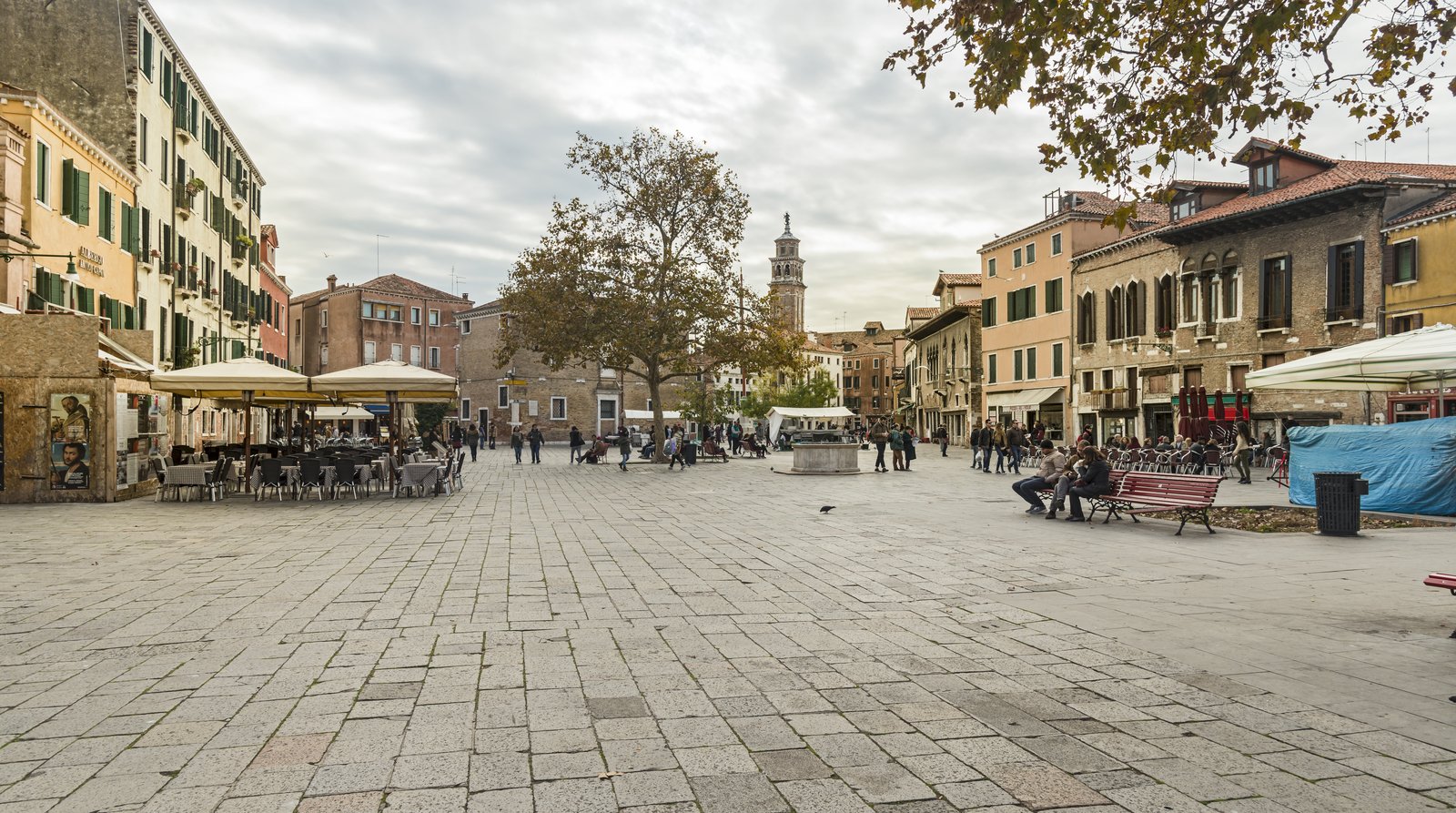
Venice's central paradox is well known: a historic centre that receives tens of thousands of day visitors on a peak afternoon is, at the same time, one of Europe's fastest-depopulating cities. The resident population inside the historic islands has fallen from around 174,000 in the years after the Second World War to roughly 49,000 today, according to Comune di Venezia population records — a decline driven by high housing costs, the conversion of flats to short-term rentals, and the practical difficulty of ordinary life in a city with no cars and increasingly frequent high-water events. It would be reasonable to assume that a culture this depopulated has become mostly performance: costumes for cameras, craft demonstrations staged for coach parties. Some of that undeniably exists. But underneath it, in workshops, parish halls and boat clubs that keep no tourist hours at all, a working culture continues on its own terms.
Craft that is still made, not just sold
The clearest evidence is in the workshops that still produce objects Venice actually uses. At squeri — small boatyards, most famously the Squero di San Trovaso in Dorsoduro — gondolas are still built and repaired by hand from eight types of wood, on a form that has barely changed in centuries. The forcole that hold a gondolier's oar are still individually shaped by remèri, of whom perhaps half a dozen workshops remain active across the city. On Murano, furnaces still work in glass using techniques — lattimo, murrina, filigrana — that go back to guild statutes from the medieval Republic, even as the number of working fornaci has shrunk considerably from its mid-twentieth-century peak. In Cannaregio and Dorsoduro, a small number of letterpress and bookbinding studios still set type by hand and sew signatures the way Venetian printers did when the city was one of Europe's publishing capitals. None of these trades are large industries any longer. All of them are still, in the strict sense, alive: someone learned them from someone else, and is passing them on.
A calendar still organised around feast days
Venice's ritual calendar is not a tourism invention, even though tourism now attends it. The Festa del Redentore, held on the third weekend of July, commemorates the end of a sixteenth-century plague with a votive bridge of boats across the Giudecca Canal, an evening of fireworks watched from private and rented boats, and Masses held at Palladio's Redentore church itself — a devotional event before it is a spectacle. The Regata Storica in early September opens with a historical costume procession of boats but is, underneath the pageantry, a genuine rowing competition contested by Venetian crews who train year-round. The Festa della Salute on 21 November, marking deliverance from the 1630s plague, still draws Venetians across a pontoon bridge to the Basilica di Santa Maria della Salute to give thanks, a tradition documented by the Diocese of Venice with unbroken continuity. These are not re-enactments staged for visitors; visitors are, at most, invited guests at events with their own internal logic and their own reasons for existing.
Language, parish life and the campo
Venetian — a distinct Romance language rather than a dialect of Italian by most linguistic classifications — is spoken less by the young than by their grandparents, but it has not disappeared: it survives in market stalls, in some theatre companies, in the informal speech of boatmen and market traders at the Rialto pescheria. Parish life, too, still structures the calendar of many older residents, with each sestiere's feast days, processions and Scuole — the lay confraternities that have organised charitable and devotional life in Venice since the Middle Ages — continuing in reduced but real form. The Scuola Grande di San Rocco and Scuola Grande dei Carmini still function as active institutions, not only as art galleries for their Tintorettos.
Who is actually keeping it going
It would be a mistake to romanticise this as effortless continuity. Every craftsperson interviewed by Venetian cultural institutions in recent years describes the same structural problem: apprenticeship is slow, housing for young workers in the historic centre is scarce and expensive, and the economics of hand craft compete poorly against mass-produced imports, particularly glass. What keeps these traditions alive is a mixture of genuine vocation, family workshops passing skills to a next generation, and — increasingly — small cooperatives and cultural foundations, including Fondazione Musei Civici di Venezia programming, that give craft workshops a public platform beyond the souvenir trade.
How to encounter it without flattening it
For a visitor, the difference between consuming a performance and encountering a living culture usually comes down to pace and respect. Watching boats gather for the Redentore from a quiet stretch of the Zattere rather than the most crowded viewpoint; visiting a squero or vetreria at a quiet hour and asking, rather than assuming a right to photograph; buying craft directly from the maker rather than from a stall reselling imported imitations — these are small choices that put a visitor in relationship with a living practice rather than at a remove from it, watching it perform.
Sources
- Comune di Venezia — historic centre resident population statistics
- Fondazione Musei Civici di Venezia — craft and heritage programming
- Diocese of Venice — Festa della Salute historical documentation
- La Biennale di Venezia — cultural calendar and public programming
This article was independently researched and produced. No payment, complimentary service or editorial approval was provided by the places mentioned.