
In brief
A forcola is the carved wooden oarlock that a Venetian rowing boat's single oar pivots against; a remèro (plural remèri) is the craftsperson who makes it, along with the oars themselves. Each forcola is custom-shaped in walnut for one rower's height, stroke and boat type, offering several distinct pivot positions rather than a fixed rowlock. Perhaps half a dozen active workshops still practise the craft in Venice today.
At a glance
- Craft
- Forcola and remo (oar) carving for Venetian rowing boats
- Material
- Typically walnut for forcole; beech or fir for oars
- Where to see it
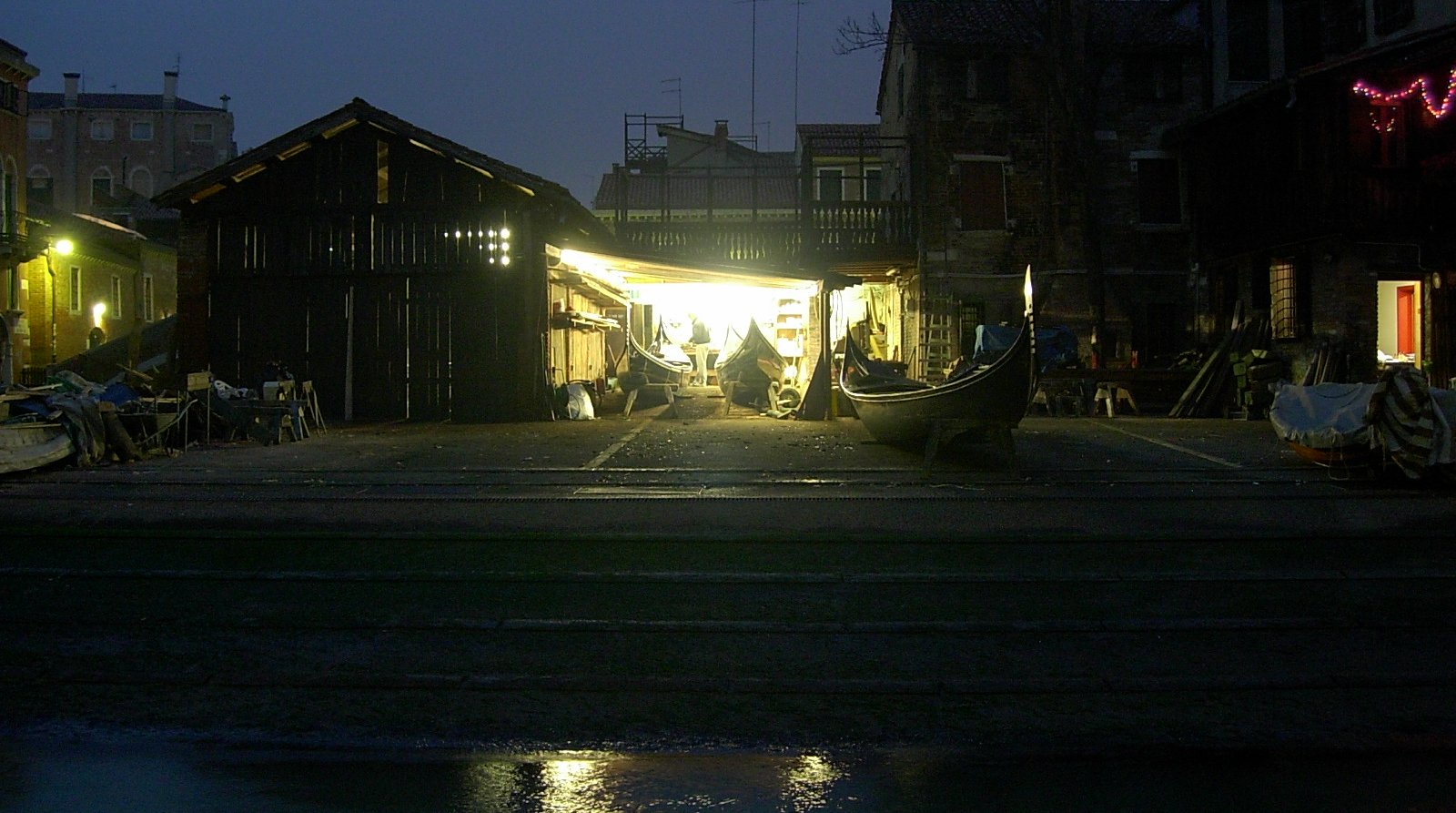
- Small ateliers in Dorsoduro and near the Squero di San Trovaso
- Time to learn the basics
- Years of apprenticeship for full mastery; a single forcola takes days to weeks to carve
- Access note
- Working ateliers, not shopfronts — call ahead or ask before entering
- Last checked
- July 2026
An oarlock that is really a sculpture
Most rowing traditions use a simple rowlock: a fixed metal fork the oar drops into. Venetian voga alla veneta — the standing, forward-facing rowing style used on gondolas and most traditional lagoon boats — uses something far stranger and more sophisticated. The forcola is a single sculpted piece of wood, usually walnut, whose curves offer the oar several distinct resting positions: one for the powerful forward stroke, one for a slow cruising pace, one for reversing, one for turning tightly in a narrow canal. A skilled gondolier moves the oar between these positions within a single manoeuvre, using the forcola's shape rather than muscle alone to control the boat. No two are identical, because no two rowers, boats or purposes are identical — a forcola made for a competitive regatta crew looks different from one made for a tourist-carrying gondola or a family sandolo.
Who makes them: the remèri
The craftspeople who carve forcole and their accompanying remi (oars) are called remèri, a trade name that survives from the guild structure of the historic Republic, when boatbuilders, oarmakers and remèri were organised into distinct, regulated professions with their own statutes. Today only a small number of workshops continue the trade in Venice — commonly cited as somewhere around half a dozen active ateliers, most concentrated near Dorsoduro's boatyards, though the exact number shifts as older makers retire and, occasionally, a younger apprentice takes up the bottega. The most internationally known contemporary remèro built his reputation partly by explaining the craft to visitors and scholars, treating the forcola as functional sculpture worth understanding rather than a curiosity, and his walnut forms are now held in design and maritime collections outside Italy — but the working core of the trade remains local, commission-based and slow.
How a forcola is made
The process starts with a rough walnut blank, chosen for grain that will hold up to the torque of rowing, and a careful conversation between maker and rower: what boat, what height, what rowing position, left- or right-handed, competitive or leisurely. From there the remèro works largely by eye and hand — rasps, drawknives, gouges and sandpaper rather than machine templates — shaping the piece over days, sometimes weeks, checking the fit against the oar and, ideally, against the rower's own trial strokes before final finishing. The result is oiled or waxed rather than heavily varnished, so the wood can be read and adjusted as it ages. A well-made forcola is expected to last decades of hard use, refinished periodically rather than replaced.
Oars, too, are not off the shelf
The remèro's other product, the remo, is deceptively simple-looking: a long tapered oar in beech or fir, balanced so its weight sits correctly against the forcola for the owner's stroke and boat. Length, flex and blade shape are all adjusted to the individual — a racing remo for the Regata Storica differs meaningfully from one built for a slow evening row on the Giudecca Canal. Because the oar and forcola are fitted as a pair to one rower, buying either off a generic shelf is, among people who row seriously, considered a mark of not taking the sport seriously.
Why the craft is fragile
The economics of forcola-making are stark: a genuinely handmade forcola takes real skilled hours to produce and cannot be priced to compete with the mass-produced decorative "forcola-shaped" ornaments sold as souvenirs in the city's tourist shops, which are not made for actual boats and are not made by remèri at all. This gap — between an object that functions on the water and one that merely resembles it on a shelf — is the same pressure facing several of Venice's hand crafts, and it means the trade survives mainly on commissions from serious rowers, rowing clubs and collectors rather than casual retail. Apprenticeship remains informal, workshop to workshop, which makes the transmission of the craft to a next generation genuinely uncertain even as demand from rowing clubs and regatta culture stays reasonably steady.
Seeing the craft without buying a souvenir
A visitor curious about the real object is better served visiting an atelier respectfully — many remèri are used to curious visitors and happy to explain the work if approached at a quiet moment rather than treated as a photo backdrop — or attending a rowing regatta such as the Vogalonga in May or the Regata Storica in September, where forcole are in active use rather than static display. Fondazione Musei Civici di Venezia's maritime collections also hold historic forcole worth comparing against contemporary ones, showing how little the essential form has changed even as individual makers bring their own hand to it.
Sources
- Fondazione Musei Civici di Venezia — Museo Storico Navale maritime craft collections
- Comune di Venezia — traditional rowing (voga alla veneta) heritage documentation
- La Biennale di Venezia — design and craft programming referencing Venetian boatcraft
This article was independently researched and produced. No payment, complimentary service or editorial approval was provided by the places mentioned.