
In brief
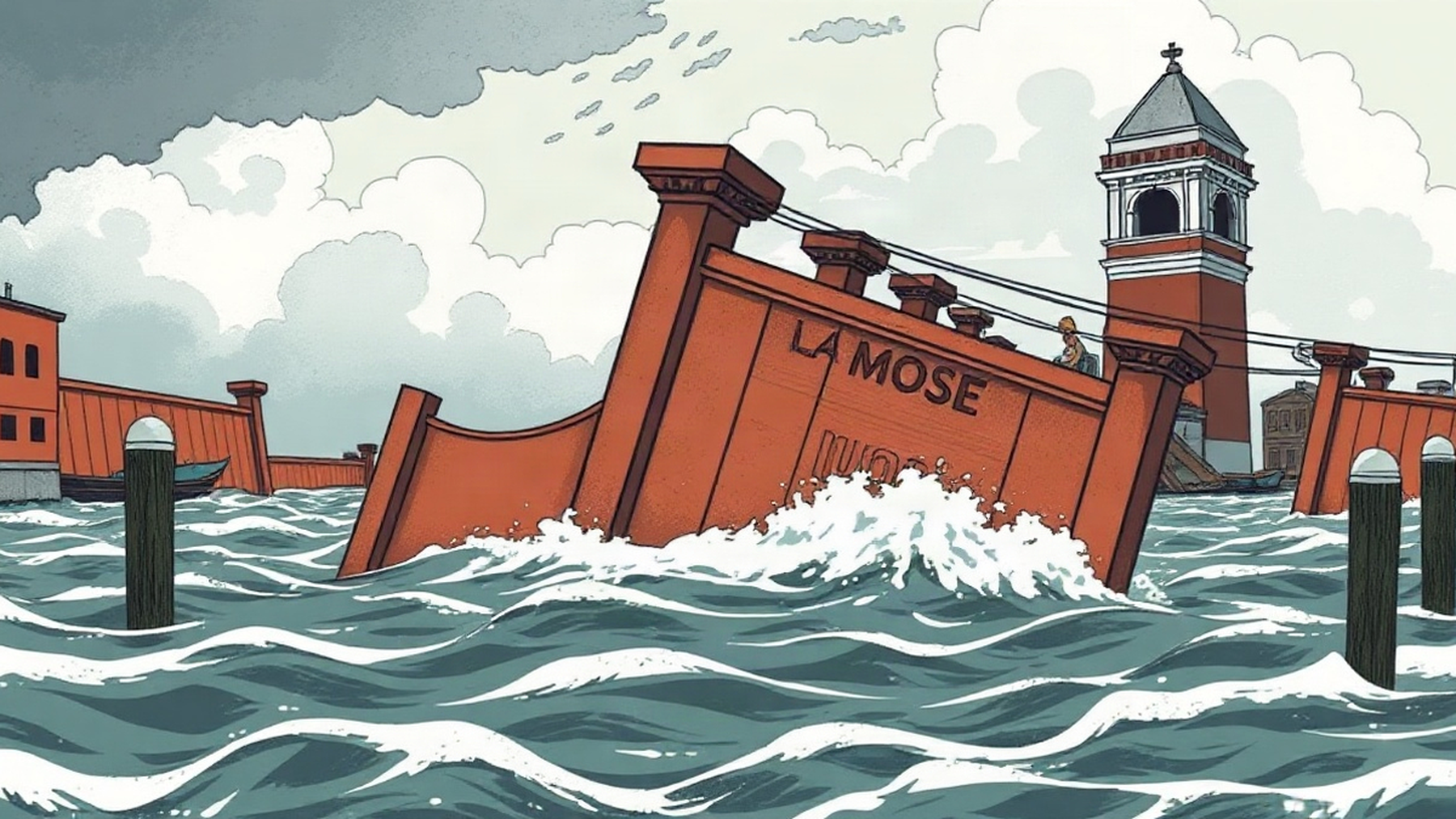
In September 2023, Venice's MOSE flood barrier system became fully operational, providing a pivotal enhancement in the city's strategy to combat flooding due to high tides.
At a glance
- System
- MOSE Flood Barriers
- Location
- Venetian Lagoon
- Operational Since
- September 2023
- Barrier Count
- 78
- Effective Against Tides
- Up to 3 meters
Decades in the Making
The MOSE project has been a monumental undertaking for Venice, a city frequently affected by high tides. Originally conceptualized decades ago, the system faced numerous setbacks, including financial mismanagement, corruption, and technical challenges. Despite these hurdles, September 2023 marked the moment when MOSE became fully operational, a testament to the resilience and determination of those involved in the project. The system is designed to protect Venice from tides of up to 3 meters, a necessary defense against the increasing threat of climate change.
Technical Specifications
The MOSE system comprises 78 mobile barriers strategically positioned at the lagoon's inlets. These barriers are engineered to rise in synchrony, creating a temporary but formidable wall against the sea. The deployment process is swift, taking less than 30 minutes, and is crucially activated approximately three hours before anticipated high tides, based on meteorological data collected from the Acqua Alta Oceanographic Tower. The operations center located at the Arsenale complex oversees the management and coordination of these barriers.
Community and Environmental Impact
While the MOSE system represents a significant triumph in flood defense, it has sparked debate. Environmentalists have expressed concerns over its impact on the lagoon's biodiversity, arguing that frequent barrier operations could disrupt the natural water flow and marine life. Additionally, there are apprehensions about the long-term effects on Venice's infrastructure and cultural heritage. Nevertheless, the successful prevention of flooding instances since its full operation has brought relief to many Venetians, underscoring its immediate benefits.
Operational Success and Challenges
Since its activation, the MOSE system has been utilized over 30 times in 2023 alone. Notably, it successfully protected the city during a high tide event in November 2021, when water levels reached 135 centimeters, a height that would have previously inundated Venice. This achievement made headlines worldwide and demonstrated the system's potential to safeguard the city from future climate-induced challenges. However, continuous monitoring and maintenance are imperative to ensure its longevity and efficacy.
Future Considerations
As Venice navigates the complexities of climate adaptation, the MOSE system is just one component of a comprehensive strategy that includes elevating quaysides and reinforcing coastal areas. Efforts are ongoing to integrate sustainable practices and technologies to preserve Venice for future generations. The insights gained from the MOSE project's implementation and operation may serve as a model for other coastal cities facing similar threats, highlighting the importance of proactive measures in urban resilience planning.
Historical Context and Development
The concept of a flood barrier system for Venice was first proposed in the 1980s, as the city grappled with increasingly severe flooding issues. The initial designs were ambitious, aiming to protect the historic city from the frequent inundations caused by the Adriatic Sea's high tides. However, it wasn't until the early 2000s that construction began in earnest, following decades of planning, debate, and revision. The MOSE project, an acronym for MOdulo Sperimentale Elettromeccanico (Experimental Electromechanical Module), was envisioned as part of a broader initiative to safeguard the Venetian Lagoon through integrated coastal management.
Despite the technical sophistication of the project, its journey was fraught with obstacles. Financial mismanagement and corruption scandals significantly delayed progress, and the project's escalating costs drew criticism from various quarters. Moreover, environmental groups raised concerns about the potential ecological impact on the lagoon, advocating for more sustainable solutions. These challenges underscored the complexity of balancing technological innovation with environmental stewardship and fiscal responsibility.
Innovative Engineering Solutions
The MOSE system's engineering is a marvel of modern technology, featuring a series of 78 mobile barriers that are hinged to the seabed at the strategic inlets of the lagoon. Each barrier is a hollow, metal structure, filled with water and lying flat on the seabed when not in use. When a high tide is forecasted, compressed air is pumped into the barriers, expelling the water and causing them to rise to the surface. This process creates a temporary dam that effectively separates the lagoon from the sea.
These barriers are capable of withstanding significant water pressure, thanks to their robust construction using thousands of tonnes of steel. The precision required for their synchronized elevation is facilitated by advanced meteorological data and monitoring systems. The Acqua Alta Oceanographic Tower plays a crucial role in this process, providing real-time data on sea and weather conditions. The success of the MOSE system relies heavily on the seamless integration of these technological components, which collectively form a formidable defense against the forces of nature.
Economic Implications and Tourism
Venice's economy is heavily reliant on tourism, with millions of visitors flocking to the city each year to experience its unique cultural and architectural heritage. Flooding poses a direct threat to this economic lifeline, as high water levels can disrupt transportation, damage property, and deter tourists. The MOSE system's activation has already demonstrated its potential to mitigate these risks by preventing flood-related disruptions.
By ensuring the city's accessibility and preserving its iconic landmarks, the MOSE system helps safeguard Venice's cultural heritage and supports its economic stability. Moreover, it alleviates the financial burden of flood damage repairs, allowing resources to be redirected towards other critical infrastructure improvements. As a result, the MOSE project is not only a technical achievement but also an economic imperative for the city, reinforcing Venice's position as a premier global tourist destination.
Lessons for Global Coastal Protection
The implementation of the MOSE system offers valuable insights for other coastal cities facing similar challenges from rising sea levels and climate change. While the project's execution was not without controversy, its eventual success highlights the importance of perseverance and innovation in addressing complex environmental issues. Collaboration between engineers, policymakers, and environmental scientists is crucial to developing effective and sustainable flood protection strategies.
The lessons learned from Venice's experience underscore the necessity of long-term planning and investment in resilient infrastructure. As climate change continues to exacerbate the frequency and intensity of flooding events worldwide, cities must adopt comprehensive approaches that encompass both technological solutions and ecological considerations. The MOSE system exemplifies how targeted engineering can coexist with broader efforts to enhance urban resilience, setting a precedent for future initiatives aimed at protecting vulnerable coastal communities.
Frequently asked questions
What is “A New Era for Venice: MOSE System Operational” about?
In September 2023, Venice's MOSE flood barrier system became fully operational, providing a pivotal enhancement in the city's strategy to combat flooding due to high tides.
What is the key fact about “A New Era for Venice: MOSE System Operational”?
MOSE Flood Barriers
What should readers know about “Decades in the Making”?
The MOSE project has been a monumental undertaking for Venice, a city frequently affected by high tides. Originally conceptualized decades ago, the system faced numerous setbacks, including financial mismanagement, corruption, and technical challenges. Despite these hurdles, September 2023 marked the moment when MOSE became fully operational, a testament to the resilience and determination of those involved in the project. The system is designed to protect Venice from tides of up to 3 meters, a necessary defense against the increasing threat of climate change.
Sources
- “MOSE: The Venice flood barriers that might save the city,” CNN. Source link
- “VENICEPROJECT® - MOSE, the mobile barriers system,” VENICEPROJECT. Source link
- “Flood protection gates save Venice from exceptional high tide - EnviroNews,” EnviroNews. Source link
This article was independently researched and produced. No payment, complimentary service or editorial approval was provided by the places mentioned.