
In brief
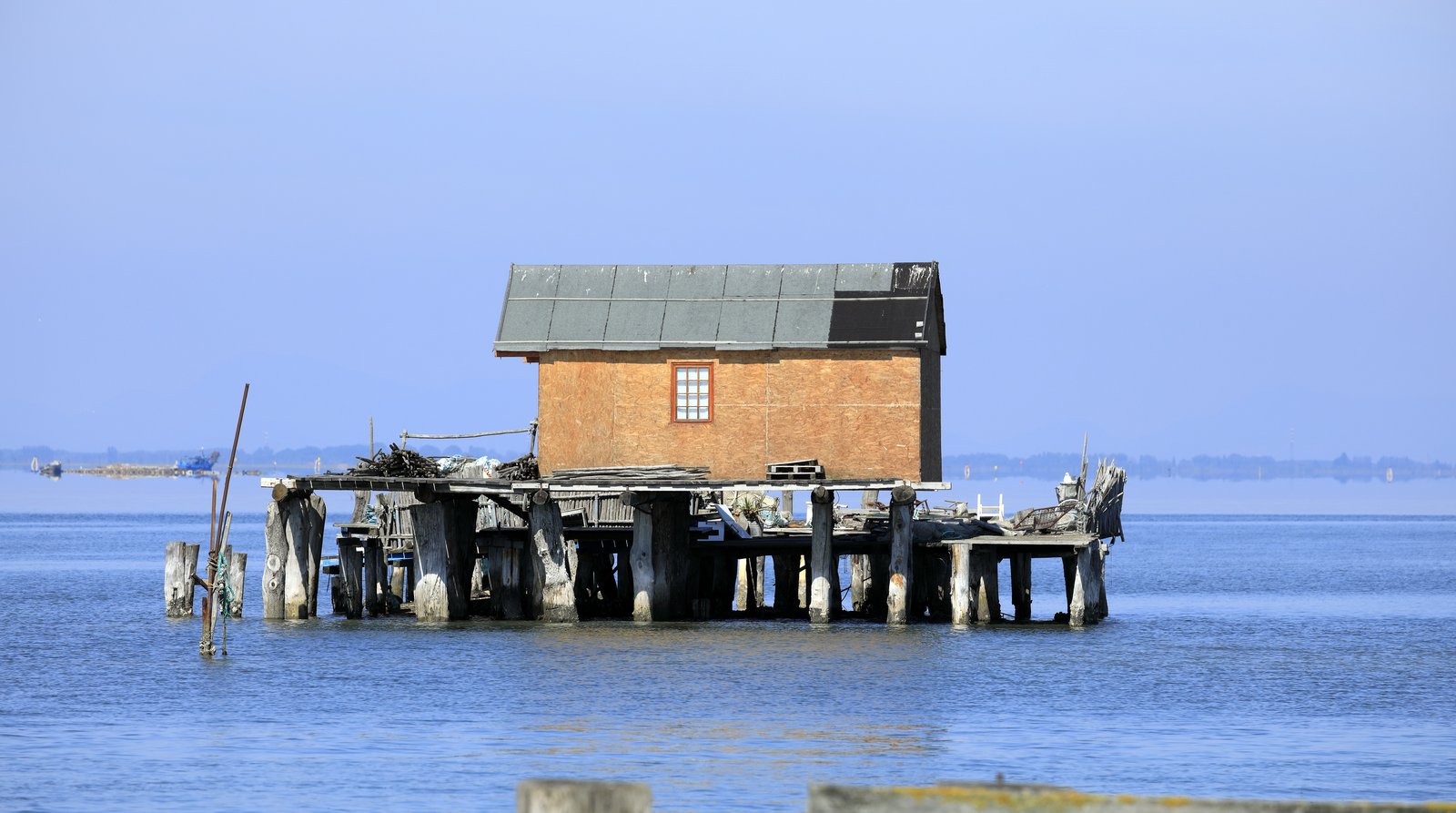
Pellestrina is a narrow barrier island south of the Lido, connected by a car ferry from Alberoni and reachable overall from Venice in around 90 minutes. Built almost entirely around fishing and protected on its seaward side by the Murazzi, an 18th-century stone sea defence, it remains one of the least visited inhabited parts of the Venetian Lagoon.
At a glance
- Location
- Southernmost barrier island, between the Lido and Chioggia
- Best for
- Fishing-village life, cycling, seeing the Murazzi sea wall
- Time needed
- Half a day, longer if combined with Chioggia
- Getting around
- ACTV bus/ferry line 11 from the Lido (bus, then car ferry, then bus)
- Access note
- Few services outside the main village of San Pietro in Volta and Pellestrina town — plan food and water in advance
- Last checked
- August 2026
A sliver of land built to be a defence, not a destination
Pellestrina is barely more than a strip of sand and stone in places, at points only a few hundred metres wide, separating the southern lagoon from the open Adriatic. Its narrowness is not incidental — the island has functioned for centuries as a natural barrier protecting Venice and the southern lagoon from storm surges, a role the Republic took seriously enough to reinforce with permanent stonework. Unlike the Lido, Pellestrina never developed a resort identity; its economy has remained tied almost entirely to fishing, and its villages — Santa Maria del Mare, San Pietro in Volta and Pellestrina town itself — retain a working, unpolished character rarely found this close to central Venice.
The Murazzi: the Republic's answer to the sea
Along Pellestrina's seaward edge runs the Murazzi, a monumental sea wall of Istrian limestone blocks built by the Republic of Venice between 1744 and 1782 to replace earlier wooden and earthen defences that storms repeatedly destroyed. Engineered to absorb and dissipate wave energy rather than simply block it, the Murazzi was among the most ambitious civil engineering projects the Republic undertook in its final century, and much of it still stands and functions, walkable along long stretches and offering uninterrupted Adriatic views distinct from anything available on the lagoon side of the island.
A fishing economy that still runs the island
Pellestrina's identity is inseparable from its fishing fleet. Small boats work daily from the island's protected lagoon-side moorings, and much of the local diet and restaurant menus reflect that directly — this is one of the more reliable places in the lagoon to eat fish and shellfish landed the same day rather than transported in. Lace-making has a documented history on the island as well, distinct from Burano's tradition though frequently overshadowed by it, practiced by a shrinking number of women who learned the craft from earlier generations.
Getting there is part of the experience
Reaching Pellestrina from Venice requires a vaporetto to the Lido, a bus the length of the Lido to Alberoni, a short car ferry crossing to Santa Maria del Mare, and then a bus or bicycle along Pellestrina's single main road — a journey of roughly 90 minutes each way that filters out all but the genuinely curious. The upside of that friction is an island with essentially no tourist infrastructure: no souvenir stalls, no scripted photo stops, just a fishing community going about its day.
The MOSE barriers and Pellestrina's role in flood defence
Pellestrina sits close to two of the three inlets connecting the lagoon to the Adriatic, which made it a natural anchor point for MOSE, the mobile flood barrier system engineered to protect Venice from acqua alta by sealing the lagoon's inlets during exceptionally high tides. Sections of the system's infrastructure near the Chioggia inlet are visible from the island's southern stretches, and the barriers' first operational closures in the early 2020s marked a significant, if still debated, chapter in the centuries-long effort — traceable back to the Murazzi and beyond — to manage the relationship between this fragile strip of land and the sea it holds back.
Cycling the island and the road to Chioggia
Because the ferry and bus system also carries bicycles, Pellestrina is well suited to a slow cycle along its single road, with the lagoon on one side and, glimpsed between buildings, the Murazzi and open sea on the other. At its southern end, a further short ferry connects to Chioggia, a substantial fishing town technically outside the Venetian Lagoon proper but historically and economically bound to it — a natural extension for travellers with a full day rather than a half-day to spend.
What to eat on Pellestrina
Pellestrina's kitchens lean heavily on whatever the fleet has landed that morning, with moeche — soft-shell lagoon crabs harvested during a brief moulting window in spring and autumn — a particular local specialty prepared in several villages along the island. Simpler dishes dominate elsewhere: grilled or fried small fish, sarde in saor (Venice's classic sweet-and-sour marinated sardine dish, though it is claimed by cooks across the lagoon rather than uniquely by Pellestrina), and bread from the handful of bakeries still operating in Pellestrina town. Restaurant choice is limited compared with central Venice, but what exists tends to be aimed squarely at residents rather than visitors, which shows in both pricing and portion sizes.
A shrinking, ageing population
Like several of the lagoon's outer islands, Pellestrina has seen its resident population decline over recent decades, according to Comune di Venezia demographic records, as younger residents move toward the mainland for work and education, leaving behind an older, more fishing-dependent community. This pattern is common across Venice's outlying islands but feels especially pronounced on Pellestrina given how thoroughly the island's identity depends on continuous, active fishing rather than tourism or commuting to the historic centre. Visiting respectfully here means recognising Pellestrina as a working community under real economic pressure, not a preserved backdrop, and supporting its handful of independent restaurants and shops accordingly.
Is Pellestrina worth the journey?
For travellers specifically interested in the lagoon's working, non-touristic edge — its fishing economy, its sea defences and its unhurried village life — yes; for anyone with only a day or two in Venice and a checklist of major sights still unseen, Pellestrina is better saved for a longer stay.
Sources
- Comune di Venezia — Pellestrina municipal and heritage records
- ACTV / Venezia Unica — bus and ferry routes to Pellestrina
- Consorzio Venezia Nuova — historical documentation of lagoon sea defences including the Murazzi
This article was independently researched and produced. No payment, complimentary service or editorial approval was provided by the places mentioned.