
In brief
Sant'Erasmo is the largest lagoon island after Venice's historic centre, reached by ACTV vaporetto line 13 from Fondamente Nove in about 35 to 40 minutes. It has no monuments to speak of; instead it is a working agricultural island, long the lagoon's principal market garden, known especially for the castraure and violet artichokes sold at Rialto Market each spring.
At a glance
- Location
- Northern lagoon, east of Murano
- Best for
- Cycling, farm visits, a genuinely rural lagoon landscape
- Time needed
- Half a day, ideally with a bicycle
- Getting around
- ACTV vaporetto line 13 from Fondamente Nove; bicycles are the practical way to cover the island
- Access note
- Very limited food and rental services — check opening hours before travelling, especially outside spring and summer
- Last checked
- August 2026
The lagoon's working larder
Where Murano is defined by fire and glass and Burano by colour and lace, Sant'Erasmo is defined by soil. At roughly 3 square kilometres it is the largest lagoon island outside the historic centre of Venice, yet it draws a fraction of the visitors of its northern neighbours, because there is, deliberately, very little built to see. What there is instead: rows of vegetables, vineyards, orchards and greenhouses spread across sandy, mineral-rich soil that has supplied Venice's markets for centuries, most visibly the Rialto Market's Erberia stalls a short vaporetto ride away.
The violet artichoke and the castraura
Sant'Erasmo's best-known product is its violet-tinged artichoke, and specifically the castraura — the first, small, tender bud cut from each plant in a short window in April and May before the larger secondary buds are allowed to develop. Castraure are prized enough in Venetian cooking that they command a significant premium and appear on seasonal menus across the city for only a few weeks each year, eaten raw, thinly sliced, or briefly fried. The island also grows other lagoon vegetables, grapes for a small local wine production, and, historically, produce that supplied Venetian households directly via boat before formal market infrastructure existed.
A defensive tower with no obvious town around it
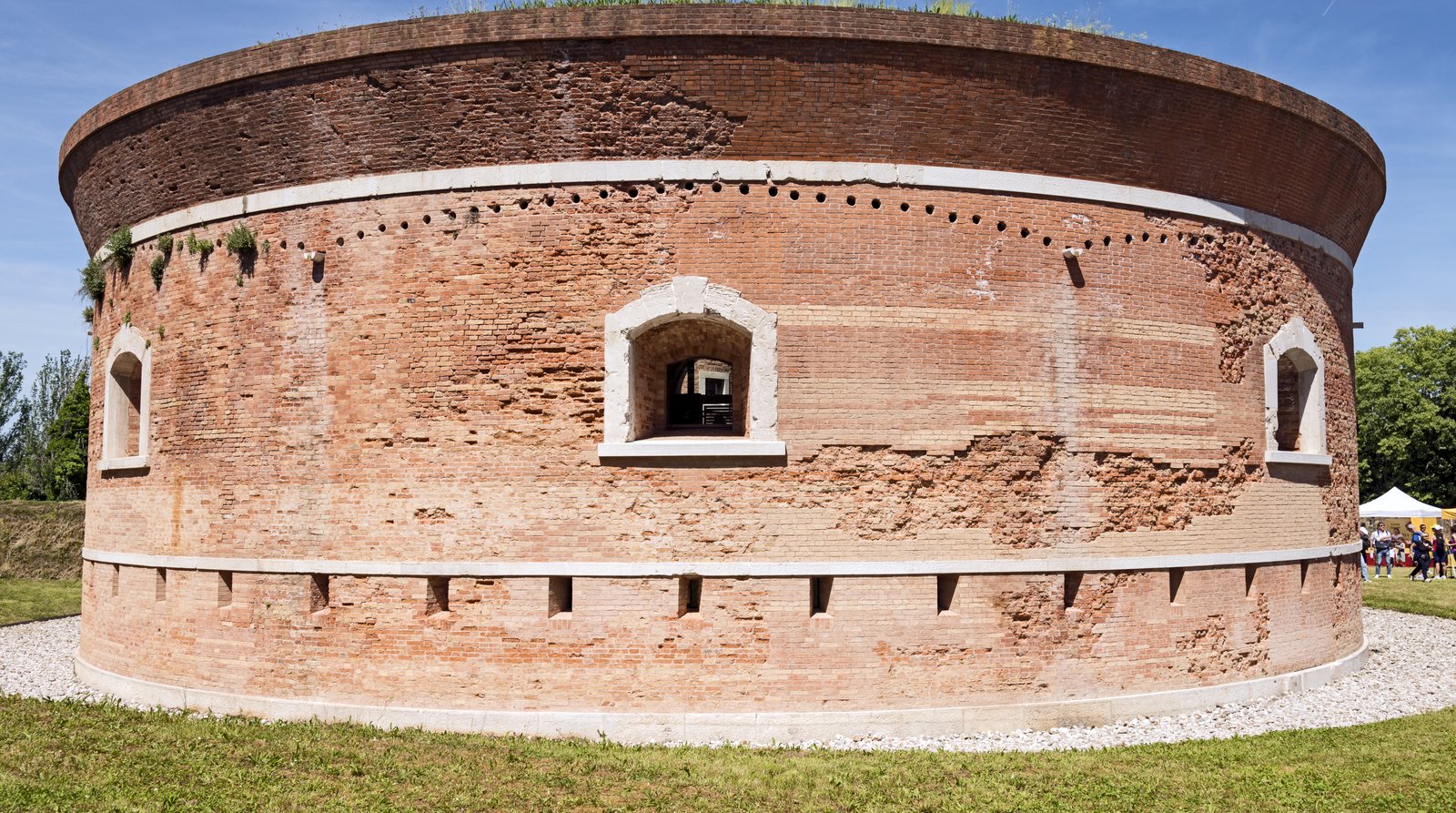
The island's one substantial historic structure is the Torre Massimiliana, a nineteenth-century defensive tower built during the Austrian administration of Venice as part of the lagoon's coastal fortifications. Unlike a typical Venetian landmark, it sits somewhat apart from any dense settlement, since Sant'Erasmo never developed a conventional town centre — its population has always been dispersed across farms rather than concentrated around a campo and church. The tower today hosts occasional exhibitions and cultural events, a modest counterpoint to the working fields around it.
Cycling the island properly
Sant'Erasmo is flat, quiet and largely free of the pedestrian congestion that defines central Venice, which makes it one of the few lagoon islands genuinely suited to unhurried cycling. A single road loops much of its length, passing farm plots, a scattering of houses, small vineyards and a modest beach area, the Bagno Lido di Sant'Erasmo, at its northeastern tip — an unassuming stretch of sand with none of the resort infrastructure of the Lido proper, popular mainly with locals.
Vineyards and a lagoon wine tradition
Alongside vegetables, Sant'Erasmo supports a small but genuine wine-growing tradition, including plantings of the malvasia istriana grape and other varieties suited to the island's sandy, saline-influenced soil. Production is modest compared with mainland Veneto wine regions and rarely reaches wide distribution beyond Venice itself, but a handful of producers on the island bottle under their own labels, and some restaurants in Venice specifically list lagoon-grown wine as a point of local distinction. The vineyards themselves, low rows running between vegetable plots and drainage channels, are one of the more visually distinct features of the island's landscape, especially in early autumn during harvest.
Buying directly from growers
A handful of farms on the island sell produce directly, and some offer informal tastings or farm visits, particularly in artichoke season. Buying this way — rather than relying solely on Rialto resellers — puts money directly into an agricultural economy that has come under real pressure from rising land costs and the broader depopulation affecting the lagoon's outer islands, where Comune di Venezia figures show a long-term decline in resident numbers.
Sant'Erasmo compared with the lagoon's other outer islands
It is useful to place Sant'Erasmo against its better-known neighbours. Where Murano's economy depends on a skilled trade passed down through guild-like family workshops, and Burano's on tourism drawn by colour and craft, Sant'Erasmo's economy remains closer to what most of the lagoon's outer islands looked like before tourism reshaped them: land worked for food, sold through established market channels, with visitors an occasional rather than a central part of the picture. That makes it one of the more instructive stops for understanding what the lagoon actually produces, as distinct from what it displays, and a natural counterpart to Pellestrina's fishing economy on the lagoon's southern edge.
The Torre Massimiliana's cultural second life
Beyond its role as a historical curiosity, the Torre Massimiliana has taken on a modest cultural function in recent years, hosting occasional art exhibitions, small concerts and community events organised with local associations. Its thick defensive walls and circular plan, designed for artillery rather than aesthetics, make for an unusual exhibition space, and events there tend to draw a mix of island residents and visitors specifically seeking out Sant'Erasmo rather than passing tour groups. Checking the tower's opening schedule before visiting is worthwhile, since it operates on a considerably more limited timetable than any museum in central Venice, run largely by volunteers and local cultural associations rather than a dedicated municipal staff.
A quiet counterpoint to Venice's tourism debate
Much of the public conversation about the lagoon in recent years has focused on visitor numbers in central Venice — access fees, day-tripper caps, cruise ship restrictions. Sant'Erasmo sits almost entirely outside that debate, not because it lacks relevance but because it faces a nearly opposite problem: too few visitors and too little economic support for an agricultural way of life that is genuinely at risk of disappearing as land costs rise and younger generations look elsewhere for work. A visit here, framed with that context in mind, is less about ticking off another lagoon island and more about understanding the quieter, harder-to-headline pressures facing the lagoon's working communities alongside its more visible over-tourism.
What is the best time to visit Sant'Erasmo?
Late April through May is the highlight for anyone interested in the castraure harvest and the island at its most productive, though Sant'Erasmo is a pleasant, uncrowded cycle at almost any time between spring and early autumn — it is simply a working landscape rather than a seasonal spectacle, and rewards visitors who come without a fixed list of things to see.
Sources
- Comune di Venezia — lagoon island population and agricultural land records
- ACTV / Venezia Unica — vaporetto routes and timetables
- Consorzio Cooperative Produttori Sant'Erasmo — local agricultural documentation
This article was independently researched and produced. No payment, complimentary service or editorial approval was provided by the places mentioned.