
In brief
Venice is divided into six sestieri — San Marco, Castello, Cannaregio, Dorsoduro, San Polo and Santa Croce — an administrative division dating to the twelfth century that still structures addresses, parish life and local identity. Each has a distinct character: San Marco is monumental and commercial, Cannaregio and Castello are largely residential, Dorsoduro is academic and artistic, and San Polo and Santa Croce hold the historic Rialto market district.
At a glance
- Location
- Historic centre of Venice, within the Grand Canal's loop
- Best for
- Understanding Venice beyond the San Marco basin
- Time needed
- Roughly a day per sestiere for an unhurried visit
- Getting around
- On foot via calli and campi; vaporetto along the Grand Canal
- Access note
- House numbers run consecutively within each sestiere rather than by street — expect three- or four-digit numbers with no obvious street order
- Last checked
- August 2026
An address system older than the country around it
Ask a Venetian for a street address and you are likely to get a sestiere name and a number before you get a street name at all. "San Polo 2076" or "Cannaregio 3778" is a complete, functional address in Venice, because the city's six sestieri — literally "sixths" — have organised numbering, parish boundaries and civic identity since the division was formalised in the twelfth century, long before Italy existed as a country. The numbers run in a single sequence around the perimeter of each sestiere rather than block by block along individual streets, which is precisely why paper maps and patience still beat any app for orientation here.
Most visitors experience only one sestiere — San Marco — and leave believing they have seen Venice. They have seen its stage set. The other five sestieri, home to the great majority of the roughly 49,000 residents who still live in the historic centre according to Comune di Venezia population figures, are where the city's working rhythms are easiest to observe.
San Marco and Castello: power, ceremony and the Arsenale
San Marco is the smallest sestiere by area but the most monumental: the Basilica, the Doge's Palace, the Procuratie arcades and the dense grid of shops between them were built to project the Republic's wealth to visiting ambassadors, and they still do that job for cruise-ship crowds today. It rewards an early-morning visit, before the Piazza fills, more than any other approach.
Castello, the largest sestiere, stretches east from San Marco toward the Arsenale — the fortified shipyard where the Republic once built and armed war galleys on something close to an assembly line, centuries before the term existed. Beyond the Arsenale's walls, Via Garibaldi and the Giardini della Biennale (home to the Venice Art and Architecture Biennales) show a residential, workaday Castello that most day-trippers never reach, with local bacari and a genuinely mixed-age population.
Cannaregio: the northern residential quarter
Cannaregio holds roughly a quarter of Venice's residents within its boundaries and is where much of the city's actual domestic life happens: the broad Strada Nova carries local shopping traffic, while the Fondamenta della Misericordia has become the sestiere's evening gathering spot for spritz and cicchetti. Cannaregio is also home to the Venetian Ghetto, established by Republic decree in 1516 as a mandatory Jewish quarter — commonly cited as the origin of the word "ghetto" itself — where two active synagogues and the Jewish Museum of Venice still operate today.
Dorsoduro: academies, gardens and the Zattere
South of the Grand Canal, Dorsoduro takes its name — "hard back" — from the slightly firmer ground it was built on. It houses Ca' Foscari University, the Gallerie dell'Accademia and the Peggy Guggenheim Collection, giving it a younger, more academic character than most of the city. The Zattere, a long sunny promenade along the Giudecca Canal, is one of the few stretches of open waterfront in central Venice wide enough for an unhurried walk, and the Squero di San Trovaso — a working boatyard where wooden boats including gondolas are still built and repaired using traditional methods — can be viewed from the fondamenta opposite.
San Polo and Santa Croce: the market district and the oldest streets
San Polo and Santa Croce, the two smallest sestieri, sit around the Rialto Bridge and hold what is arguably the oldest continuously inhabited part of the city. The Rialto Market — split between the Erberia (produce) and Pescheria (fish) — has operated on roughly this site since the Republic's early centuries, and it remains a working market rather than a staged one, supplied partly by growers from Sant'Erasmo. Nearby, the Basilica dei Frari and the Scuola Grande di San Rocco hold major Titian and Tintoretto works with a fraction of the queues found at the Accademia. Santa Croce's Papadopoli Gardens offer one of the few green, shaded public spaces within the historic centre.
How to see more than one sestiere well
The mistake most first-time visitors make is treating Venice as a single compact sight to be covered in a day. Each sestiere rewards slower attention: crossing from San Marco into Castello via the Riva degli Schiavoni, or from San Polo into Dorsoduro across the Ponte dell'Accademia, changes the texture of a walk within minutes. Splitting a stay so that at least one full day is spent away from the San Marco basin — in Cannaregio in the morning, Dorsoduro in the afternoon, for instance — tends to leave visitors with a far more accurate sense of the city than a single circuit of the main sights.
Local markets as a way to read a sestiere
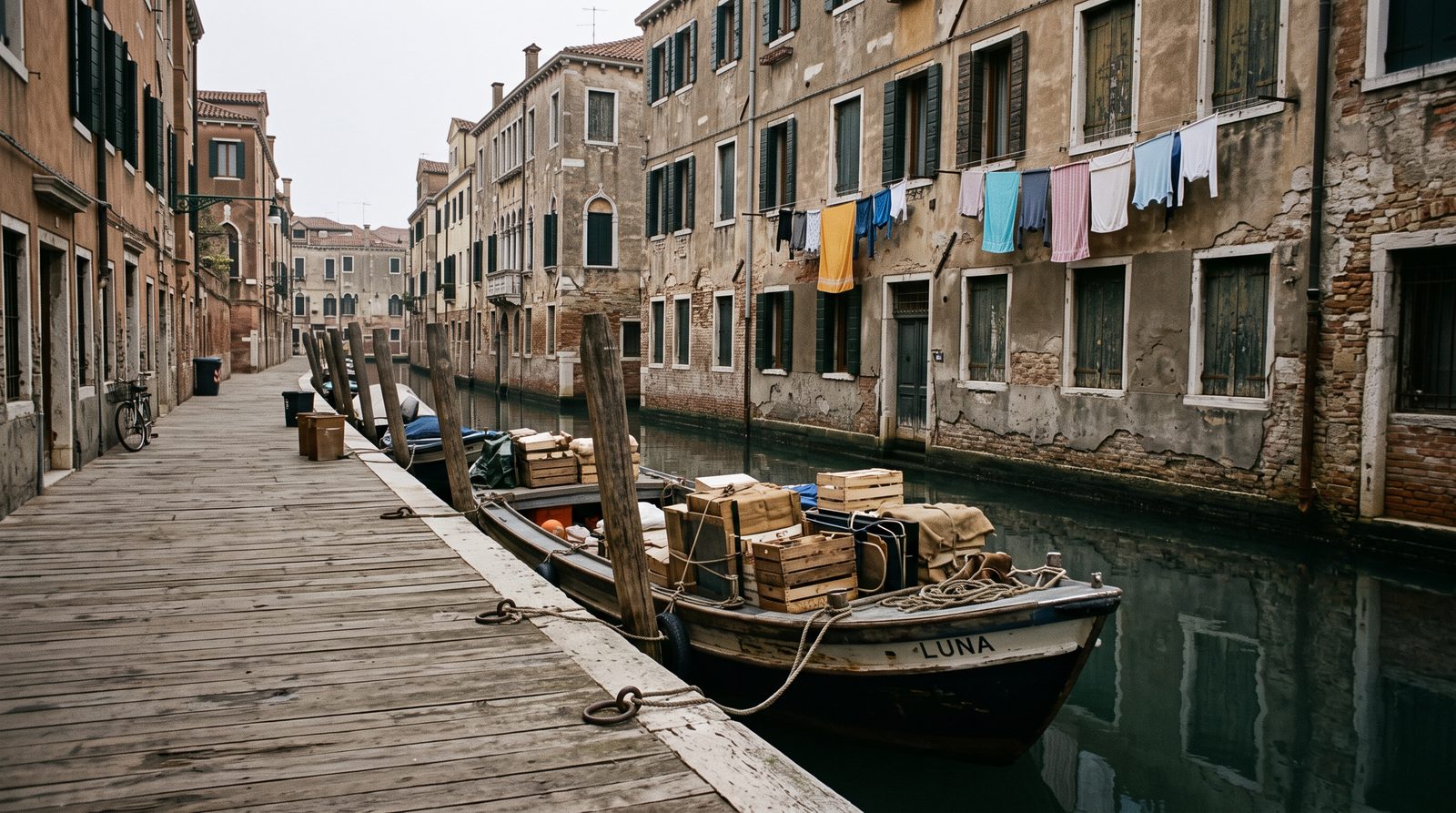
One of the more reliable ways to sense the difference between sestieri is to visit their local markets rather than their monuments. Beyond the well-known Rialto Market, smaller neighbourhood markets persist: a produce barge moors most mornings on the Rio de Cannaregio near Ponte dei Tre Archi, a floating stall that has served the sestiere's residents for generations, while Castello's Via Garibaldi holds a modest daily market largely unvisited by tourists. These smaller markets, supplied in part by growers from Sant'Erasmo, tend to close by early afternoon and rarely appear on printed itineraries, which is part of what makes them a useful gauge of how a sestiere actually functions day to day, as opposed to how it performs for visitors during peak hours.
Which sestiere should a first-time visitor prioritise?
Travellers with only a day or two should pair San Marco's major sights with either Dorsoduro (for art and the Zattere) or Cannaregio (for residential Venice and the Ghetto); those staying longer gain the most by adding Castello's Arsenale district and a slow walk through San Polo's market streets before the day-trip crowds arrive.
Sources
- Comune di Venezia — municipal population and territorial data
- Fondazione Musei Civici di Venezia — Gallerie dell'Accademia and city museum records
- Jewish Museum of Venice — history of the Venetian Ghetto
- ACTV / Venezia Unica — public transport routes across the sestieri
This article was independently researched and produced. No payment, complimentary service or editorial approval was provided by the places mentioned.