
In brief
Giudecca is Venice's eighth sestiere by tradition, a narrow island south of Dorsoduro reached by ACTV vaporetto line 2 or 4.1 from Zattere in about seven minutes. Once dominated by shipyards, mills and convent gardens, it is now a quiet residential district with a fraction of central Venice's visitor density, known for the Redentore church, converted industrial buildings and long lagoon-facing walks.
At a glance
- Location
- South of Dorsoduro, across the Giudecca Canal
- Best for
- Quiet walks, lagoon views, escaping central Venice's crowds
- Time needed
- Half a day is enough for a first visit
- Getting around
- ACTV vaporetto lines 2 and 4.1/4.2 from Zattere or San Marco
- Access note
- Few restaurants stay open outside core meal hours — check ahead in low season
- Last checked
- August 2026
An island that turned its back on tourism by accident
Giudecca is technically counted as part of Venice's sestiere structure but sits physically apart, separated from Dorsoduro by the wide Giudecca Canal — a gap of water just large enough to keep the island off most day-trip itineraries. That accident of geography has preserved something increasingly rare in central Venice: a neighbourhood where the majority of people on the street are residents rather than visitors, where laundry still gets strung between apartment blocks, and where the loudest sound most afternoons is a workboat engine rather than a rolling suitcase.
The name's origin is debated. One long-standing theory ties it to a historic Jewish settlement predating the 1516 Ghetto in Cannaregio; another traces it to "giudicata," land granted or "judged" to exiled noble families in the ninth century. Comune di Venezia heritage documentation treats both as plausible without settling the question definitively — a reminder that not every Venetian place name has a clean, agreed history.
From convent gardens to shipyards to studios
For centuries Giudecca combined religious institutions with productive land: convents held substantial garden plots, and by the nineteenth century the island had industrialised, hosting shipyards, a flour mill (the Molino Stucky, its neo-Gothic red-brick bulk still dominating the western skyline), textile works and warehouses. Much of that industrial architecture survived deindustrialisation in the twentieth century and has since been converted rather than demolished — the Molino Stucky is now a hotel, and smaller former workshops house artist studios, small manufacturers and, increasingly, private homes.
The Redentore and a festival that reshapes the canal
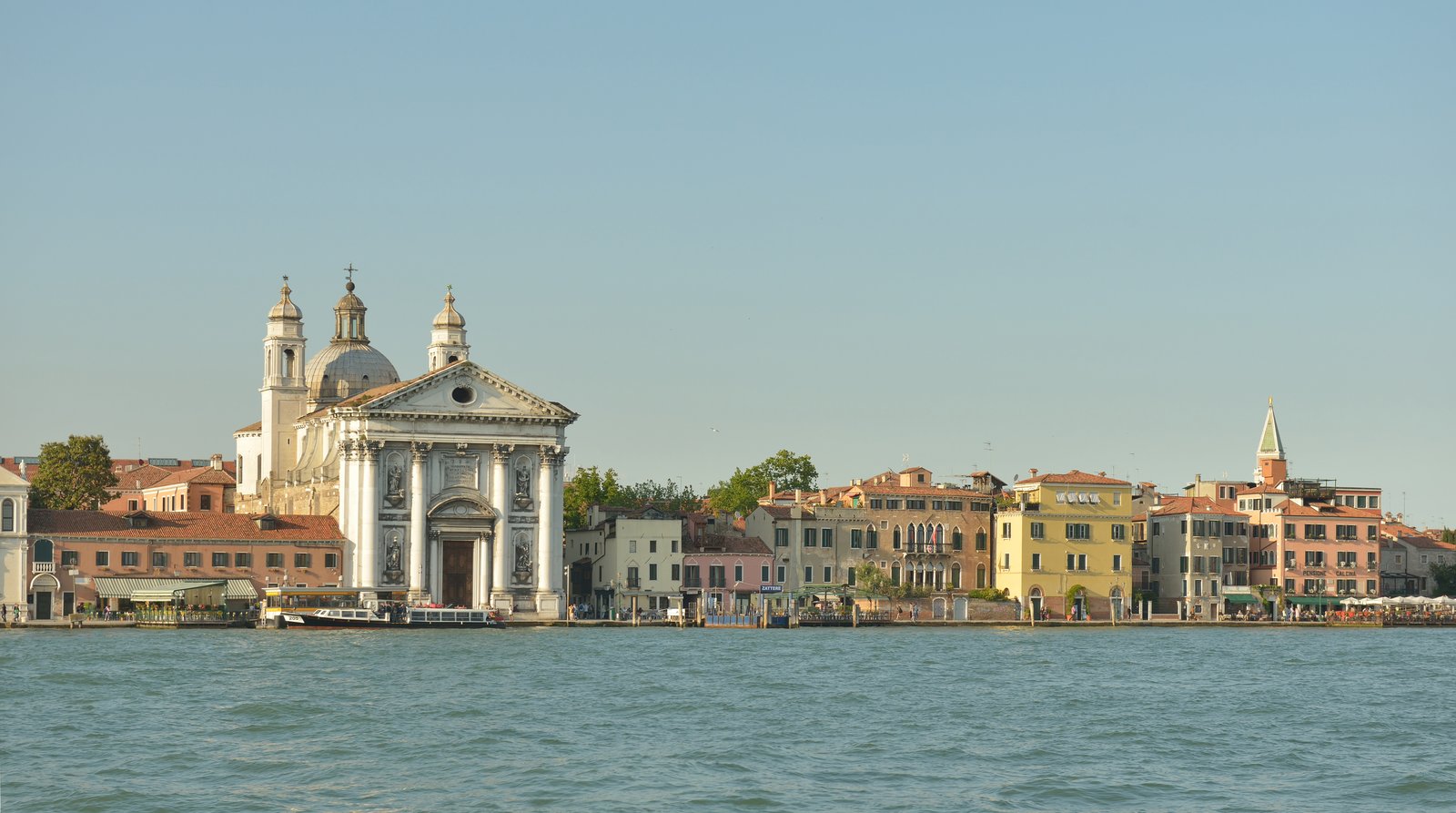
Andrea Palladio's Chiesa del Santissimo Redentore, completed in 1592, was built as a votive offering after a plague that killed a large share of Venice's population in 1575–1576. It remains the centrepiece of the Festa del Redentore each July, when a temporary pontoon bridge is built across the Giudecca Canal linking the island to Zattere, and much of Venice turns out for fireworks over the water — one of the few nights of the year when Giudecca is genuinely crowded rather than quiet.
Gardens, workshops and the long fondamenta walk
The island's northern fondamenta, facing Dorsoduro and San Marco across the canal, makes for one of the best uninterrupted waterside walks in Venice — wide, mostly flat, and rarely congested. Behind it, walled gardens (some still tended by religious communities, others now private) hint at Giudecca's agricultural past. At the island's eastern tip, past the Redentore, the pace slows further into a genuinely residential quarter with small campi, local bars and little visible commerce aimed at tourists.
Le Zitelle and the island's other churches
The Redentore is Giudecca's best-known church but not its only significant one. Chiesa delle Zitelle, closer to the eastern end of the fondamenta, was built in the late sixteenth century as part of a charitable institution for young women, its design also attributed in part to Palladian influence though completed after Palladio's death. Its twin white towers are a recognisable landmark from across the Giudecca Canal, and the building today hosts occasional concerts and cultural events rather than regular services. Further along, smaller parish churches and former convent chapels, many now deconsecrated or repurposed, mark the island's dense religious history relative to its modest size — a legacy of the convents that once owned much of Giudecca's land before Napoleonic suppression redistributed or abandoned it.
Hospitality and the island's changing economy
Giudecca's converted industrial buildings have increasingly drawn hospitality investment over recent decades, from the Molino Stucky's conversion to smaller boutique conversions of former warehouses and workshops. This has brought debate familiar across the lagoon's more accessible islands: rising property interest can fund restoration of buildings that would otherwise have continued decaying, but it also puts pressure on the kind of long-term residential population that gives Giudecca its distinct, unhurried character in the first place. Comune di Venezia housing data has tracked a gradual decline in the historic centre's resident population for decades, a trend Giudecca has not been fully immune to even as it remains, for now, markedly quieter than Venice's central sestieri.
Visiting without adding pressure to a residential island
Because Giudecca's appeal is largely its ordinary daily rhythm, the most useful thing a visitor can do is keep that rhythm intact: eat at the handful of trattorie that serve residents as much as visitors, avoid treating private garden walls and doorways as photo backdrops, and time a visit outside the Redentore festival weekend if a quiet island is specifically what's wanted.
The view most visitors never think to look for
Because Giudecca faces north across the canal toward Dorsoduro and San Marco, it offers a sightline that is essentially unavailable from within Venice itself: the city's skyline, campanili and domes seen as a single continuous silhouette rather than experienced street by street. Photographers and painters have long favoured the Giudecca fondamenta for exactly this reason, and the effect is strongest in the early morning or at sunset, when low light catches the facades across the water directly. It is a useful reminder that some of the best views of Venice are found by leaving it, briefly, rather than by climbing something within it.
Is Giudecca worth a special trip from central Venice?
Yes, for anyone who has already covered San Marco and wants a genuine change of pace within seven minutes of it — Giudecca offers lagoon views back toward the city that are unavailable from Venice itself, along with a rare sense of unhurried, lived-in space.
Sources
- Comune di Venezia — sestiere and island heritage records
- Fondazione Musei Civici di Venezia — Palladian architecture documentation
- ACTV / Venezia Unica — vaporetto routes and timetables
This article was independently researched and produced. No payment, complimentary service or editorial approval was provided by the places mentioned.