
In brief
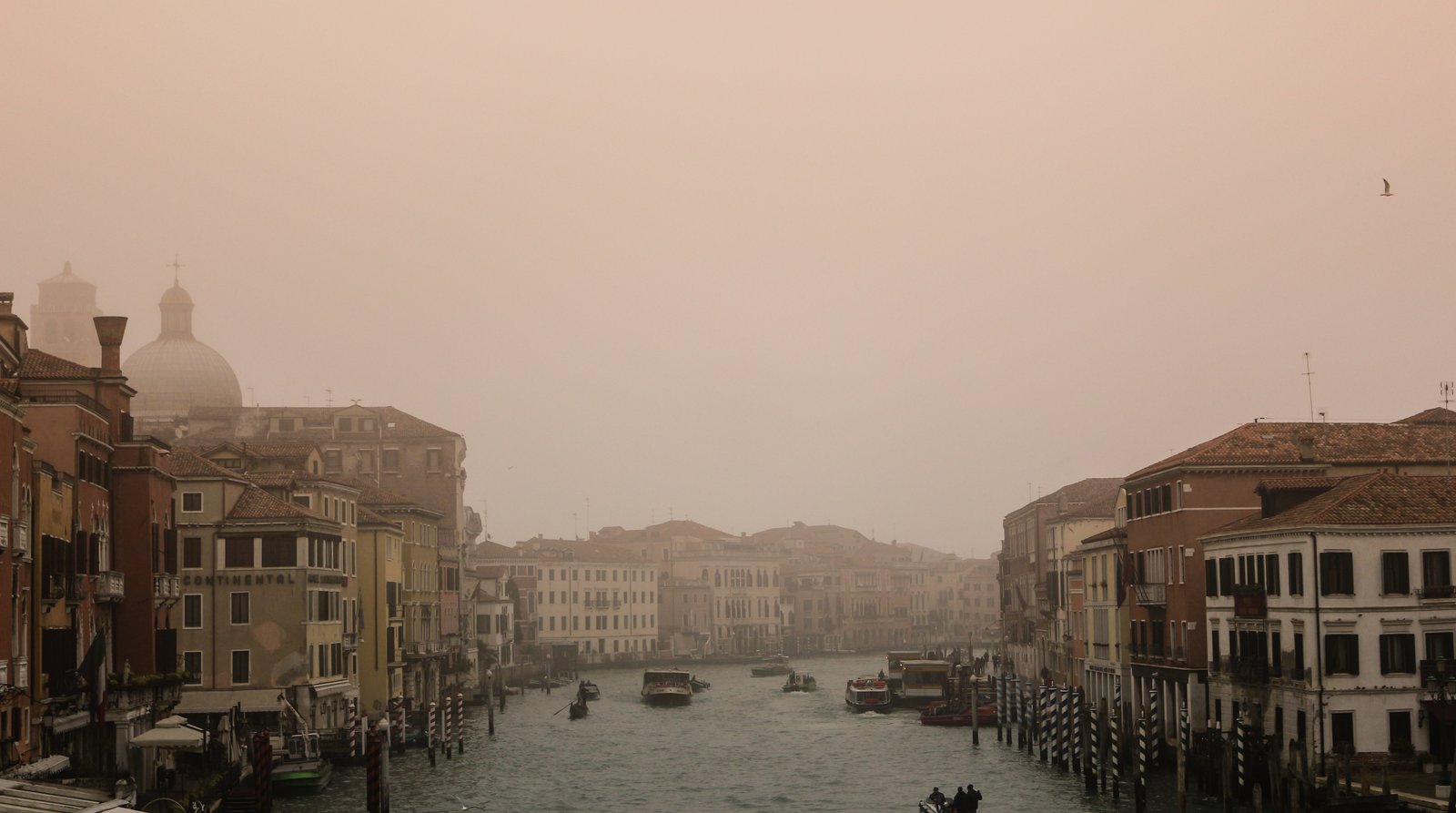
Winter in Venice, roughly November through February, sees visitor numbers drop sharply compared with spring and summer, while fog, cold temperatures and periodic acqua alta become more frequent. Residents commonly describe this period as when the city's shops, bacari and campi return to a pace and use dominated by locals rather than day-trippers, making it the season many Venetians consider most representative of daily life.
At a glance
- Season
- Roughly November–February
- Weather
- Cold, damp, frequent fog (nebbia), occasional acqua alta
- Visitor volume
- Markedly lower than April–October peak season
- Notable event
- Carnevale di Venezia typically runs in February, drawing a distinct crowd
- What's different
- Shorter opening hours for some tourist-facing businesses; longer for others
- Last checked
- July 2026
A city that empties out, on a schedule
Venice's visitor numbers follow a pronounced seasonal curve, peaking through spring and summer and again around major events, then dropping substantially from November through the depths of winter aside from the concentrated surge around Carnevale in February. For residents, this is not a subtle shift. Campo Santa Margherita, thick with foot traffic on a June evening, can feel like a genuinely local neighbourhood square on a January one. Vaporetti that run standing-room-only in August have empty seats in December. Restaurants that keep tourist-oriented hours and menus in peak season often shift back toward something closer to how they'd operate for a mostly local clientele.
Fog, cold and a different relationship with water
Winter brings the lagoon's own particular weather: nebbia, a dense fog that can settle over the water for days at a stretch, especially during still, cold conditions, occasionally disrupting vaporetto schedules to the outer islands and lending the city a genuinely different visual character than its sunlit summer version. Acqua alta also concentrates heavily in this period, a fact residents treat as simply part of the season rather than a crisis each time it occurs, as described in more detail elsewhere in this publication. The cold itself is damp in a way that feels sharper than the same temperature reads inland, a function of humidity off the lagoon, and locals dress and plan accordingly — layered wool, waterproof boots kept by the door, an understanding of which routes flood first.
What actually changes for people who live here
Beyond the obvious reduction in crowding, residents describe winter as when certain rhythms of Venetian life reassert themselves: neighbourhood bacari fill with regulars over ombra and cicchetti in the early evening in a way that summer's tourist-heavy version of the same ritual doesn't quite replicate; market vendors at Rialto deal more with local household buyers and less with photograph-taking visitors; and public spaces generally used as thoroughfares by day-trippers in summer become spaces Venetians actually linger in again. None of this is presented as an argument that winter Venice is more "authentic" in some essentialist sense — that framing tends to flatten a complicated, lived-in city into a simple binary. It is simply a documented, widely reported seasonal pattern: fewer visitors changes how public space gets used, and residents notice and value that shift.
Carnevale, the exception that proves the pattern
Carnevale di Venezia, typically held over roughly the ten days leading up to Ash Wednesday and therefore falling in February most years, is winter's major exception to the quiet-season pattern, drawing a dedicated crowd of costumed participants and spectators distinct from the general tourist calendar. For residents, Carnevale carries its own complicated relationship: rooted in genuine historical civic tradition dating back centuries, revived in its modern form in 1979 partly as a deliberate effort to bring life back to the city outside peak season, and simultaneously, for some residents, another period of crowding to navigate around rather than participate in directly. Its concentrated, dated nature — unlike the diffuse, months-long summer season — makes it feel different in character even to those who find it disruptive.
Light, at least, is on winter's side
What winter lacks in warmth it partly compensates for in light. Low winter sun over the lagoon, particularly on clear cold days after a spell of fog has cleared, produces a flatter, longer-angled light across the water and building facades that photographers and painters working in Venice have long favoured over summer's harsher overhead sun. Combined with near-empty campi and calli in the mid-morning hours before Carnevale-season crowds or weekend day-trippers arrive, this gives winter Venice a distinct visual character — quieter colours, longer shadows, mist rising off canals on the coldest mornings — that is simply unavailable at other times of year, whatever else the season costs in comfort.
Visiting in winter, done well
For a visitor genuinely interested in seeing how Venice functions day to day rather than only its most photographed version, winter offers real advantages: shorter queues at major sites, a more legible sense of the city's actual scale and quiet, and — outside the Carnevale window specifically — a public realm shared mostly with residents rather than other visitors. The trade-offs are real too: some island connections run less frequently, certain seasonal businesses close for the winter entirely, and the weather is genuinely damp and cold rather than merely atmospheric. Residents who recommend winter travel tend to do so honestly, with those caveats included, rather than as an uncomplicated sales pitch — which is, itself, a fairly accurate representation of how Venetians tend to talk about their own city.
Sources
- Comune di Venezia — seasonal visitor and tourism data
- Carnevale di Venezia — official event history and dates
- ACTV — seasonal timetable variation, outer-island routes
This article was independently researched and produced. No payment, complimentary service or editorial approval was provided by the places mentioned.