
In brief
ACTV operates Venice's vaporetto network, a system of roughly two dozen water routes carrying tens of millions of passengers annually through canals and open lagoon. Piloting one requires a specific maritime licence, close working knowledge of tides, currents and traffic in narrow waterways, and the ability to dock precisely at crowded stops using a boat with none of a car's steering geometry.
At a glance
- Operator
- ACTV (Azienda del Consorzio Trasporti Veneziano)
- Network
- Roughly two dozen numbered routes across Venice and the lagoon
- Annual ridership
- Tens of millions of passenger journeys per year
- Crew roles
- Comandante (pilot) and marinaio (deckhand/mooring crew) per boat
- Ticketing
- Managed through Venezia Unica, the city's integrated transport card
- Last checked
- July 2026
A public transport system with no roads
Venice has no cars, no buses, no trams within the historic centre — which makes ACTV's vaporetto network the closest equivalent the city has to an urban transit system, and it is treated with exactly that level of civic seriousness by the people who run it. Routes are numbered like bus lines, timetables are published and generally kept to closely, and the boats themselves range from small, agile craft working tight inner canals to larger vessels handling the Grand Canal and open-lagoon crossings to Murano, Burano and the Lido. Each boat typically operates with a two-person crew: a comandante piloting from an open or semi-enclosed control position, and a marinaio handling mooring lines, the gate and passenger flow at each stop — a division of labour that matters enormously in a system where stops come every few minutes and docking has to be fast, precise and safe in a boat crowded standing-room with passengers.
What piloting a vaporetto actually requires
Commanding a vaporetto requires a specific Italian maritime licence appropriate to inland and coastal waters, along with training specific to Venice's canal system, which behaves quite differently from open water. Canals have currents that shift direction with the tide, vary in depth across a single crossing, and narrow sharply at certain points where boat traffic — vaporetti, water taxis, delivery barges, private boats, gondolas — all compete for the same limited channel width, with different vessel types following different right-of-way conventions that a pilot has to know instinctively rather than work out in the moment. Fog, common in the lagoon particularly in late autumn and winter, can reduce visibility drastically on open-water crossings to the outer islands, and pilots on those routes rely on a combination of experience, radar where fitted, and close route familiarity to keep to schedule safely when visibility drops.
Docking itself is a skill worth pausing on specifically: a vaporetto has no wheels, no brakes in the automotive sense, and has to be brought alongside a floating pontoon stop precisely enough for a gate to open directly onto it, repeatedly, at short intervals, often while a moderate current is actively pushing the boat off line. Experienced pilots make this look close to effortless; it is, in fact, one of the more technically demanding routine manoeuvres in any public transport system anywhere, repeated dozens of times across a single shift.
Tide, not timetable, sets the real constraints
ACTV schedules are built around normal tidal conditions, but exceptional tides — very low water, which can leave some shallower canal routes briefly unnavigable for larger boats, or acqua alta, which can affect certain low stops and require route adjustments — mean pilots and dispatchers regularly have to make real-time judgment calls that a purely timetable-driven bus or train system would rarely face. A vaporetto captain's actual working knowledge includes not just the published network map but a mental model of which routes become difficult under which specific tidal and weather conditions, built up, as with so much lagoon expertise, through years of accumulated shifts rather than a training manual alone.
Crowding as a genuine operational problem
Peak-season crowding is not simply an inconvenience for passengers; it is a real operational and safety consideration for crews, who have to manage boarding limits, prevent overcrowding at popular stops such as San Marco and Rialto, and keep to schedule even when a stop has far more waiting passengers than the boat can reasonably take. During the busiest summer weeks and around major events, ACTV crews are effectively managing crowd control as much as piloting, a dimension of the job that has intensified as visitor numbers to Venice have grown faster than the network's core infrastructure.
Public transport as civic backbone, not tourist attraction
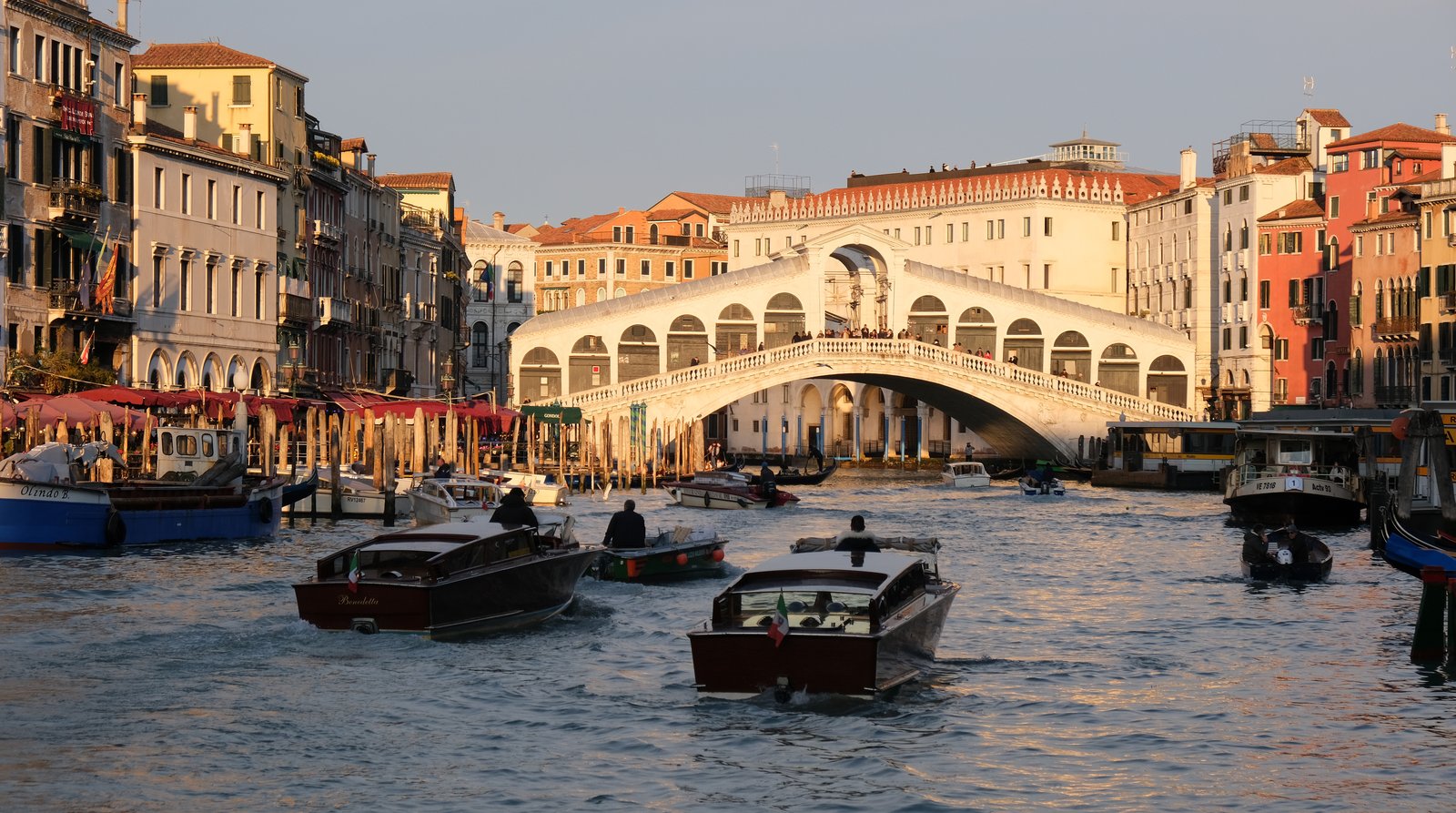
It is worth remembering, riding a vaporetto down the Grand Canal at sunset, that the boat is fundamentally a public transport vehicle used daily by residents commuting, running errands and moving through their own city — not a themed attraction, even though it functions as one for many visitors. The crews who pilot and crew these boats are operating genuine, demanding public infrastructure, in one of the most logistically unusual urban environments in the world, on schedules that Venetians depend on the same way any city depends on its buses and trains.
Sources
- ACTV (Azienda del Consorzio Trasporti Veneziano) — route network, ridership and operations data
- Venezia Unica — integrated ticketing and transport information
- Comune di Venezia — public transport planning and tide-related service data
This article was independently researched and produced. No payment, complimentary service or editorial approval was provided by the places mentioned.