
In brief
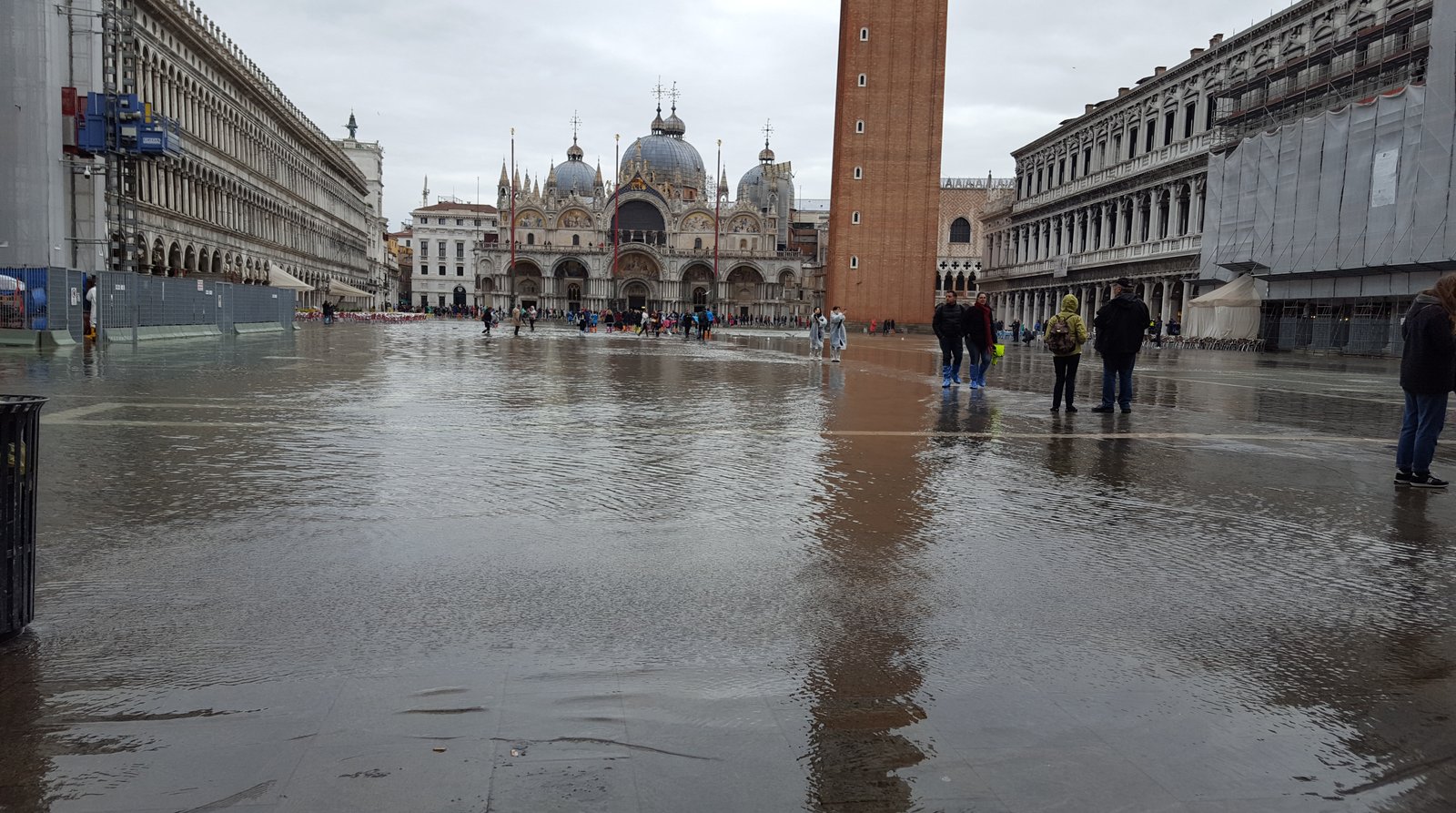
Acqua alta is the exceptional tidal flooding that periodically covers low-lying parts of Venice, mainly between autumn and early spring, when a high astronomical tide combines with sirocco winds and low atmospheric pressure. The Comune di Venezia issues public tide forecasts and siren alerts, and the MOSE flood barrier, operational since 2020, now closes the lagoon's inlets during the most severe events, though minor flooding still occurs regularly.
At a glance
- Typical season
- Late autumn through early spring, peaking October–December
- Warning system
- Siren tones plus SMS/app alerts from the Comune di Venezia's tide centre
- Flood barrier
- MOSE, operational since October 2020, closes for the highest tides
- Most exposed areas
- Piazza San Marco, low-lying calli in Cannaregio and Dorsoduro
- Practical gear
- Raised walkways (passerelle) laid out on main routes during events
- Last checked
- July 2026
A word that means more than "flood"
Acqua alta translates simply as "high water," but the phrase carries a precision that the English rendering loses. It refers specifically to tides that exceed a defined threshold above the city's reference datum, forecast in centimetres and tracked obsessively by anyone who lives or works at ground level. A tide of 80 centimetres above the reference mark floods perhaps 5% of the city, mostly the lowest points around Piazza San Marco. A tide of 110 centimetres or more can put a much larger share of the historic centre briefly underwater. Locals do not talk about "flooding" in the abstract; they talk about specific centimetre figures, because the practical difference between a 90cm and a 120cm tide is the difference between a mildly inconvenient morning and a genuinely disrupted one.
The Comune di Venezia's Centro Previsioni e Segnalazioni Maree publishes forecasts and, when a significant tide is expected, sounds a rising siren tone across the city, with the number of ascending notes indicating the expected severity. Residents also receive alerts by SMS and through a dedicated app. This is treated as ordinary civic infrastructure, not an emergency broadcast reserved for disasters — closer, in spirit, to a weather warning than a fire alarm.
How a flood-prone city actually builds itself
What is easy to miss, watching footage of tourists wading through ankle-deep water in St Mark's Square, is how much of ground-floor Venice has been quietly designed around this reality for centuries. Many shopfronts have raised thresholds, removable metal flood barriers kept folded behind the counter, and ground floors used for storage rather than living space — a pattern that predates modern flood engineering by hundreds of years. Older palazzi typically have an androne, a ground-level entrance hall built to flood and drain without damaging the floors above, with living quarters starting on the piano nobile a level up. Living with acqua alta is less a matter of heroic improvisation each time and more a matter of infrastructure absorbing an expected, recurring event.
During a significant event, the city lays out raised wooden walkways, known as passerelle, along main pedestrian routes so people can move through the worst-affected areas in ordinary shoes. Residents who need to reach a vaporetto stop, a pharmacy or a school on a flood morning plan routes around these walkways the way people elsewhere plan around road closures — an adjustment, not a crisis.
MOSE and what has actually changed
The MOSE system — Modulo Sperimentale Elettromeccanico, a set of mobile gates at the lagoon's three inlets — became operational in 2020 after a construction period stretching back to the 1980s, delayed for years by cost overruns and a major corruption investigation that touched senior local officials. Since becoming active, MOSE has closed for the most severe forecast tides, preventing several events that would otherwise have flooded large parts of the city. It has not eliminated acqua alta altogether: the barrier is reserved for the highest tides, both because closing it has real costs and because closing the lagoon off from the Adriatic too often would affect water quality and the lagoon's ecological exchange. Moderate flooding at 80–100 centimetres, common in autumn and winter, still occurs and is still managed the old way, with sirens, passerelle and raised doorsteps.
A seasonal rhythm, not a single disaster
What outside coverage of acqua alta often gets wrong is treating any given flood event as an isolated news story rather than part of an expected annual cycle. Residents plan around a flood season much as people elsewhere plan around a rainy season: checking the tide forecast the way others check for rain, keeping boots by the door from October, and treating a 100-centimetre tide on a Tuesday morning as a known inconvenience rather than a surprise. The exceptional events — the historic 1966 flood that reached 194 centimetres and prompted the international restoration efforts that still fund conservation work in the city today, or the severe November 2019 flooding that reached 187 centimetres before MOSE was operational — remain genuinely rare and are remembered as such precisely because they break from the expected pattern.
Living with a tide, not against it
None of this is meant to minimise the real cost that repeated flooding imposes on residents, shopkeepers and the building fabric of a city built largely from brick, stone and wood — salt water is corrosive, and the cumulative damage to foundations and masonry is a genuine, ongoing conservation concern tracked by heritage bodies working in the city. But the lived experience of acqua alta among Venetians is closer to a managed seasonal condition than to an emergency, and understanding that distinction is part of understanding how this city actually functions day to day.
Sources
- Comune di Venezia — Centro Previsioni e Segnalazioni Maree (tide forecasting and alert centre)
- MOSE Venezia / Consorzio Venezia Nuova — flood barrier operational data
- Comune di Venezia — historic flood records, including November 1966 and November 2019 events
- CORILA (Consorzio per il coordinamento delle ricerche inerenti al sistema lagunare di Venezia) — lagoon hydrology research
This article was independently researched and produced. No payment, complimentary service or editorial approval was provided by the places mentioned.