
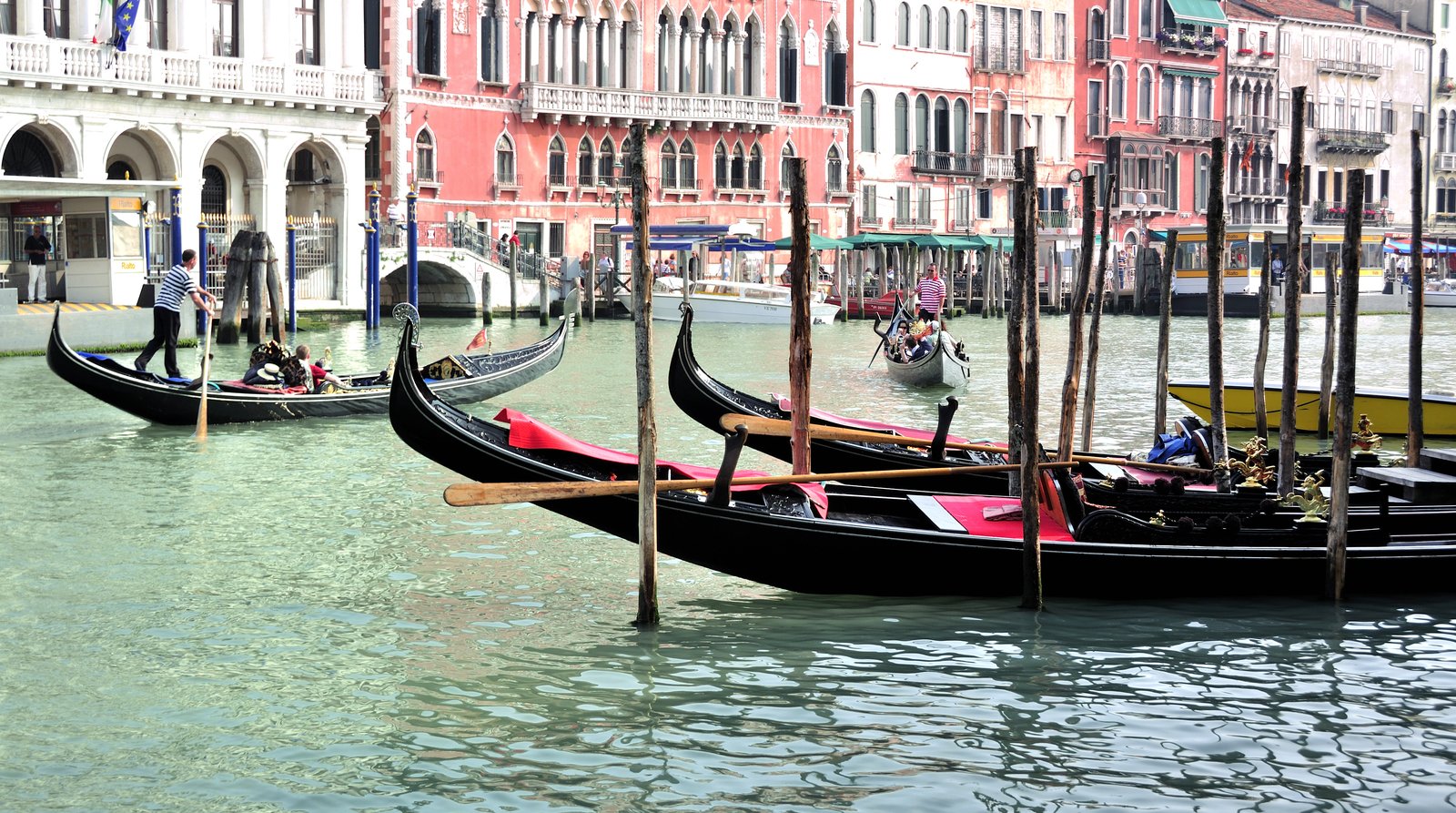
In brief
Venice licenses roughly 400 gondoliers, regulated by the Istituzione per la Conservazione della Gondola e la Tutela del Gondoliere, the body descended from the historic gondolier guild. Becoming licensed requires a lengthy apprenticeship, swimming and rowing tests, and a formal exam covering local history, languages and navigation rules — a barrier to entry that keeps the profession small and, historically, difficult to enter without family or apprenticeship ties.
At a glance
- Licensed gondoliers
- Roughly 400, a number capped by the regulating body
- Governing body
- Istituzione per la Conservazione della Gondola e la Tutela del Gondoliere
- Boat
- Gondola — asymmetric hull, rowed standing with a single forcola-mounted oar
- Qualifying process
- Apprenticeship, swimming/rowing tests, written and practical exam
- Working hours
- Shifts typically run morning through evening in rotation
- Last checked
- July 2026
A regulated trade, not a costume
It is worth separating the image of the gondolier from the profession itself, because the two have drifted apart in popular imagination. A working gondolier today operates under a licence issued by the Istituzione per la Conservazione della Gondola e la Tutela del Gondoliere, the modern successor to a trade structure with roots going back centuries, and the number of active licences is deliberately limited — a cap intended to balance canal traffic, income for existing gondoliers, and the physical capacity of Venice's waterways, which were never designed for unlimited boat volume. Entry into the profession has historically run heavily through family succession, since licences were for a long period passed down or inherited within gondolier families, though reforms opened the process to a wider pool of applicants; the first woman to qualify as a licensed gondolier did so in 2010, a genuinely notable moment in a trade with a long male-only practical history.
What the exam actually tests
Qualifying involves a formal apprenticeship period working under an established gondolier, followed by swimming and rowing proficiency tests and a written and oral examination covering Venetian history, art and architecture along the standard tourist routes, navigation rules for the city's canal traffic, and basic conversational ability in at least one foreign language, since most clients are visitors rather than residents. This is a meaningfully different skill set from simply being able to row: a gondolier is effectively operating as pilot, narrator and small-business owner simultaneously, often within canals barely wide enough for two boats to pass.
The actual working day
A gondolier's day typically starts at one of the city's designated stazi, or gondola stations, each associated with a specific stretch of the city and its own small cooperative of boats and operators. Morning hours often bring a different clientele than the evening — couples and families booking shorter daytime routes through smaller canals away from the Grand Canal's heavier traffic, while evening slots, sometimes accompanied by a musician for serenaded rides, follow a different, often longer route. Between bookings, the job involves substantial boat maintenance: gondolas require regular re-varnishing, and the ferro, the distinctive metal prow ornament, along with the felze-era decorative ironwork tradition it descends from, needs periodic care.
Routing is not casual. Experienced gondoliers develop detailed working knowledge of which canals run too shallow at low tide for a fully loaded boat, which junctions get dangerously congested at particular hours, and how wake from passing motorised taxis and delivery boats — which gondoliers have limited power to avoid, since motorised traffic has right of way in narrow channels — affects a hand-rowed boat's stability. Rowing a gondola well in heavy canal traffic, using only a single oar and forcola for propulsion, steering and braking simultaneously, is a considerably harder physical skill than the smooth, unhurried image usually presented to passengers suggests.
Economics of a capped profession
Gondola rates in Venice are municipally regulated, with official fixed prices for standard daytime and evening durations, a system intended to prevent the kind of price gouging that unregulated tourist transport elsewhere is prone to, though gondoliers and their cooperatives have periodically negotiated rate increases with the city as costs have risen. Because the number of licences is capped and the trade remains comparatively well paid relative to other lagoon crafts, competition for the limited entry slots that do open remains significant, even as many other traditional Venetian trades struggle to attract younger workers at all.
Weather, season and the pace of the work
The trade is also considerably more seasonal than passengers riding a single gondola on a summer evening might assume. Winter brings fewer bookings, shorter daylight hours and genuinely difficult working conditions on cold, damp mornings, and a number of gondoliers reduce their working hours or take on other work during the quietest months. Fog, common in late autumn and winter, can make even short, familiar routes hazardous, since a rowed boat has none of a motorised vessel's manoeuvring speed to react quickly to another craft appearing suddenly out of poor visibility. Rain is a more ordinary hazard, handled with tarpaulins and a philosophical attitude, though heavy acqua alta can flood a stazio itself and suspend service from that station entirely until water levels drop. None of this is visible in the postcard image of a gondola gliding past sunlit palazzi, but it is a routine part of a working year spent almost entirely outdoors, at water level, in a city whose weather is considerably less gentle in February than in June.
A trade still tied to the water it works
What distinguishes gondoliering from a simple tourism job is how much of it still depends on exactly the kind of tacit, physical, place-specific knowledge that runs through Venice's other lagoon trades — reading tide and traffic, maintaining a wooden boat, working a forcola correctly, knowing which bridge clearance is tightest at which hour. The uniform and the striped shirt are a visible surface; the actual profession underneath is closer in kind to the boatbuilders, oar-makers and market vendors who share the same canals, running on the same demanding, largely unwritten expertise.
Sources
- Istituzione per la Conservazione della Gondola e la Tutela del Gondoliere — licensing and regulation of the gondolier trade
- Comune di Venezia — official gondola tariffs and municipal transport regulation
- Fondazione Musei Civici di Venezia — Museo Storico Navale, gondola construction history
This article was independently researched and produced. No payment, complimentary service or editorial approval was provided by the places mentioned.