
In brief
Venetian table culture favours restraint over abundance: heavy, often handed-down linen, a small set of well-chosen glass and ceramic, and food served in courses timed to conversation rather than efficiency. The tradition draws on Burano's historic lace industry, Murano glass, and a household habit of owning fewer, better table things rather than a large matching service.
At a glance
- Core textile
- Heavy linen, often hand-embroidered or trimmed with lace
- Lace tradition
- Burano, documented from the 16th century onward
- Where to see historic pieces
- Museo del Merletto, Burano; Museo di Palazzo Mocenigo
- Typical glassware
- Simple hand-blown Murano tumblers rather than cut crystal
- Everyday habit
- Fewer, inherited pieces reused across generations rather than large matching sets
- Last checked
- July 2026
Why the table matters more than the menu
Ask a Venetian household to describe a proper dinner and the conversation turns to the table before it turns to the food. This is not vanity; it reflects a genuine belief, still common across the older generation of Venetian families, that a meal is a piece of shared time to be marked deliberately — a heavy linen cloth laid rather than a place mat set, glassware chosen for how it feels rather than how it matches, and course order respected even for a simple weekday meal shared with family.
The linen itself is often older than anyone at the table. Trousseau linen — sheets, napkins and tablecloths assembled for a bride's household, sometimes monogrammed by hand — was a standard part of Venetian domestic life well into the twentieth century, and pieces from these sets are still in ordinary use in many homes, mended rather than replaced, valued for the weight and drape that modern mass-produced linen rarely matches.
Burano's lace, and what actually survives of it
Burano's reputation for lace-making dates to at least the sixteenth century, when needle lace produced on the island — punto in aria, worked entirely with a needle rather than bobbins — became a prized export across Europe, worn by nobility and clergy from Venice to France. The trade declined sharply by the eighteenth century as fashions and cheaper machine lace elsewhere undercut it, and it very nearly disappeared entirely before a deliberate revival effort in the 1870s, backed by the Contessa Andriana Marcello, reestablished a lace school on the island.
Genuine hand-made Burano lace is now rare and expensive, made by a small number of practitioners whose skill takes years to acquire; much of what is sold as "Burano lace" in shops along the island's main streets is machine-made and imported. The Museo del Merletto on Burano, part of the Fondazione Musei Civici di Venezia, documents the real technique and its history, and is the most reliable place to see the difference between hand and machine work up close. A genuine piece — even a single trimmed napkin corner — is treated in Venetian households the way a small piece of jewelry might be: kept, not used daily, brought out for specific occasions.
Glass on the table
Murano's furnaces produce tableware as well as lighting, and the everyday Venetian glass tradition leans toward simplicity rather than elaborate cut crystal: hand-blown tumblers and stemware in clear or lightly tinted glass, often with a slight asymmetry that machine-made glass lacks. A well-stocked Venetian sideboard is more likely to hold a small number of well-loved, mismatched glasses accumulated over years — some inherited, some bought singly to replace breakages — than a matching boxed set of twelve.
Setting a table the Venetian way
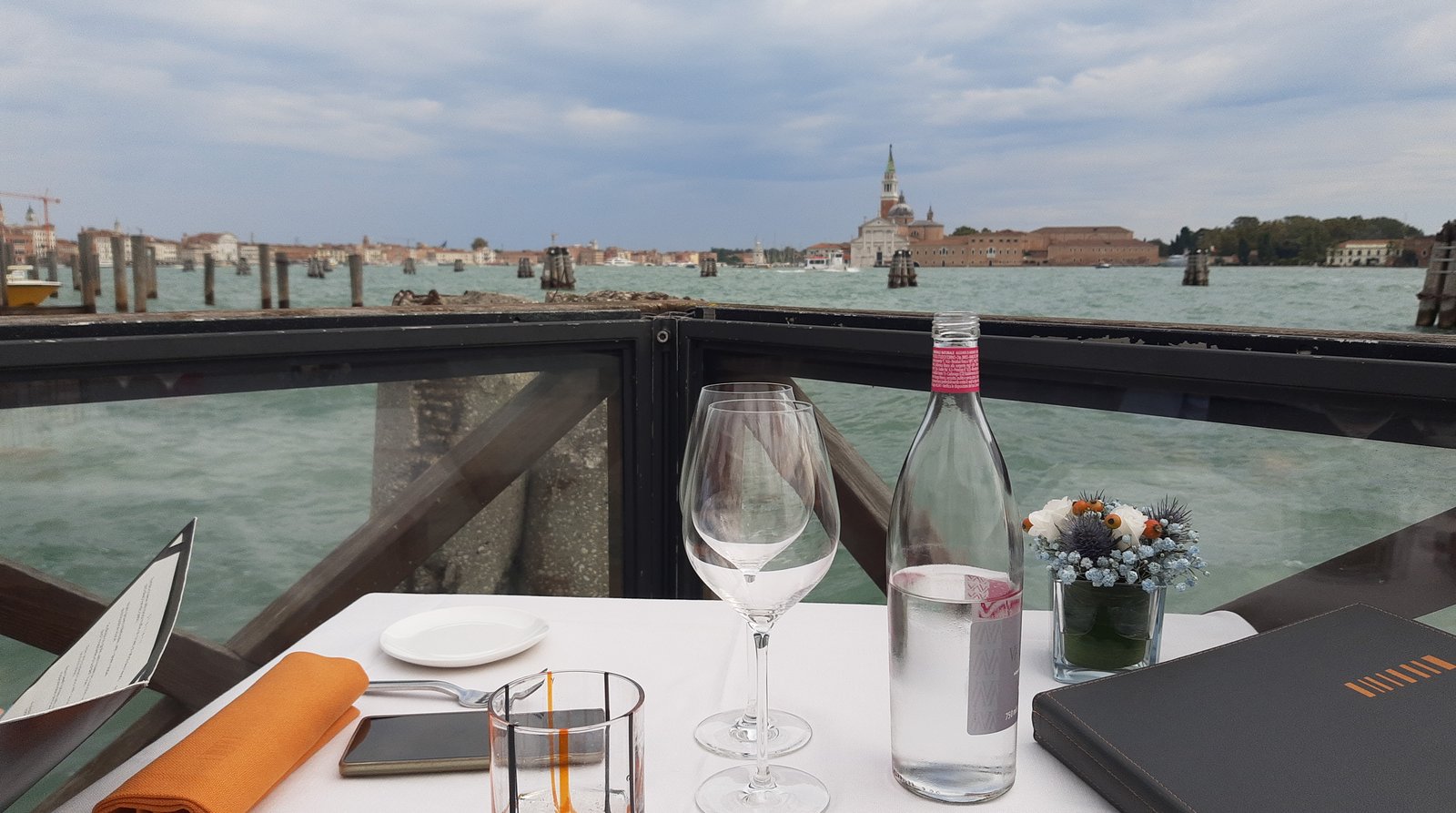
The practical habits are simple and worth borrowing regardless of where you live: a cloth with real weight and drape rather than a thin one that needs constant straightening; napkins large enough to actually use, ideally linen rather than paper for anything beyond a quick lunch; glassware chosen for how it catches light rather than for matching a set exactly; and a table set a little sparser than instinct suggests, since Venetian table culture treats empty space on the cloth as intentional rather than incomplete. Flowers, when used, tend to be modest and seasonal rather than a formal centrepiece — a small jug of whatever is in season, not a florist's arrangement.
A living tradition, not a museum piece
What distinguishes Venetian table culture from a purely decorative "Italian tablescape" aesthetic is that it is still, in ordinary households, functional rather than performed: the good linen comes out because guests are coming, not because a photograph is being taken. This is worth keeping in mind when shopping for "Venetian" table textiles and glass while visiting — the most authentic pieces are rarely the ones marketed hardest to tourists, and a maker willing to explain their technique in detail is generally a better sign than a shop with the widest window display.
What makes a table setting distinctly Venetian rather than generally Italian?
Restraint and provenance: fewer, heavier, often inherited linen pieces rather than a large matching set; hand-blown Murano glass with real irregularity rather than uniform crystal; and, where lace appears, genuine hand-made Burano work treated as a rare, keepsake object rather than everyday decoration.
Sources
- Fondazione Musei Civici di Venezia — Museo del Merletto, Burano
- Museo di Palazzo Mocenigo — Centro Studi di Storia del Tessuto e del Costume
- Comune di Venezia — municipal heritage documentation on Burano lace-making
This article was independently researched and produced. No payment, complimentary service or editorial approval was provided by the places mentioned.