
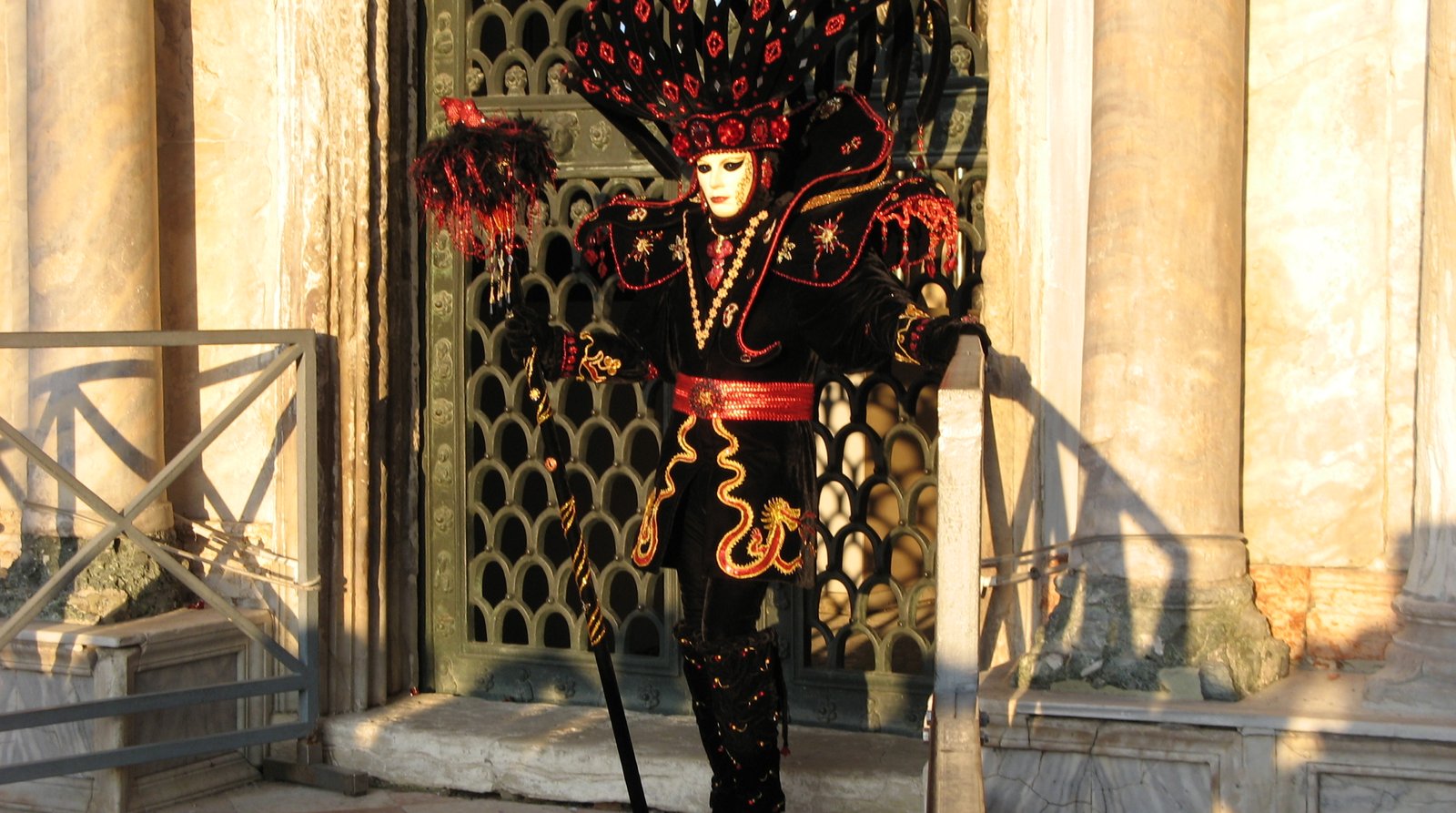
In brief
Authentic Venetian masks are made by hand from papier-mâché pressed into plaster moulds, then sanded, gessoed and painted in a workshop — a craft distinct from the moulded plastic sold in most souvenir stalls, much of which is imported. Traditional mask types like the bauta and moretta relate to real historical uses, including anonymity during Carnevale and the Republic's more permissive gambling and social season, not costume alone.
At a glance
- Craft
- Papier-mâché mask-making over plaster moulds
- Historic role
- Anonymity and social levelling during Carnevale and beyond, documented from at least the 13th century
- Where to see real workshops
- A small number of independent ateliers in San Polo, Santa Croce and Cannaregio
- How to tell workshop-made from imported
- Weight, visible brushwork, price, and willingness to explain the mould process
- Carnevale dates
- Ten days before Ash Wednesday, dates shift each year with the liturgical calendar
- Last checked
- July 2026
Two very different objects share a name
Walk through San Marco or the approach to the Rialto and "Venetian mask" can mean two almost unrelated things sold a few metres apart. One is a moulded plastic object, mass-produced abroad, sold cheaply from open-fronted stalls in stacks of identical faces. The other is a handmade object built from papier-mâché pressed into a plaster mould, individually sanded, primed with gesso, and hand-painted — a process that takes real hours of skilled labour and produces a mask with visible texture, weight and, usually, a maker willing to discuss how it was made. Both are called Venetian masks. Only one is, in any craft sense, actually Venetian in origin.
What the workshop process actually involves
Traditional mask-making starts with a clay or plaster model sculpted for a specific face type — the long-nosed bauta, the round-cheeked gnaga, the moretta's oval — from which a reusable plaster mould is cast. Strips of paper and glue, or occasionally a light fabric, are layered into the mould and left to dry, a process called cartapesta, the same technique used more broadly in Italian papier-mâché sculpture. Once released from the mould, the raw form is trimmed, sanded smooth, and coated with gesso to create a surface that will hold paint and gilding evenly. Decoration is where individual workshops diverge most: gold leaf, hand-painted patterns, feathers, lace, and sometimes ceramic or glass trim, applied entirely by hand rather than printed or stamped. A single well-made mask can take a working day or more from mould to finish, which is reflected in its price relative to a plastic import — a genuine cost difference, not simply a markup on authenticity.
The characters actually mean something
Venetian mask types are not arbitrary decoration; most map onto specific historical roles. The bauta — a stark white, long-jawed mask, usually paired with a black cape (tabarro) and tricorn hat — was, notably, not a gendered costume item during the Republic: bauta and cape could be worn by anyone regardless of social rank or gender, and its exaggerated jaw shape let a wearer eat, drink and speak while remaining anonymous, making it a genuine social equaliser at gambling tables and civic events, not only at Carnevale itself. The moretta, a small oval black velvet mask historically held in place by biting a button on its inner side, rendered its wearer silent as well as anonymous, since speaking meant dropping it — a detail often lost in modern reproductions worn with straps instead. Commedia dell'Arte characters — Arlecchino, Pantalone, il Dottore, Pulcinella — contribute their own mask traditions, originating in improvised theatre rather than Carnevale specifically, and their exaggerated features were originally designed to project character type to an audience at distance, a practical stage tool as much as a decorative one.
Carnevale's real history, before the costumes
Venetian Carnevale's documented history stretches back to at least the thirteenth century, and mask-wearing during the pre-Lenten season became so socially significant that the Republic passed specific sumptuary and public-order laws regulating when and how masks could be worn in public, including restrictions on wearing masks into churches or carrying weapons while masked. Anonymity had real civic consequences: it let nobility gamble, court and mingle across rank without immediate social consequence, a levelling function historians of the Republic point to as part of why Carnevale grew so elaborate under Venetian rule. The festival was suppressed for long stretches after the Republic's fall in 1797 and was only formally revived as a major public event in the late twentieth century, with the modern Carnevale di Venezia — coordinated today with support from the Comune di Venezia — consciously reviving historical costume traditions rather than continuing them in unbroken form.
Telling a workshop mask from an import
A few concrete signs help distinguish the two. Weight is the fastest: a papier-mâché mask feels light but solid, not hollow-cheap plastic. Surface tells the rest of the story — brushwork, slight asymmetry, visible texture under paint on a real mask, versus perfectly uniform moulded colour on a plastic one. Price is a blunt but honest indicator; a genuinely handmade mask, even a simple one, will cost meaningfully more than a stall souvenir. And perhaps the clearest test is conversation: a real workshop maker will typically discuss their mould process, materials and character types without hesitation, because it is their actual daily work, not a script.
Seeing the craft, not the costume
A handful of independent ateliers in San Polo, Santa Croce and Cannaregio still practise mask-making as their primary trade, some open to visitors watching the papier-mâché and painting process directly rather than only browsing finished stock. Attending Carnevale itself outside its most crowded central days — early mornings in smaller campi, or the quieter costume gatherings that precede the main public weekend — offers a far closer view of the craft's actual social life than the busiest afternoon in Piazza San Marco.
Sources
- Comune di Venezia — Carnevale di Venezia official programming and history
- Fondazione Musei Civici di Venezia — Commedia dell'Arte and mask-craft collections
- La Biennale di Venezia — historical theatre and performance documentation referencing Carnevale traditions
This article was independently researched and produced. No payment, complimentary service or editorial approval was provided by the places mentioned.