
In brief
The Veneto produces far more than Prosecco: Soave (white, Garganega grape), Valpolicella and its concentrated Amarone (red, Corvina-based), and Lugana near Lake Garda are all significant regional wines. Venice itself has a rare curiosity — Dorona, an old lagoon grape revived on a walled vineyard on Mazzorbo — while everyday bacaro wine is usually simpler, unlabelled Veneto table wine sold by the glass.
At a glance
- Sparkling
- Prosecco DOC and DOCG (Conegliano Valdobbiadene), Glera grape
- White
- Soave (Garganega), Lugana (Turbiana), near Verona and Lake Garda
- Red
- Valpolicella and Amarone della Valpolicella (Corvina-based)
- Lagoon curiosity
- Dorona, a near-extinct grape grown on a walled vineyard on Mazzorbo
- Everyday bacaro wine
- Simple, often unlabelled Veneto white or red, sold by the glass
- Last checked
- July 2026
Beyond Prosecco
The Veneto is one of Italy's largest wine-producing regions by volume, and international attention has settled so heavily on Prosecco over the past two decades that it's easy to assume the region produces little else. In fact Prosecco is one export among a genuinely wide range of Veneto wines — structured reds, mineral whites, sweet dessert styles made from dried grapes — most of which rarely leave Italy in significant volume and are, as a result, considerably better known inside the region than outside it. Understanding that range gives a clearer sense of what actually fills a glass at a Venetian table beyond the export-friendly bottle most visitors already recognise.
Prosecco: the hills behind the name
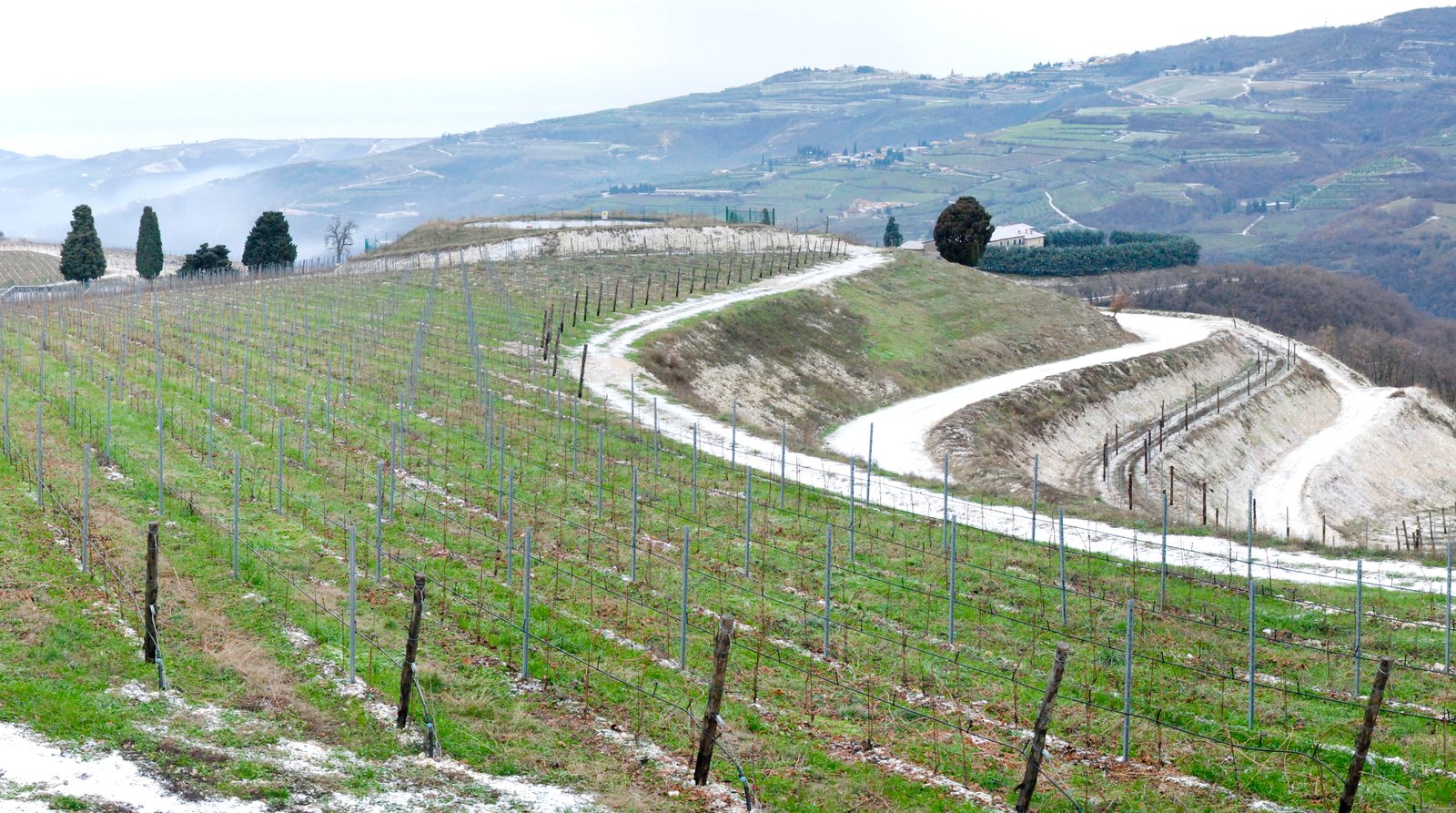
Prosecco itself splits into two meaningfully different tiers. The broader Prosecco DOC designation covers a large, largely flat production zone across the Veneto and part of Friuli, yielding the straightforward, high-volume Prosecco found on wine lists worldwide. The Conegliano Valdobbiadene DOCG, by contrast, is a smaller, hillier zone northeast of Treviso where steep, hand-tended vineyards produce a generally more structured, complex wine — the distinction between the two is roughly analogous to a regional appellation versus a specific, higher-standard subzone. The Conegliano Valdobbiadene hills were inscribed as a UNESCO World Heritage Site in 2019, recognition specifically of the historic, labour-intensive terraced viticulture practised there, distinct from the flatter, more mechanised Prosecco DOC vineyards elsewhere. Both are made from the Glera grape.
Soave: Veneto's classic white
West of Verona, the Soave zone produces one of Italy's best-known dry whites from the Garganega grape, grown on volcanic and limestone-influenced soils that give the wine a characteristic mineral edge. The Soave Classico zone, the historic heart of the appellation around the town of Soave itself, is generally considered to produce the more distinctive wines compared to the wider, flatter DOC area added later as production expanded. Soave pairs naturally with lagoon fish and shellfish, and turns up regularly on Venetian wine lists as a step up from house-pour bacaro whites.
Valpolicella and Amarone
North of Verona, the Valpolicella zone is built around a blend dominated by the Corvina grape, typically alongside Rondinella and sometimes Molinara, producing wines that range from the light, everyday Valpolicella to the far more concentrated Amarone della Valpolicella. Amarone is made using the appassimento method: grapes are dried on mats or racks for months after harvest, concentrating their sugars and flavours before fermentation, producing a rich, high-alcohol red quite unlike standard Valpolicella. Ripasso, a related style, involves refermenting standard Valpolicella over the leftover skins from Amarone production, producing something in between the two in weight and intensity.
Lugana: the Lake Garda white
Lugana is produced from the Turbiana grape in a zone straddling the border between the Veneto and Lombardy, near the southern shore of Lake Garda. It tends toward a fuller-bodied, more textured style than many Italian whites, with enough structure to pair well with richer lagoon dishes, and has built a solid reputation among Italian wine drinkers even though it remains less internationally recognised than Soave or Prosecco.
Dorona: the lagoon's own grape
Venice has its own genuine wine curiosity in Dorona, an old local grape variety that was once cultivated across the lagoon's islands before falling into near-total obscurity, a decline accelerated by the catastrophic acqua alta flood of 1966, which destroyed much of what remained of the lagoon's vineyards. Dorona has since been revived on a small, walled vineyard on the island of Mazzorbo, associated with the Venissa estate, where salt-tolerant vines are grown in conditions unlike almost any other wine region in Italy. Production is tiny and the resulting wine correspondingly rare and expensive, but it represents something genuinely distinct: a wine actually grown within the lagoon itself, rather than trucked or shipped in from the Veneto mainland.
Recioto and the region's sweeter side
The appassimento method used for Amarone isn't unique to Valpolicella's reds — it also produces Recioto, a category of sweet dessert wine made from dried grapes and found in both the Valpolicella zone (Recioto della Valpolicella, red) and Soave (Recioto di Soave, white), predating Amarone itself, which is generally understood to have originated as a Recioto that fermented further than intended into a dry wine. Recioto rarely travels far outside Italy and is more often encountered at the end of a meal in the Veneto than on an export wine list, making it one of the region's more genuinely local specialities for anyone willing to seek it out specifically.
What actually fills a Venetian glass
For all this regional range, the wine most commonly poured into an everyday ombra at a bacaro counter is a good deal humbler than any of the above — a simple, often unlabelled house white or red, sold by the glass at low cost, chosen for drinkability rather than provenance. Recognising the difference between that everyday pour and a specifically named Soave, Valpolicella or DOCG Prosecco helps set realistic expectations: an ombra is not the moment to expect a serious wine, and a bacaro offering only house wine by the glass isn't cutting corners, it's simply serving the tradition as it's meant to be served. Asking specifically for a named appellation, where you want one, is the way to move beyond the house pour — most bacari carry at least a bottle or two of Soave or Valpolicella behind the counter even if it isn't the default pour, and are generally happy to open it on request.
Sources
- Consorzio di Tutela del Vino Conegliano Valdobbiadene Prosecco DOCG — appellation and terroir documentation
- Consorzio Tutela Vini Soave e Recioto di Soave — Soave appellation records
- Consorzio Tutela Vini Valpolicella — Valpolicella and Amarone production standards
- UNESCO — World Heritage listing, Le Colline del Prosecco di Conegliano e Valdobbiadene
This article was independently researched and produced. No payment, complimentary service or editorial approval was provided by the places mentioned.