
In brief
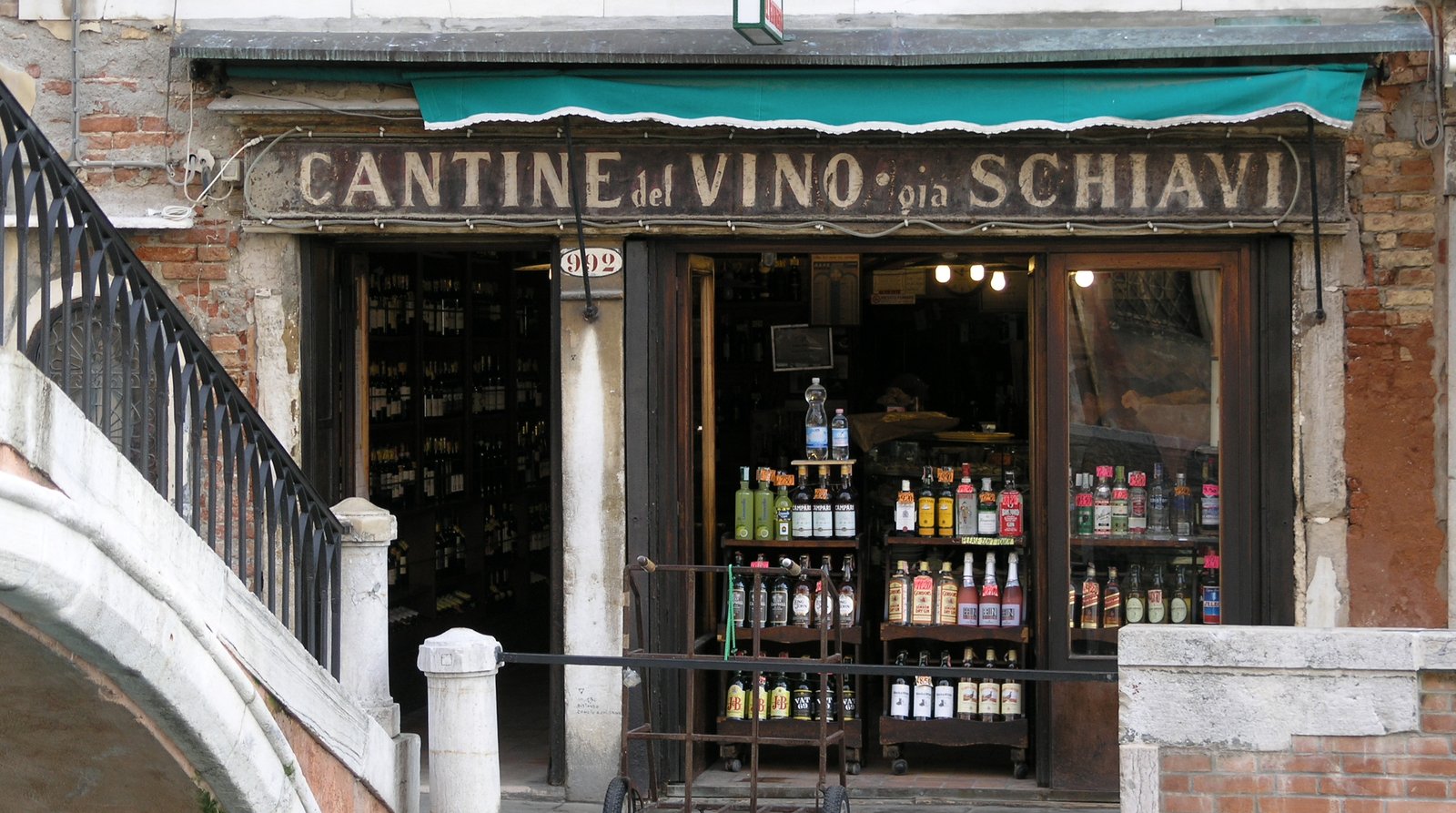
Cicchetti are small savoury bites — a single crostino, a skewer of fried seafood, a spoonful of baccalà — eaten standing at a bacaro's counter, typically alongside a small glass of wine. They are not a fixed "Venetian tapas" menu: what is on offer changes by the hour and season, and the custom is to eat two or three at a time, then move on to the next bar.
At a glance
- What it is
- Small savoury bites served at a bacaro counter, usually with a drink
- Best for
- A light lunch, a pre-dinner stop, or an evening moving between bars
- Typical cost
- Roughly €1.50–€4 per piece; a small glass of wine from about €1.50
- When
- Late morning through early evening; many bacari close by 9pm
- Where
- Concentrated around Rialto, Cannaregio and Dorsoduro
- Last checked
- July 2026
A word that keeps getting mistranslated
Menus and guidebooks abroad routinely describe cicchetti as "Venetian tapas," and the comparison is understandable — both are small, both are eaten standing, both pair naturally with wine. But the label flattens something that developed on its own terms, inside a specific kind of shop called a bacaro, long before tapas culture had any international profile at all. The word itself likely comes from the Latin ciccus, a small or negligible amount, filtered through Venetian dialect into something like "a little something." That etymology matters more than it sounds: cicchetti were never conceived as a composed course. They were, and largely still are, whatever a bar has made that morning, portioned small enough to eat in two or three bites without sitting down.
What actually shows up on the counter
The cicchetti counter (the banco) is a working display case more than a menu. On any given day you might find baccalà mantecato — salt cod whipped with olive oil into something closer to a pale mousse than a spread — piled on a small crostino of grilled polenta or white bread. Alongside it, sarde in saor: sardines fried and layered with softened onions, vinegar, pine nuts and raisins in a sweet-sour marinade that was originally a way for fishermen to preserve fish before refrigeration, and is now eaten as a dish in its own right, best in late summer and autumn. There will usually be polpette (fried meatball-shaped bites, not always meat — chickpea and vegetable versions are common), nervetti (cooked veal cartilage dressed with onion and oil, an acquired texture worth trying once), folpetti — baby octopus simmered until tender and dressed simply — and hard-boiled egg halves topped with a single anchovy. What is on the counter on a Tuesday in July will not be what is there on a Tuesday in December; a bacaro's cicchetti follow the same seasonal logic as the Rialto market a few streets away.
How a bacaro actually works
Most bacari are small, narrow rooms with a bar running along one side and little or no seating — some have a few high tables outside, but eating cicchetti while seated at a table is often technically a different, pricier order in Venetian bar economics, since table service can carry a cover charge that standing at the counter does not. The rhythm is informal: you approach the counter, look at what is laid out, point or ask, and the barman plates it for you on the spot. There is rarely a printed cicchetti menu, because the selection is a physical display, not a document. Payment usually happens as you go or in a small tab settled at the end, and it remains normal, even now, to see regulars pay in cash for a quick stop.
How to order without missing the point
The most common mistake visitors make is ordering as though at a restaurant — sitting down, asking for a full plate of everything, expecting table service and a written list. A more accurate approach is to treat each bacaro as one stop in a longer route. Order two or three cicchetti and a small glass of wine, eat standing at or near the counter, then leave for the next bar. Ask the person behind the counter what's good today rather than what's listed, since the good answer changes with the tide of what came off the boats that morning. Pointing is entirely acceptable, and expected — cicchetti culture assumes you are choosing by sight and instinct as much as by name.
The giro d'ombre: bar hopping with a purpose
Venetians call an evening of moving between two, three or four bacari a giro d'ombre — literally a "round of shades," after ombra, the local term for a small glass of wine (see our separate guide to that custom). The giro is sociable rather than gluttonous: nobody expects to leave any single bacaro full. It is closer to grazing through a neighbourhood's evening ritual than to a sit-down meal, which is exactly why treating a single bacaro stop as "dinner" tends to disappoint — both because you'll have ordered too much in one place, and because you'll have missed the point of moving on.
Reading a good bacaro
A handful of practical cues separate a bacaro serving fresh, properly turned-over cicchetti from one coasting on foot traffic near a landmark. Look for a counter that is being actively restocked rather than one holding the same tray for hours; for a clientele that includes visibly local regulars, not only visitors; and for cicchetti that look distinct from what's on offer two doors down, a sign the kitchen is actually cooking rather than buying in pre-made trays. Prices that seem unusually low for the location are worth a second look, as are laminated multilingual menus taped to the window — a bacaro's real menu is the counter itself.
Are cicchetti a meal?
They can be, if you eat enough of them across two or three stops, and many Venetians do treat an evening giro d'ombre as dinner. But approaching cicchetti with restaurant expectations — one sitting, one order, one bill — misreads a tradition built around movement, small portions and repetition. The better question isn't whether cicchetti constitute a meal, but whether you're willing to eat the Venetian way: standing, unhurried between stops, and led by what's actually fresh that day rather than by a fixed list.
Sources
- Comune di Venezia — municipal documentation on local food culture and markets
- Slow Food Venezia — regional culinary tradition and product documentation
- Accademia Italiana della Cucina, Delegazione di Venezia — regional dish records
This article was independently researched and produced. No payment, complimentary service or editorial approval was provided by the places mentioned.