
In brief
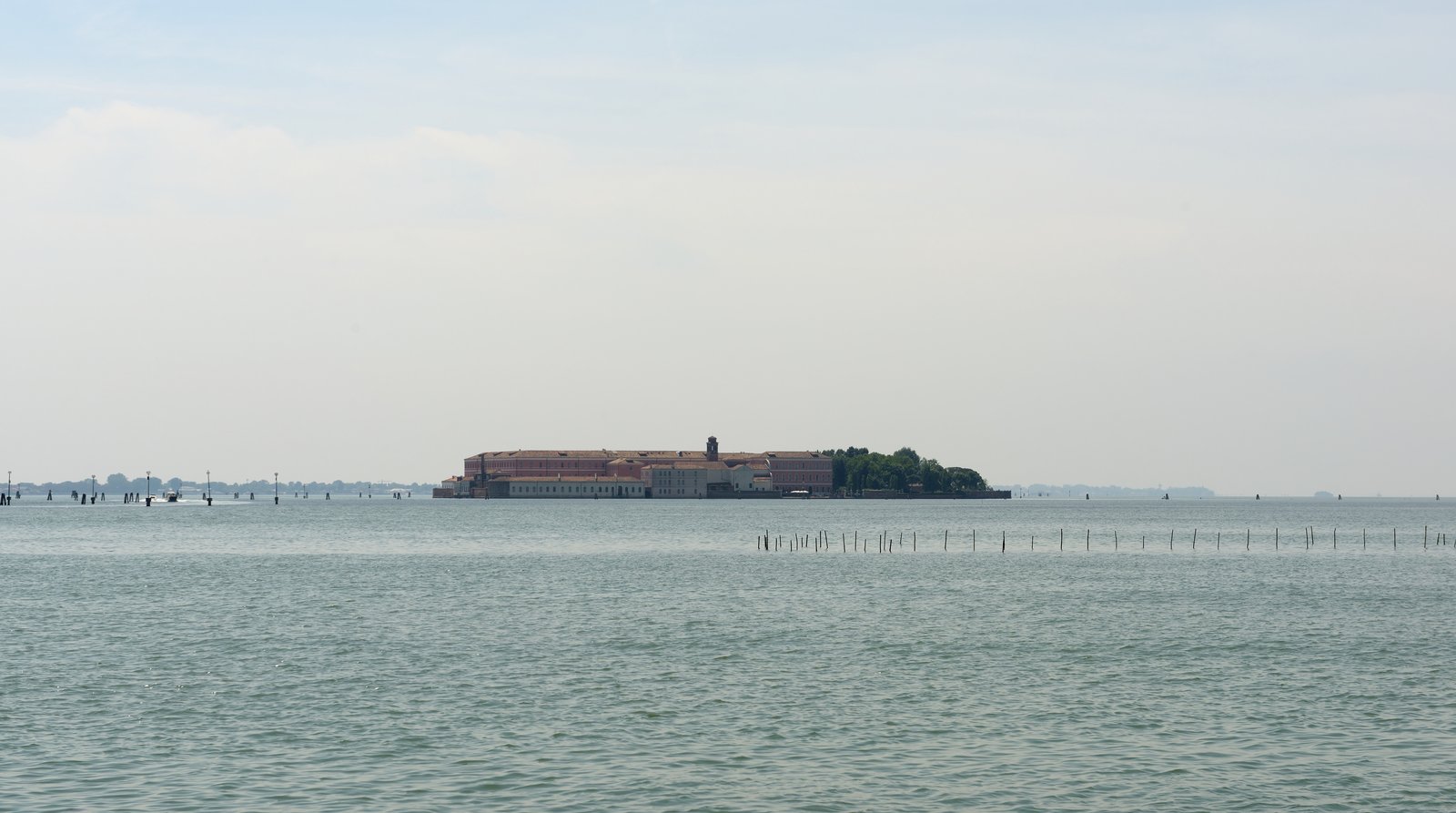
San Clemente is a wooded island in the southern Venetian Lagoon, roughly midway between San Marco and the Lido, with a documented religious history dating to the twelfth century. Across eight centuries it served as a monastery, a plague quarantine site, a psychiatric hospital from the 1870s until the 1990s, and briefly a military outpost, before its buildings were restored for other uses in the early twenty-first century.
At a glance
- Location
- Southern lagoon, between San Marco and the Lido
- Best for
- History, quiet gardens, lagoon views back toward Venice
- Time needed
- A couple of hours, longer for a full walk of the grounds
- Getting around
- Private water transfer; no scheduled public ACTV vaporetto stop
- Access note
- Much of the island's interior is not open to casual public access — check current status before planning a visit
- Last checked
- August 2026
A hermitage before it was anything else
San Clemente's earliest documented religious use dates to the twelfth century, when hermits are recorded as having settled on the island, drawn by the same qualities that still define it today — isolation within sight of the city, and enough dry, wooded ground to support a small community. A monastery dedicated to Pope Clement I was established there not long after, and by the thirteenth century the island had passed to the Camaldolese order, whose monks maintained a presence on and off for several centuries, interrupted periodically by plague outbreaks that swept the lagoon and by the general instability affecting smaller religious houses through the medieval and early modern periods.
Quarantine, plague and the lagoon's public health system
Venice pioneered organised quarantine practice, and its lagoon islands were central to that system — the word "quarantine" itself derives from the Venetian "quaranta giorni," the forty-day isolation period ships and travellers were required to observe before entering the city during outbreaks. San Clemente was used at various points for isolation and plague-related purposes alongside better-documented quarantine islands such as Lazzaretto Vecchio and Lazzaretto Nuovo, part of a lagoon-wide network the Republic developed from the fourteenth century onward, among the earliest formal public health infrastructure in Europe.
From monastery to asylum
The island's most significant transformation came after the fall of the Venetian Republic in 1797, when Napoleonic suppression of religious orders left many monastic properties across the lagoon vacant or repurposed. San Clemente's buildings were adapted from 1873 into a psychiatric hospital, initially for women, run under the Italian state hospital system that governed such institutions through the nineteenth and twentieth centuries. It operated in that capacity for well over a century, a period largely overlooked in popular accounts of the island that tend to skip straight from monastery to modern day. The hospital closed as part of the broader Italian deinstitutionalisation of psychiatric care that followed the 1978 Basaglia Law, one of the most significant psychiatric reform laws in modern European history, with San Clemente's facility fully wound down by the 1990s.
A brief military chapter
Between its religious and medical uses, San Clemente also saw military occupation at points when the lagoon's outer islands were pressed into defensive service, part of a broader pattern across the Venetian Lagoon in which islands changed function repeatedly according to the city's most pressing needs of the moment — sacred, medical or strategic, sometimes within the same century.
What the historical record and popular memory disagree on
Much writing about San Clemente's psychiatric hospital era has, understandably, focused on the institution's later decades, when overcrowding and outdated treatment methods common across the Italian asylum system of the mid-twentieth century drew growing criticism — criticism that fed directly into the national reform movement culminating in the 1978 Basaglia Law, named for psychiatrist Franco Basaglia, whose work in Trieste became the model for closing Italy's large custodial asylums in favour of community-based care. What is less often recorded in popular retellings is the hospital's earlier decades, when it operated more conventionally within the medical standards of its time, and the monastery's own long internal history before that, spanning multiple religious orders and several documented periods of near-abandonment during plague years and political upheaval. Treating the island's story as a single dramatic arc — monastery to madhouse — flattens a more layered and, in places, more mundane institutional history.
What the island looks like today
Following the closure of the psychiatric hospital, San Clemente's historic buildings and grounds underwent a substantial restoration in the early 2000s. The island's former monastic and hospital complex, including a chapel with a documented history stretching back centuries, was converted for hospitality use, and it now houses San Clemente Palace Venice, a hotel operating within the restored buildings. The island's gardens and wooded perimeter — unusual in a lagoon where open green space is scarce — remain a defining physical feature regardless of the buildings' current function, and the island offers a genuinely different sightline back toward San Marco and the Bacino than any vantage point within the city itself.
San Clemente among the lagoon's other institutional islands
San Clemente's trajectory — religious foundation, public health use, psychiatric institution, adaptive restoration — is not unique in the lagoon; it echoes the histories of San Servolo, another former psychiatric hospital island now used for education and events, and the Lazzaretto islands, whose quarantine functions predate San Clemente's own. Reading these islands together rather than individually gives a fuller picture of how Venice used its outer lagoon for centuries: not as scenic overflow, but as a functional annex for problems the historic centre had no room, or no wish, to house directly. San Clemente's current restoration and adaptive reuse follows a broader pattern seen across these islands, where preservation has generally required finding the buildings a viable modern function rather than leaving them to decay.
Why San Clemente matters beyond its current use
Read purely as a place with a present-day function, San Clemente is easy to overlook. Read as a physical record of how Venice managed disease, faith, mental health and defence over eight centuries — often on the same small patch of ground — it is one of the more revealing sites in the southern lagoon, a reminder that the lagoon's outer islands were never simply scenic; they were where the city put its hardest problems.
Sources
- Comune di Venezia — island heritage and municipal historical records
- Diocese of Venice — Camaldolese monastic history in the lagoon
- Fondazione Musei Civici di Venezia — lagoon quarantine island documentation
- Regione del Veneto — records of Italian psychiatric hospital reform under the 1978 Basaglia Law
This article was independently researched and produced. No payment, complimentary service or editorial approval was provided by the places mentioned.