
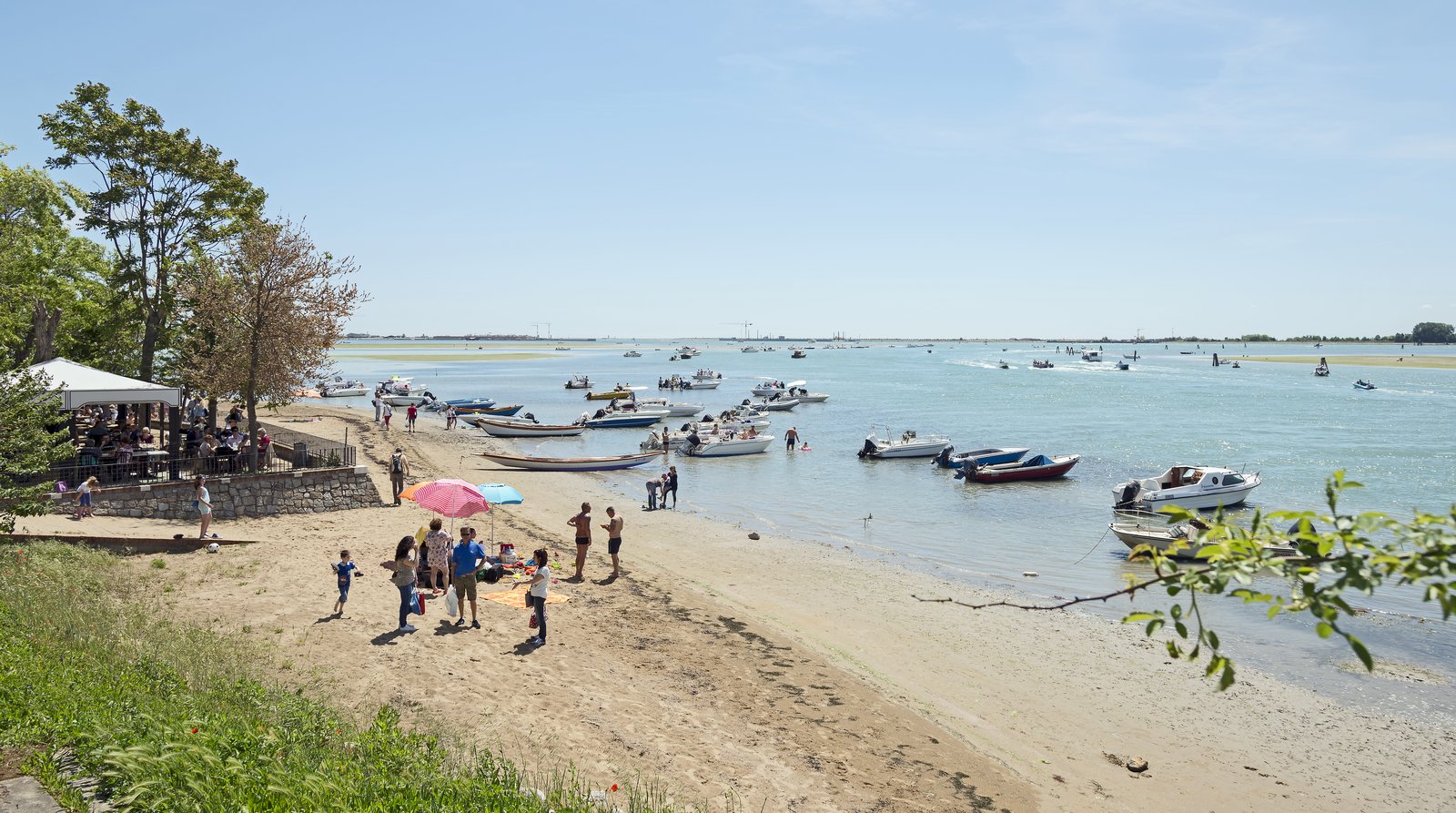
In brief
Sant'Erasmo is the largest island in the Venetian Lagoon, considerably bigger than central Venice, and remains substantially agricultural, with a small resident population farming market vegetables — most famously the violetto di Sant'Erasmo artichoke — on land where drainage, irrigation and planting decisions all have to account for a brackish, tide-linked water table.
At a glance
- Location
- Northern lagoon, near Burano and the Lido's northern tip
- Size
- The lagoon's largest island, well over three times the area of central Venice
- Known for
- Violetto di Sant'Erasmo artichoke, market vegetables, vineyards
- Access
- ACTV vaporetto line 13 from Fondamente Nove
- Best season
- Late April–May for the artichoke harvest
- Last checked
- July 2026
The lagoon's working farmland
Ask most visitors to name a Venetian lagoon island and they will reach for Murano or Burano before ever mentioning Sant'Erasmo, despite the fact that Sant'Erasmo is physically the largest island in the entire lagoon system. There are no glass furnaces here, no lace shops, no rows of postcard-coloured houses — mostly open fields, orchards, a scattering of farmhouses, and a single small road connecting them. The island has functioned as Venice's kitchen garden for centuries, its market produce reaching the Rialto's Erbaria stalls by boat, a supply relationship documented back through Venetian market records for generations.
Farming land the tide still touches
What distinguishes farming here from farming almost anywhere else in the Veneto is the direct, constant influence of the lagoon on the land itself. Much of Sant'Erasmo sits on reclaimed and consolidated marshland, and the water table beneath the fields rises and falls with the tide, occasionally bringing brief salt intrusion into low-lying areas during exceptionally high tides. Growers here plan drainage channels, raised beds and crop placement around this reality in ways that have been refined, family by family and field by field, over generations rather than derived from any general agricultural manual — a low corner of a field that floods first after a scirocco wind, a strip of soil that handles brief salinity better than the plot beside it, timing decisions for planting that account for the specific tidal exposure of a given parcel.
This body of hyper-local knowledge is not abstract. It determines, in concrete terms, whether a season's crop survives an autumn of unusually persistent high water, and it is generally held by growers who have worked the same handful of hectares, often within the same family, for decades.
The violetto and its short season
The island's best-known product is the violetto di Sant'Erasmo, a purple-tinged artichoke variety grown in the island's sandy, mineral-rich soil, prized particularly for its tender, largely thorn-free inner leaves and the small, delicate castraure — the first, most tender buds of the season, hand-picked early and considered a genuine seasonal delicacy in Venetian cooking. The harvest window is short, generally concentrated across a few weeks in spring, and the castraure in particular command a premium precisely because the picking window for them is narrower still, sometimes just days per plant. Restaurants and market buyers across Venice plan menus around this compressed calendar, a level of seasonal specificity increasingly rare in food supply chains generally.
An island fighting the same demographic tide
Sant'Erasmo's resident population is small, and like the rest of the outer lagoon it has faced the pressures of an aging farming community and limited younger recruitment into agricultural work, which is physically demanding, weather-exposed and, in a tourism-dominated regional economy, less consistently remunerative than hospitality work in central Venice. Some growers have adapted by opening small farm shops or agriturismo-style visitor experiences directly on the island, giving visitors a way to buy produce at the source and giving farms an additional, steadier income stream beyond wholesale market sales — an approach that keeps working farmland economically viable rather than converting it to other uses.
Beyond the artichoke: vines, orchards and the island's other crops
Artichokes draw most of the attention, but Sant'Erasmo's growers work a broader mix than the seasonal spotlight suggests: rows of table grapes and a small but locally noted wine production, orchards of fruit trees, and a rotation of seasonal vegetables — courgettes, beans, radicchio in its season — that supply Venice's kitchens year-round rather than only in the artichoke's brief spring window. Some of the island's vineyards sit within a stone's throw of the lagoon's open water, close enough that growers describe the salt air itself as a factor in how the grapes develop, another example of the site-specific expertise that defines farming here. A handful of producers now bottle and sell wine directly under small local labels, a relatively recent addition to an island economy that, for most of its documented history, has been overwhelmingly about vegetables rather than wine.
Why this island matters beyond its produce
Sant'Erasmo is a working demonstration of something easy to miss when thinking about the Venetian Lagoon primarily as a historic and scenic backdrop: this is also a functioning agricultural and ecological system, where land management decisions affect water quality, drainage and the broader lagoon environment, not only crop yields. Growers here are, in a very literal sense, land managers of a fragile tidal landscape, and the continuation of their work has consequences that extend well past the artichokes and market vegetables that reach the Rialto each morning. Losing working farmland here would not simply mean losing a scenic detour from the main tourist islands; it would mean losing one of the few remaining direct, working links between the lagoon's ecology and the food actually eaten in Venice's kitchens.
Sources
- Comune di Venezia — Sant'Erasmo agricultural and demographic data
- CORILA (Consorzio per il coordinamento delle ricerche inerenti al sistema lagunare di Venezia) — lagoon land and water management research
- ACTV — vaporetto line 13 routes and timetables
This article was independently researched and produced. No payment, complimentary service or editorial approval was provided by the places mentioned.