
In brief
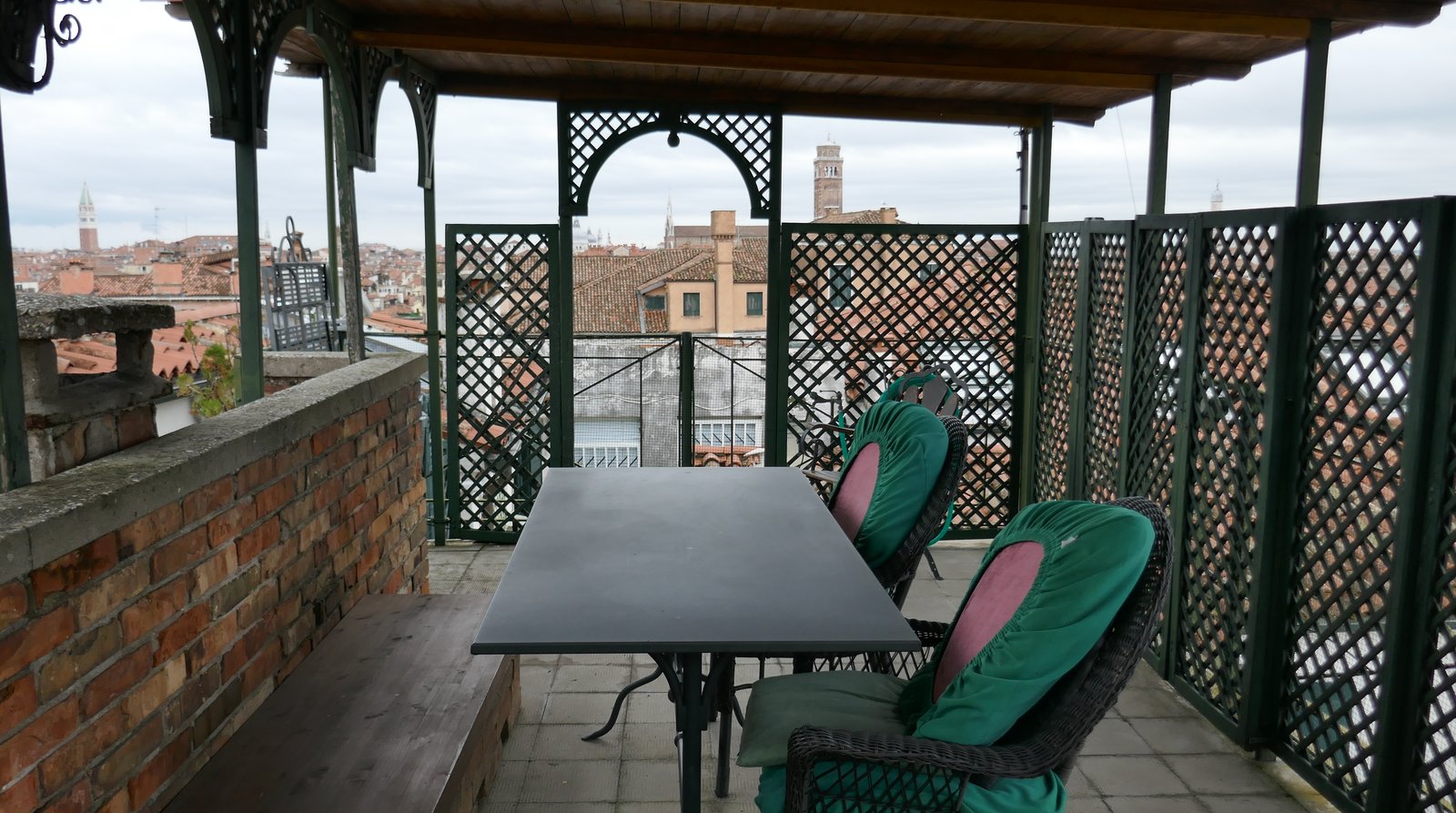
With almost no private garden ground in the historic centre, Venetian households garden vertically and in containers: window ledges, wooden altana rooftop terraces, and shared courtyard corners hold potted herbs, geraniums, citrus and trailing greenery. The lagoon's actual growing ground lies outside the city, chiefly on the market-garden island of Sant'Erasmo, which supplies much of the produce sold at the Rialto.
At a glance
- Typical spaces
- Window ledges, altane (rooftop timber terraces), shared courtyards
- Common plants
- Basil, rosemary, bay, geranium, citrus in pots, jasmine on trellises
- Real growing ground
- Sant'Erasmo, the lagoon's market-garden island
- Historic feature
- The altana — a private wooden rooftop terrace, once used for drying hair and hemp
- Constraint
- Salt air, wind exposure, weight limits on historic structures
- Last checked
- August 2026
A city with almost no soil of its own
Venice's historic centre is built on wooden piles over lagoon mud, packed tightly enough that private garden ground is genuinely scarce — a handful of grand palazzo gardens and monastery cloisters aside, most households have no soil to plant in at all. What Venetian gardening actually looks like, in the overwhelming majority of homes, is container gardening under real constraint: limited weight a historic roof or ledge can bear, salt-laden wind off the lagoon, and often only a few hours of direct sun between neighbouring buildings.
This scarcity has produced a specific, resourceful gardening culture rather than none at all. A single terracotta pot of basil on a kitchen windowsill, refreshed each spring, is as much a part of ordinary Venetian domestic life as a chandelier or a set of good linen — smaller in scale, but no less deliberate.
The altana: Venice's rooftop terrace
The altana is Venice's most distinctive contribution to urban gardening architecture: a wooden platform built out over a building's roofline, traditionally used from at least the sixteenth century for drying laundry and, notably, for the elaborate practice of sun-bleaching hair — Venetian women once sat for hours on altane with their hair spread over wide-brimmed hats to lighten it using sun and specific preparations, a fashion documented in period painting. Today altane are more often used as private outdoor space for exactly the purpose their height provides: sun and air that ground-floor and even piano nobile windows rarely get, making them the single best spot in many Venetian homes for growing anything that actually needs full sun — tomatoes in large pots, citrus, or a small vine trained along the railing.
Not every building has one, and building an altana on protected historic structures is subject to heritage oversight by the Soprintendenza, since the platforms are visible in the city's protected rooftop skyline and controlled accordingly.
What actually grows well
Salt-tolerant, wind-hardy, drought-resistant plants do best on exposed Venetian ledges and altane: rosemary, bay laurel and lavender are common precisely because they shrug off salt air that would damage more delicate species; geraniums remain a balcony staple across Venice for the same reason many Mediterranean cities favour them — long flowering, tolerant of inconsistent watering, and cheap enough to replace if a hard winter or a bad storm damages them. Citrus, especially in large terracotta pots that can be moved to shelter in the coldest weeks, is a common ambition among residents with an altana or a generous ledge, echoing the citrus culture found more extensively in gardens on Giudecca and at a few remaining private palazzo gardens.
Sant'Erasmo: where the real growing happens
The lagoon's genuine agricultural ground lies outside the historic centre, chiefly on Sant'Erasmo, a low, largely rural island a short vaporetto ride from Venice proper, where market gardens supply a meaningful share of the produce sold at the Rialto market — most famously the castraure, the small, prized first artichoke buds of the violet Sant'Erasmo variety, harvested in a short window each spring and treated as a genuine seasonal delicacy by Venetian cooks. For anyone curious what "Venetian gardening" looks like at full scale rather than on a windowsill, Sant'Erasmo, not the historic centre, is where to look.
A modest, specific green culture
What distinguishes Venetian balcony and ledge gardening from generic urban container gardening elsewhere is its modesty and specificity: plant choices shaped directly by salt exposure and weight limits rather than by trend, a genuine functional use for herbs grown a few steps from the kitchen, and — on the altana in particular — a piece of domestic architecture with its own centuries-old history rather than a modern add-on.
Practical constraints shape the gardening technique as much as the plant list. Terracotta rather than plastic is generally preferred, partly for looks but also because it is porous and breathes moisture more evenly, reducing root rot in a climate where sudden downpours followed by drying wind are common. Drainage matters more here than almost anywhere: a pot without a generous gravel layer and drainage holes will waterlog quickly during a heavy autumn rain, and Venetian gardeners are typically careful to raise pots slightly off ledges and floors to let water run off rather than pool. Watering itself is often done early morning or evening to reduce evaporation loss in summer, and many households collect rainwater in a small container specifically because Venice's tap water, drawn from the mainland aqueduct, is treated as unnecessarily good for watering geraniums.
Pests are a real if under-discussed issue: exposed ledges attract pigeons more readily than a ground-level garden would, and netting or spike deterrents are a common, largely unglamorous feature of an otherwise attractive Venetian window-box arrangement — a small reminder that even the most photogenic Venetian domestic detail usually has a practical reason behind it.
What can you actually grow on a Venetian balcony or window ledge?
Salt- and wind-tolerant plants do best: rosemary, bay, lavender, geraniums and other drought-hardy Mediterranean species, plus citrus and tomatoes in large movable pots on a sheltered altana with fuller sun. Delicate, shade-loving or heavily water-dependent plants generally struggle against the lagoon's wind and salt air.
Sources
- Comune di Venezia — Sant'Erasmo agricultural and market-garden documentation
- Soprintendenza Archeologia, Belle Arti e Paesaggio per il Comune di Venezia e Laguna — altana heritage guidance
- Fondazione Musei Civici di Venezia — historical documentation on Venetian domestic customs
This article was independently researched and produced. No payment, complimentary service or editorial approval was provided by the places mentioned.